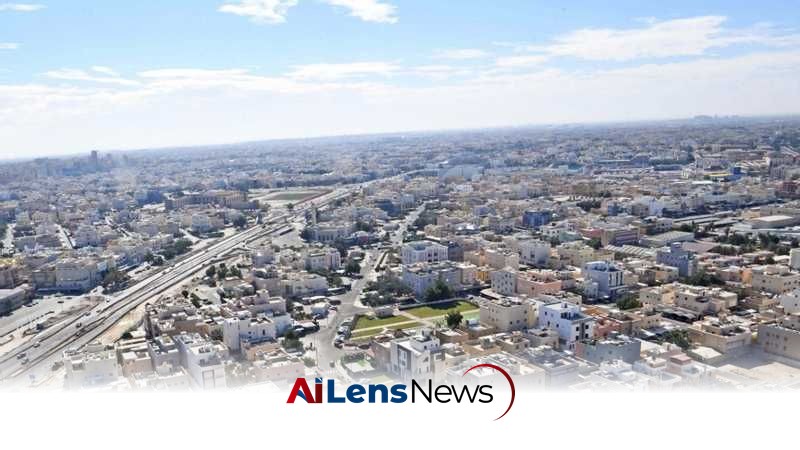


Despite a downturn in private housing prices, Kuwait's prestigious neighborhoods like Abdullah Al Salem and Al-Bida’a continue to see record land values, reflecting strong demand.
Kuwait City, Kuwait Jul 13, 2026 ALN: Kuwait's real estate market has shown a complex landscape in recent times, particularly in the realm of residential land prices. While there has been a general decline in private housing prices across various regions of the country, the most prestigious residential areas have exhibited a remarkable resilience. This is particularly evident in the Capital Governorate, where high land prices have persisted, reflecting a sustained demand for premium real estate. The latest data from the Ministry of Justice indicates that the trend is not merely a temporary phenomenon but rather a reflection of deeper market dynamics.
One of the most striking figures from the recent report is that Abdullah Al Salem, a neighborhood in the Capital Governorate, recorded Kuwait’s highest residential land price, reaching an extraordinary 3,600 dinars per square metre. This transaction involved a 1,000-square-metre residential plot that changed hands for a total of 3.60 million dinars, setting a new benchmark for land prices in the region. Furthermore, a second transaction within the same neighborhood saw a 759-square-metre plot selling for 2.25 million dinars, which translates to a price of 2,964 dinars per square metre. Such figures underscore the ongoing desirability of properties in this area, which is characterized by its central location and proximity to key amenities.
The report also highlights that nine of the ten most expensive land transactions per square metre were located in the Capital Governorate, emphasizing the enduring appeal of Kuwait's premium inner-city districts. The third-highest transaction was recorded in Shuwaikh Residential, where a 1,000-square-metre property was sold for 2.91 million dinars, equating to 2,915 dinars per square metre. This trend illustrates a significant concentration of high-value property transactions within the Capital Governorate, which remains the focal point for affluent buyers and investors.
Interestingly, the only district outside the Capital Governorate to feature among the highest-priced land sales was Mubarak Al-Abdullah Al-Sabah in the Hawalli Governorate. Here, a 500-square-metre plot fetched 1.425 million dinars, averaging 2,850 dinars per square metre. This demonstrates that while the Capital Governorate dominates the high-end market, there are still pockets of demand and investment in other areas of Kuwait. Other prestigious neighborhoods that maintained premium valuations included Al-Khalidiya (2,758 dinars per square metre), Al-Shamiya (2,400), Al-Nuzha (2,250), Al-Yarmouk (2,216), Al-Mansouriya (2,133), and Al-Faiha (2,125). These figures highlight the sustained demand for residential land in Kuwait’s most established communities, where buyers are willing to pay top dollar for desirable locations.
In terms of overall transaction value, Al-Bida’a in the Hawalli Governorate led the market with a notable coastal property sale. An 8,383-square-metre coastal plot was sold for 15.58 million dinars, followed closely by another coastal property of 7,369 square metres valued at 13.66 million dinars. Although these waterfront transactions recorded the highest overall values, it is important to note that their price per square metre remained below those achieved in the Capital’s elite residential districts. This discrepancy highlights the premium that buyers place on land located in the inner-city areas, where amenities and accessibility contribute significantly to property values.
Another significant transaction was recorded in Al-Surra, where a 6,657.5-square-metre property changed hands for 5.32 million dinars. This sale further illustrates the variety of investment opportunities available in Kuwait's real estate market, catering to different buyer preferences and investment strategies. Meanwhile, Sabah Al-Ahmad Sea City emerged as one of the most active locations for large-scale residential land deals, accounting for four of the country’s ten largest transactions. Property values in this area ranged from 2.59 million to 2.94 million dinars, reflecting growing investor interest in large coastal developments that are increasingly popular among buyers seeking luxury and waterfront living.
According to the data, the ten largest residential land transactions completed during the first half of 2026 were collectively valued at approximately 54.4 million dinars. This figure underscores the continued momentum in Kuwait’s high-end property market, even amidst broader price corrections in the residential housing sector. The persistence of high land prices in prime locations indicates a strong investor confidence that is likely driven by several factors, including limited supply, prime locations, and a growing population that continues to demand quality housing.
Despite the fluctuations observed in other segments of the real estate market, the latest figures reinforce a familiar trend: Kuwait’s established inner-city neighborhoods continue to command exceptional investor confidence. The limited availability of prime land, coupled with the desirability of these locations, enables them to remain among the country’s most valuable real estate assets. This situation is further complicated by the broader economic conditions, where external factors such as global oil prices, regional stability, and domestic economic policies play crucial roles in shaping the real estate landscape.
As Kuwait navigates through these market dynamics, the implications for both buyers and investors are significant. Buyers seeking to enter the market may find opportunities in secondary neighborhoods that are beginning to see increased interest, while investors may need to consider the long-term potential of properties in established areas. Additionally, as urban development continues, the government’s initiatives to enhance infrastructure and public services could further influence property values and market trends in the coming years.
In conclusion, while the overall residential housing market in Kuwait may be experiencing some price corrections, the enduring appeal of prime residential areas, particularly in the Capital Governorate, remains strong. The latest data reflects a robust demand for premium real estate, suggesting that high-value transactions will continue to characterize the market as investors seek to capitalize on the limited supply and desirable locations that Kuwait has to offer.
To learn more about the latest developments in Economic Reports, stay updated with our exclusive reports and analyses on AiLensNews.

