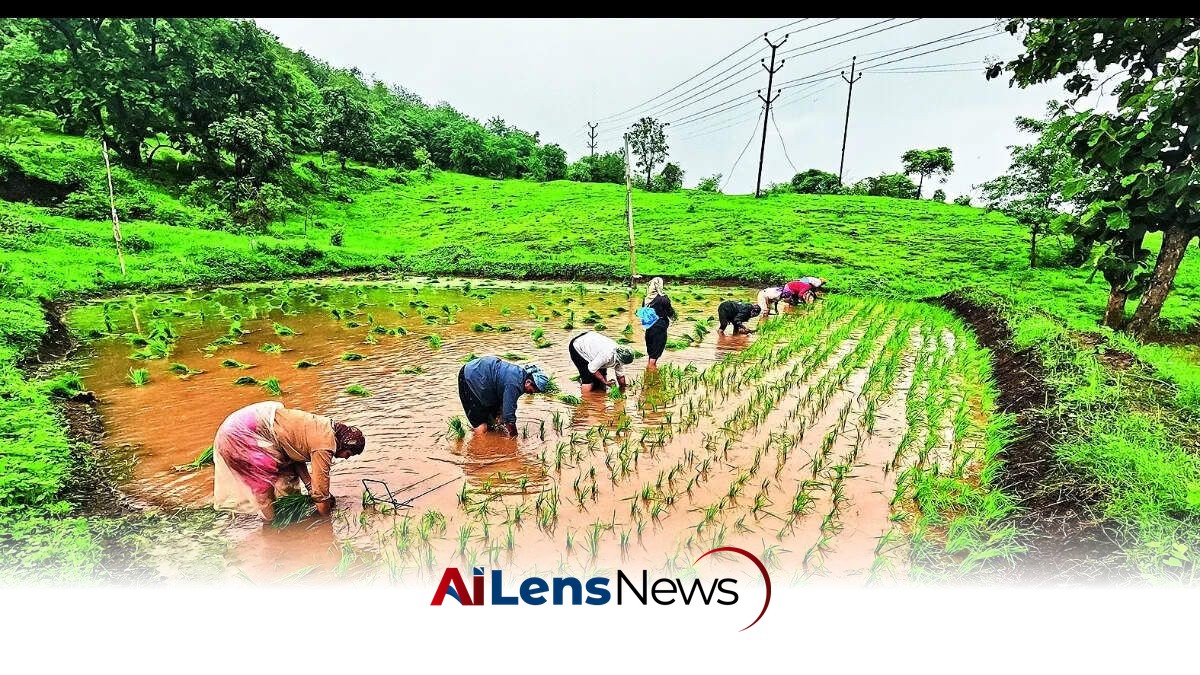


Kharif sowing lags significantly behind last year due to delayed and uneven monsoon rains. Paddy, pulses, and oilseeds acreage shows substantial year-on-year declines, raising concerns about crop output and food inflation.
New Delhi, India Jul 7, 2026 ALN: New Delhi: Kharif sowing has gathered pace over the past few days as the southwest monsoon advanced across the country. However, the total area under cultivation remains 20.77% lower than a year ago due to delayed and uneven rainfall, according to government data.
As of July 5, acreage under all major kharif crops, including paddy, pulses, and oilseeds, continued to trail last year's levels, raising concerns over crop output if rainfall does not improve in the coming weeks. The kharif season is critical for Indian agriculture, as it accounts for a significant portion of the annual production of staple crops that are essential for both domestic consumption and export.
A decline in crop production could push up prices of essential food items, fuelling food inflation and putting pressure on overall inflation. Higher inflation could dampen rural demand, weighing on broader growth. The impact of this could be particularly significant in India, where a large proportion of the population relies on agriculture for their livelihoods and where food security is a critical issue. With agriculture contributing around 17% to India's GDP and employing nearly half of the workforce, any disruptions in this sector can have cascading effects on the .
Paddy, the country's principal kharif crop, recorded a 13.07% decline in sown area from the corresponding period last year. This decline is alarming given that rice is a staple food for a significant portion of the Indian population. A reduction in paddy cultivation could lead to an increase in rice prices, affecting food affordability for millions. With rice being a key component of the diet, especially in states like West Bengal, Punjab, and Uttar Pradesh, any price hikes could trigger social unrest and exacerbate poverty in these regions.
Pulses acreage fell 21.77%, with tur (arhar) recording the sharpest decline at 41.9%. Industry experts noted that farmers have been reluctant to sow the long-duration crop because it is more vulnerable to erratic rainfall and moisture stress than other pulses. Pulses play a crucial role in the Indian diet, providing essential proteins, particularly for vegetarian populations. A reduction in their availability could lead to nutritional deficiencies in vulnerable groups, including children and pregnant women, thereby impacting public health outcomes.
Oilseeds recorded the steepest decline among the major crop groups, with acreage falling 39.32% year on year. Farmers stayed away from sowing the two main oilseed crops, with soybean acreage down 39.65% and groundnut acreage declining 39.54%. The decline in oilseed production is particularly concerning given that India is one of the largest consumers of edible oils in the world. The country imports a significant portion of its edible oil requirements, and lower domestic production could exacerbate the trade deficit and increase reliance on imports. This reliance on imports not only affects the but also makes the country vulnerable to global price fluctuations, which can lead to sudden spikes in domestic prices.
Lower production of oilseeds and pulses could increase India's import bill, as the country depends heavily on imports to meet domestic requirements. This situation could also lead to increased volatility in global markets, especially if India, a major consumer, begins to import more to compensate for domestic shortfalls. The government's agricultural policies and measures to boost local production will be crucial in addressing these challenges. Initiatives aimed at enhancing farmers' access to quality seeds, fertilizers, and irrigation facilities could be instrumental in mitigating the adverse effects of climatic variability.
The slow pace of planting follows a weak start to the monsoon, with several parts of the country receiving below-normal rainfall in June. Farmers in rain-fed regions typically delay sowing until adequate soil moisture is available to avoid re-sowing and lower yields. This cautious approach is reflective of the challenges posed by climate variability, which has become an increasing concern for farmers across the country. Erratic weather patterns, including unseasonal rains and prolonged dry spells, have made agricultural planning more complex, leading to uncertainties in yield predictions.
Sugarcane was the only major crop to buck the trend, with acreage rising 1.52% from the corresponding period last year. This increase could be attributed to the high demand for sugar and the profitability associated with sugarcane cultivation, which has remained attractive for farmers despite the challenges faced by other crops. The sugar industry plays a significant role in rural economies, providing employment opportunities and supporting ancillary industries such as transportation and processing.
The India Meteorological Department has forecast below-normal rainfall for July, the most crucial month for kharif sowing, while warning that El Nino conditions are expected to strengthen during the monsoon season. El Nino is known to disrupt weather patterns, leading to unpredictable rainfall and temperature fluctuations, which can have significant implications for agricultural production. Farmers are particularly vulnerable to these changes, and the forecast has raised concerns about the potential for a poor harvest this year. The interplay between El Nino and local climatic conditions can create a challenging environment for agricultural planning and execution.
India is expected to receive below-normal rainfall this year, with precipitation forecast at 90% of the long period average. This situation poses a significant risk to the kharif season, which is vital to India's food security as it accounts for the bulk of annual production of rice, pulses, oilseeds, and several commercial crops. The implications of a poor kharif harvest could extend beyond immediate food prices, potentially impacting rural employment and income levels, which are critical for maintaining stability in agrarian communities. The interconnectedness of agriculture with other sectors means that any downturn in agricultural productivity could have ripple effects throughout the .
The government’s response to this situation will be closely monitored, as it will likely involve measures to support farmers, including financial assistance, crop insurance, and investment in irrigation infrastructure to mitigate the impact of erratic rainfall patterns. The effectiveness of these interventions will play a crucial role in determining the overall agricultural output and food security in the country. Policymakers may also need to consider long-term strategies aimed at enhancing resilience to climate change, such as promoting sustainable agricultural practices and diversifying crop production.
In conclusion, while there has been some improvement in kharif sowing in recent days, the overall area under cultivation remains significantly below last year's levels. The delayed monsoon and the forecast of below-normal rainfall raise serious concerns about crop production and food security in India. The ramifications of a poor kharif season could be felt across the , affecting inflation rates, rural demand, and the livelihoods of millions of farmers. As the situation develops, the focus will be on how effectively the government can address these challenges to ensure food security and stabilize agricultural production. The upcoming weeks will be critical, and the response from both the government and the farming community will determine the extent of the impact on the agricultural landscape.
To learn more about the latest developments in Inflation & Prices, stay updated with our exclusive reports and analyses on AiLensNews.

