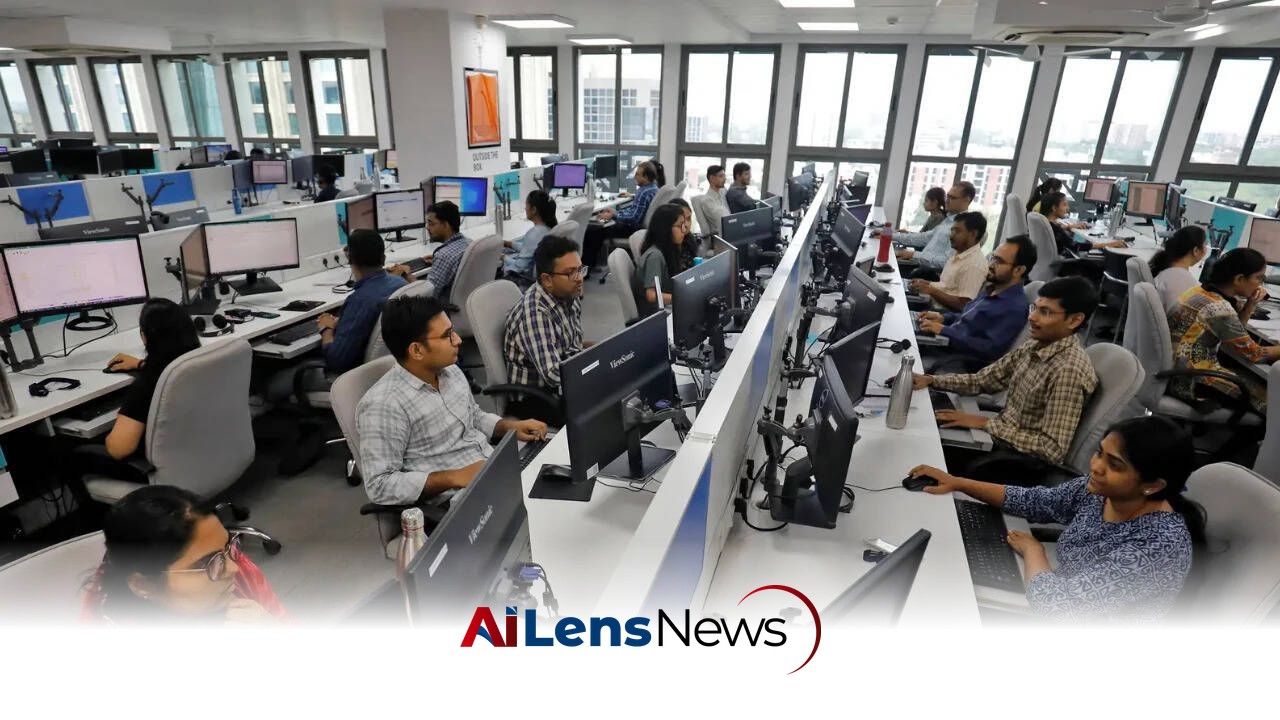



India's services sector growth slowed significantly in June, hitting a 17-month low as domestic demand weakened. New business expansion also reached its slowest point in over two-and-a-half years, leading to a near standstill in hiring.
New Delhi, India Jul 3, 2026 ALN: India's services sector, which plays a pivotal role in the country's framework, has recently exhibited signs of a significant slowdown. In June, the sector expanded at its slowest pace in 17 months, primarily due to a sharp decline in domestic demand and a marked deceleration in new business growth. This trend is concerning, especially considering the services sector's contribution to India's GDP, which has historically been a major driver of growth. The services industry encompasses a wide range of activities, including retail, hospitality, finance, information technology, and transportation, all of which are essential for the overall health of the .
The HSBC India Services Purchasing Managers' Index (PMI), a critical indicator of health in the services sector, fell to 57.4 in June from 59.8 in May. While this reading is above the neutral mark of 50.0—indicating that the sector is still growing—it marks a notable decline in momentum. The PMI is a composite index based on surveys of purchasing managers across various industries, and it provides insights into business conditions, including employment, production, and new orders. A decline in the PMI can signal potential challenges ahead, and the drop observed in June raises questions about the sustainability of growth in the services sector.
According to the PMI data, the slowdown in new business growth was particularly pronounced, with the rate of expansion reaching its lowest point since November 2023. This decline raises concerns about the sustainability of growth in the services sector, which has been a cornerstone of the Indian , especially in the wake of the COVID-19 pandemic. The pandemic had initially devastated many sectors, but the services industry had shown resilience, bouncing back strongly as restrictions eased. However, the current slowdown suggests that the recovery may be faltering as consumer confidence wanes and businesses face increased uncertainty.
Despite the domestic demand weakening, there was a silver lining in the form of international demand. New export orders increased at their fastest pace in three months, providing some relief to service providers. This suggests that while local markets may be cooling, there is still potential for growth in international markets, which could help mitigate some of the adverse effects of domestic demand weakness. The ability to tap into global markets is crucial for many Indian service providers, particularly in sectors like IT and business process outsourcing, which have a strong export component.
Moreover, the hiring landscape within the services sector also showed signs of cooling. Only about 1% of firms reported increasing their workforce, a stark contrast to the robust job creation witnessed in the preceding months of April and May. This stagnation in hiring could have broader implications for the Indian , as employment is a critical factor in driving consumer spending and overall growth. Job creation is often seen as a barometer of health, and a slowdown in hiring could signal a more cautious approach by businesses in the face of uncertain market conditions. The correlation between employment levels and consumer spending cannot be understated; as fewer people are employed or as companies become more hesitant to hire, the overall purchasing power of consumers diminishes, which, in turn, can lead to a further slowdown in activity.
In terms of cost pressures, input cost inflation eased to a five-month low in June. The prices of essential commodities such as electricity, food, fuel, and transportation have been rising at a slower pace, which could provide some relief to businesses struggling with higher operational costs. However, firms have been less inclined to pass on these costs to consumers, as indicated by the decline in the prices charged sub-index to a seven-month low. This reluctance to increase prices could be a strategic decision to maintain competitiveness in a challenging market environment. Companies may be weighing the potential backlash from consumers against the necessity of maintaining profit margins, leading to a more cautious pricing strategy.
Business confidence has also taken a hit, falling to a five-month low. Firms have expressed concerns over increased competition, challenging market conditions, and the depreciation of the Indian rupee. The rupee's weakening can have a dual effect; while it may boost export competitiveness, it can also increase the cost of imports, creating a complex scenario for businesses that rely on imported goods or materials. The interplay between currency fluctuations and business costs is a critical factor that companies must navigate, especially those engaged in both domestic and international trade.
The broader context of these developments is framed by the ongoing uncertainties in global trade and financial markets. As countries grapple with inflationary pressures, geopolitical tensions, and shifting policies, businesses in India are likely feeling the ripple effects. The Composite PMI, which encompasses both services and manufacturing, has also shown signs of strain, slipping to its weakest level since March. This trend suggests that the challenges are not confined to the services sector alone but are indicative of a broader slowdown across the private sector. Such a slowdown could potentially impact government revenue and social spending, leading to a cycle of reduced activity.
In summary, the June PMI data portrays a significant deceleration in India's services sector, underscoring the challenges faced by businesses amid waning domestic demand and global uncertainties. The implications of this slowdown are multifaceted, affecting employment, consumer confidence, and potentially the overall growth trajectory of India. Policymakers and business leaders will need to navigate these turbulent waters carefully, focusing on strategies that can bolster domestic demand, enhance export competitiveness, and foster a conducive environment for sustainable growth.
As India moves forward, the focus will likely shift towards addressing these challenges through policy interventions aimed at stimulating demand, supporting job creation, and enhancing the resilience of the against external shocks. The interplay between domestic and international factors will continue to shape the outlook for the services sector and the broader in the coming months. Stakeholders may need to engage in proactive measures, such as improving infrastructure, investing in technology, and fostering innovation to ensure long-term sustainability and growth in the face of increasing competition and evolving market dynamics.
To learn more about the latest developments in Employment & Labor, stay updated with our exclusive reports and analyses on AILensNews.

