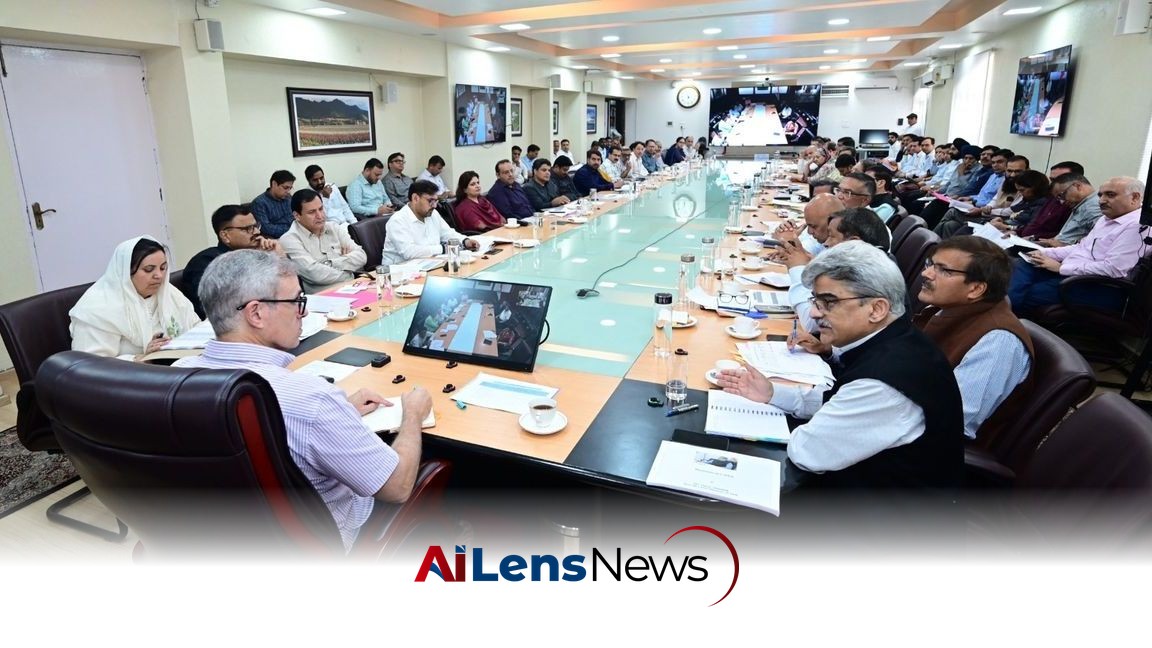


In a recent meeting, Chief Minister Omar Abdullah emphasized the importance of timely expenditure of allocated funds for infrastructure and public services in Jammu and Kashmir.
Leh, India Jul 29, 2026 ALN: Chief Minister Omar Abdullah on Tuesday chaired a high-level review meeting on Capital Expenditure (CAPEX) at the Civil Secretariat here and directed all departments to significantly accelerate the pace of expenditure, emphasising that timely utilization of available funds is critical for infrastructure development, public service delivery, and sustained economic growth.
The Chief Minister underscored the need for focused attention on departments lagging in expenditure and cautioned against the practice of delaying spending until the closing months of the financial year. This issue is not unique to Jammu and Kashmir; it reflects a broader challenge faced by many governmental bodies where the urgency to spend often only arises as deadlines approach. The Chief Minister’s comments highlight an ongoing struggle within the public sector to ensure that funds allocated for development are utilized effectively and within the timeframes set by financial regulations.
“To have money and not spend it is incompetence. This is very difficult to justify. Not having money is easier to explain, but it is impossible to explain when funds are available and remain unutilized,” the Chief Minister said while addressing the meeting. This statement encapsulates a fundamental frustration that many stakeholders feel when observing the inefficiencies within government spending. The Chief Minister's remarks serve as a call to action for all departments to prioritize their financial responsibilities and to recognize the implications of unspent funds, which can hinder development and economic progress.
He said the review was intentionally convened at the beginning of the financial cycle rather than towards the end of the year so that corrective measures could be taken in time and departments could utilize the remaining working season effectively. This proactive approach is significant, as it allows for the identification of issues early in the financial year, providing departments with the opportunity to address shortcomings without the pressure of impending deadlines. The emphasis on early intervention is particularly relevant in the context of Jammu and Kashmir, where seasonal factors can impact the feasibility of certain projects.
“There is still ample working season available in both the Kashmir Valley and the Jammu plains. There should be no reason why funds already released are not spent appropriately. Every department must give this focused attention,” he said. This statement underscores the importance of taking advantage of the geographical and climatic conditions that influence the execution of development projects. The Chief Minister's insistence on timely spending reflects a broader commitment to ensuring that the region's unique challenges are met with equally responsive governance.
The meeting was attended by Ministers Sakina Itoo, Javed Ahmed Rana, Javid Ahmed Dar, and Satish Sharma, along with Chief Secretary Atal Dulloo, Additional Chief Secretaries, and other senior officials. The diverse representation from various departments indicates a collective approach to addressing the challenges of capital expenditure and emphasizes the need for collaboration across different sectors of government.
Reviewing the implementation of the Special Assistance to States for Capital Investment (SASCI), the Chief Minister directed departments to ensure full utilization of allocations under the scheme, warning that any unspent amount during the current financial year would reduce Jammu and Kashmir’s allocation in the next fiscal. This cautionary note serves as a reminder of the interconnectedness of fiscal management and future funding opportunities. The SASCI program is designed to provide financial support to states for capital investments, and its effectiveness hinges on the ability of local governments to utilize these funds efficiently.
He stressed that every rupee available under SASCI Part-I must be utilized and instructed departments to identify eligible projects without delay. The urgency of this directive reflects the competitive nature of state funding, where the ability to demonstrate effective use of resources can significantly impact future allocations. He also directed ministers to personally review reform-linked targets under the scheme on a fortnightly basis so that Jammu and Kashmir could qualify for additional financial assistance under the reform component of SASCI. This focus on accountability and regular review is crucial for maintaining momentum in capital expenditure and ensuring that projects remain aligned with the broader goals of economic development.
“The earlier we implement the specified reforms, the sooner we receive additional funds and the more time we will have to utilize them productively,” he observed. This statement highlights the importance of strategic planning and timely execution in the realm of public finance. The Chief Minister's approach points to a recognition that effective governance is not merely about securing funds but also about ensuring that those funds are put to work in a manner that benefits the community.
The Chief Minister asked departments to immediately begin work on projects where administrative approvals and tendering had already been completed, stating that such projects could initially be funded through the CAPEX budget and later shifted to the reform-linked component of SASCI once additional funds become available. This strategy showcases a pragmatic approach to project management, allowing for flexibility in funding sources while ensuring that development efforts are not stalled due to bureaucratic delays.
He further directed departments to prepare a robust pipeline of projects for the next financial year instead of waiting for funding before identifying development works. This proactive planning is essential for maintaining a steady flow of projects and ensuring that the government can respond effectively to the needs of its citizens. By establishing a clear pipeline, departments can better align their efforts with the strategic priorities of the government and the expectations of the public.
Expressing concern over the inability of some departments to identify projects despite the availability of financial resources, the Chief Minister remarked that the government’s challenge had shifted from a shortage of funds to inadequate project preparedness. This observation points to a critical area for improvement within the public sector, where the capacity to plan and execute projects effectively is essential for maximizing the impact of available resources. The Chief Minister's comments serve as a call for enhanced training and capacity-building initiatives within government departments to improve project readiness.
He advised departments to revisit the development priorities submitted by Members of the Legislative Assembly during the Budget consultations and utilize proposals, particularly projects exceeding the ₹2 crore threshold, for inclusion under future SASCI funding. This approach emphasizes the importance of stakeholder engagement in the budgeting process and highlights the need for alignment between legislative priorities and executive actions.
The Chief Minister also instructed departments to initiate administrative approvals and other statutory formalities well in advance so that projects for the 2027-28 financial year remain implementation-ready as soon as funds are sanctioned. This foresight is critical in ensuring that the government can respond quickly to emerging needs and capitalize on funding opportunities as they arise.
Highlighting the need to improve expenditure under Centrally Sponsored Schemes, the Chief Minister directed departments to closely monitor utilization levels and ensure that funds released under all development programmes are spent efficiently and within stipulated timelines. The emphasis on monitoring and accountability is vital for ensuring that public funds are used effectively and that projects deliver the intended benefits to the community.
He also took note of suggestions made by ministers regarding simplification and streamlining of the tendering process and directed the concerned departments to evolve an appropriate mechanism to make procurement procedures more efficient while maintaining transparency and accountability. This focus on procurement reform is essential for enhancing the efficiency of government spending and ensuring that projects are delivered on time and within budget.
Expressing confidence that departments would respond with urgency, the Chief Minister said the next review would assess tangible improvements in expenditure performance across sectors. This forward-looking approach is indicative of a commitment to continuous improvement and accountability in governance, with an emphasis on results and outcomes.
Earlier, Additional Chief Secretary, Finance, Shailendra Kumar, gave a detailed presentation on the Capital Expenditure position for the financial year 2026-27, covering expenditure under the UT sector, District CAPEX, and Centrally Sponsored Schemes. He also highlighted departments where expenditure remained below expected levels and outlined the factors contributing to slow utilization of funds. This presentation provided a critical overview of the current state of capital expenditure in Jammu and Kashmir, setting the stage for informed decision-making and targeted interventions to enhance the effectiveness of government spending.
To learn more about the latest developments in Inflation & Prices, stay updated with our exclusive reports and analyses on AiLensNews.

