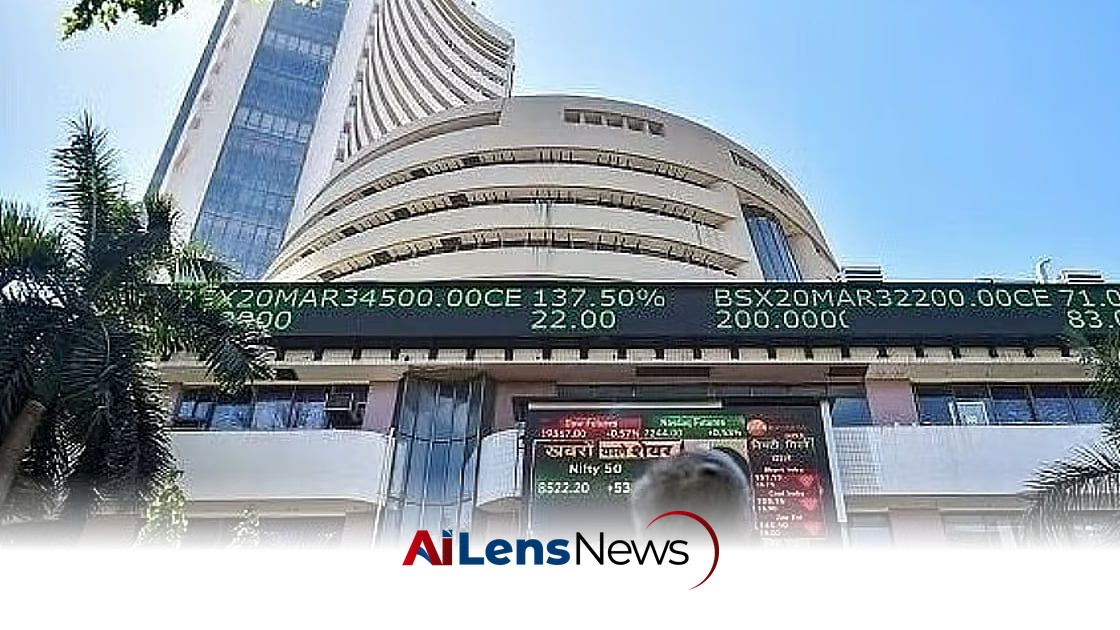


Sensex and Nifty fell in early trade as Brent crude prices surged due to tensions in West Asia, impacting investor sentiment and leading to FII selling.
New Delhi, India Jul 23, 2026 ALN: Mumbai: Market benchmark indices Sensex and Nifty edged lower in early deals on Thursday due to surging crude oil prices amid escalating tensions in West Asia. The fluctuations in the stock market reflect broader economic concerns, particularly regarding energy prices and geopolitical stability, which have historically impacted investor confidence and market performance.
The 30-share BSE Sensex declined 230.95 points to 76,521.02 during initial trade. Meanwhile, the 50-share NSE Nifty dipped 57.15 points to 23,937. This downward trend is indicative of a broader market reaction to external shocks, particularly in the commodities sector, which can have a direct impact on inflation and economic growth. The current situation underscores the sensitivity of stock markets to global events, especially in a world increasingly interconnected by trade and finance.
From the Sensex pack, notable laggards included major companies such as Infosys, Bajaj Finance, HDFC Bank, State Bank of India, NTPC, and Reliance Industries. These companies are significant players in their respective sectors, and their decline can be reflective of a larger trend affecting the technology, finance, and energy sectors. Conversely, Trent and Eternal were the only winners from the pack, suggesting that some sectors or companies may be more resilient or less affected by current events. This divergence in performance highlights the selective nature of market reactions, where certain industries may thrive despite broader economic challenges.
Brent crude, the global oil benchmark, quoted 2.27 percent higher at $96.20 per barrel. The increase in crude oil prices is a critical factor for economies like India, which relies heavily on imported oil. Rising oil prices can contribute to inflationary pressures, increase transportation costs, and affect the overall cost of living, which in turn can influence consumer spending and economic growth. The implications of these rising costs are multifaceted, affecting everything from household budgets to business operational expenses, and can lead to a tightening of consumer discretionary spending, which is vital for economic momentum.
Foreign Institutional Investors (FIIs) offloaded equities worth Rs 819.20 crore on Wednesday after a day's breather, according to exchange data. This trend of foreign investment withdrawal can signal a lack of confidence in the market, often driven by external factors such as geopolitical tensions or economic instability. FIIs play a crucial role in the Indian stock market, and their movements can significantly influence market trends. A sustained outflow of foreign capital can exacerbate market volatility and lead to a depreciation of the Indian rupee, further complicating the economic landscape.
Investor sentiment remains fragile as escalating tensions in the Middle East fuel a fresh surge in global oil prices and weigh on risk appetite. Ponmudi R, CEO of Enrich Money, an online trading and wealth-tech firm, stated, "Markets were rattled after Yemen's Houthi rebels reportedly attacked two Saudi oil tankers, opening a new front in the regional conflict and raising fears of further disruptions to crude supplies." Such incidents can lead to increased volatility in oil prices, which are already sensitive to geopolitical developments. The potential for further disruptions in oil supply chains could have cascading effects on global markets, particularly for oil-dependent economies like India.
The geopolitical landscape in the Middle East has long been a source of instability, with various conflicts affecting global oil supply chains. The recent attacks on Saudi oil tankers underscore the potential for further escalations in the region, which could lead to significant disruptions in oil production and transportation. This situation is particularly concerning for countries like India, which are heavily dependent on oil imports to meet their energy needs. The reliance on imported oil makes India vulnerable to global price fluctuations and geopolitical risks, necessitating a strategic approach to energy security and diversification of energy sources.
In Asian markets, South Korea's KOSPI jumped 3.15 percent. Japan's Nikkei 225 index and Hong Kong's Hang Seng index were also trading higher, while Shanghai's SSE Composite index quoted lower. The mixed performance of Asian markets indicates varying degrees of investor confidence across the region, which can also be influenced by local economic conditions and policies. The divergence in market performance across Asia reflects the complex interplay of regional economic dynamics and investor sentiment, with each market responding differently to global events.
US markets ended in negative territory on Wednesday, reflecting broader concerns about economic growth and inflation. The performance of US markets often serves as a bellwether for global market trends, and negative sentiment in the US can have ripple effects on other markets, including India. Investors closely monitor US economic indicators, such as inflation rates and employment figures, as these can influence central bank policies and, subsequently, global capital flows.
On Wednesday, the Sensex tanked 715.06 points, or 0.92 percent, to settle at 76,755.05. The Nifty declined 191.45 points, or 0.79 percent, to end at 23,996.25. These declines are part of a larger trend of volatility that has characterized the markets in recent weeks. Investors are navigating a complex landscape of rising inflation, interest rate changes, and geopolitical tensions, making it challenging to predict market movements. The uncertainty surrounding these factors can lead to increased market volatility, as investors react to news and developments in real-time.
The implications of rising crude oil prices and geopolitical tensions extend beyond immediate market reactions. For India, higher oil prices can lead to increased import bills, which can widen the fiscal deficit and affect the current account balance. Policymakers may need to consider measures to mitigate the impact of rising oil prices, such as exploring alternative energy sources or enhancing domestic production capabilities. The government’s response to these challenges will be crucial in maintaining economic stability and fostering sustainable growth.
Furthermore, sustained high oil prices can lead to inflationary pressures, prompting the Reserve Bank of India (RBI) to adjust interest rates to maintain economic stability. Such actions can influence borrowing costs for consumers and businesses, potentially slowing down economic growth. The interplay between global oil prices, domestic economic policies, and market performance will remain a critical area of focus for investors and analysts alike. The RBI's monetary policy decisions will be closely watched, as they will have significant implications for credit availability and economic activity.
In conclusion, the decline in Indian stock markets amid rising crude oil prices highlights the interconnectedness of global events and local economic conditions. As tensions in the Middle East continue to unfold and oil prices remain volatile, investors will need to remain vigilant and adaptable to navigate the challenges and opportunities that lie ahead. The coming days and weeks will be crucial in determining how these factors will shape market dynamics and economic prospects for India. The potential for further geopolitical developments and their impact on oil prices will be a key consideration for market participants, as they seek to position themselves in an increasingly uncertain environment.
To learn more about the latest developments in Inflation & Prices, stay updated with our exclusive reports and analyses on AiLensNews.

