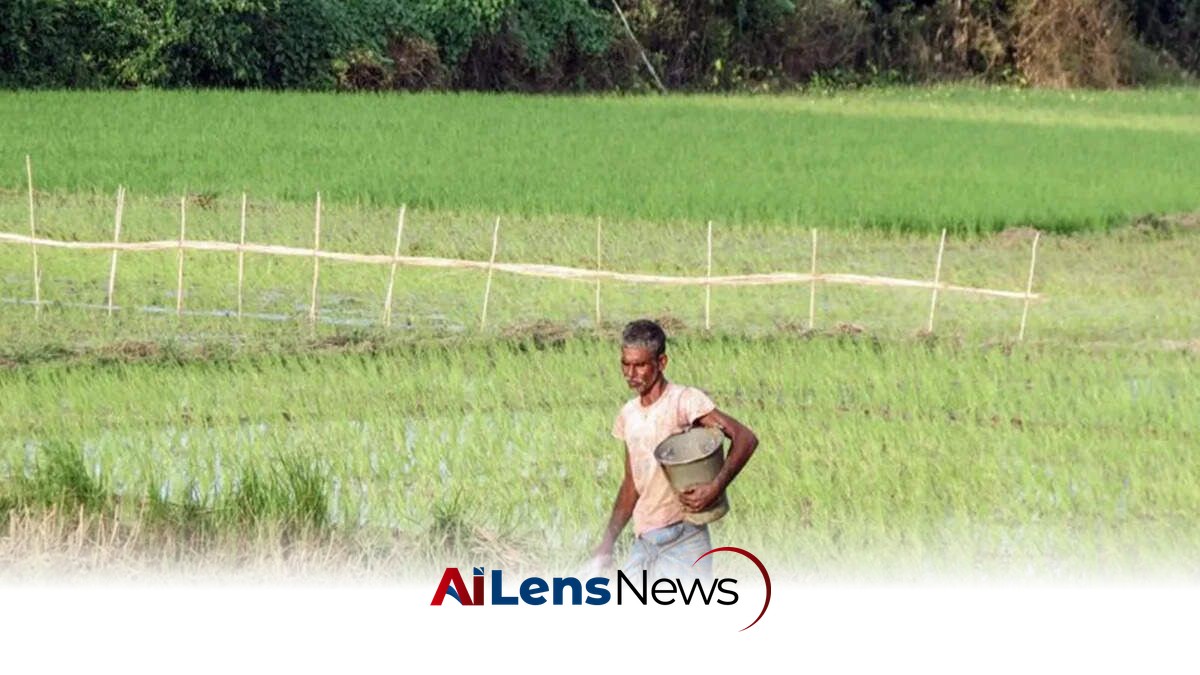


Despite a recovery in monsoon rainfall, uneven distribution raises concerns for the kharif season, with many districts facing moisture stress and potential food inflation.
New Delhi, India Jul 10, 2026 ALN: New Delhi: The southwest monsoon has recovered sharply after a weak June, but its uneven distribution continues to pose risks to the ongoing kharif season with large parts of the country still experiencing deficient rainfall. Aggregate rainfall numbers may indicate a recovery, but the spatial distribution can significantly impair agricultural growth, economists said.
The overall rainfall deficit has narrowed from 38% in June to 15% as of July 9. However, data from the India Meteorological Department show that of the 738 districts it monitored, rainfall was deficient in 280 and largely deficient in another 97 between June 1 and July 8. This discrepancy highlights the ongoing challenges faced by farmers, particularly in regions that depend heavily on monsoon rains for their agricultural activities.
Many of the affected districts are located in key agricultural states such as Maharashtra, Madhya Pradesh, Karnataka, Gujarat, Uttar Pradesh, and Bihar, where farmers cultivate pulses, oilseeds, cotton, paddy, and maize. These states play a crucial role in India's agricultural output, contributing significantly to the country's food security. Farmlands in a number of these places are rain-fed with very low irrigation coverage, making them particularly vulnerable to variations in rainfall.
The kharif season, which spans from June to September, is critical for the cultivation of various crops that are sown with the onset of the monsoon. The timely arrival and distribution of rainfall are essential for crop establishment and growth. However, the recent uneven rainfall patterns have raised concerns among farmers and agricultural experts alike. "The recent bout of rain has eased the immediate concerns. However, it does not eliminate the risks associated with a below-normal monsoon," said Yuvika Singhal, economist at QuantEco. The research firm estimates deficient rainfall to potentially slow agricultural growth to 0-1% in fiscal 2027 from about 3% last fiscal year and increase upside risks to food inflation.
According to experts, the headline rainfall numbers mask significant regional disparities. "From an agricultural perspective, the timing and spatial distribution of rainfall matter more than aggregate numbers," said Crisil Intelligence director Pushan Sharma. Nearly 100 of the 377 rainfall-deficient districts are predominantly rain-fed, where inadequate soil moisture could affect crop establishment and reduce yields, he said. This situation is particularly concerning as many farmers in these regions rely solely on rainwater for irrigation, leaving them at the mercy of the monsoon.
Regions that cultivate soybean and cotton, especially in Maharashtra and Madhya Pradesh, along with pulses and groundnut belts in Karnataka and Gujarat, continue to face moisture stress despite an improvement in the national rainfall position. The uneven distribution of rainfall not only affects crop yields but also impacts farmers' incomes and livelihoods, leading to broader implications. For instance, farmers may be forced to take on debt to sustain their operations, which can have long-term repercussions on rural economies.
The potential slowdown in agricultural growth and the risk of increased food inflation are critical issues that need to be addressed to ensure food security and stability. As agricultural growth slows, it can have a cascading effect on related industries, including food processing and logistics, which rely on a steady supply of agricultural products. Additionally, rising food inflation can disproportionately affect low-income households, exacerbating issues of poverty and food insecurity.
The Indian government, recognizing the importance of agriculture in the , has implemented various measures to support farmers, including subsidies, crop insurance schemes, and investment in irrigation infrastructure. However, the effectiveness of these measures is often contingent on timely and adequate rainfall. As such, the current situation calls for a reevaluation of agricultural policies to better address the challenges posed by climate variability and ensure that farmers have the resources they need to adapt to changing conditions.
Looking ahead, the outlook for the kharif season remains uncertain. While some regions may experience improved rainfall in the coming weeks, others may continue to struggle with moisture stress. The Indian Meteorological Department provides regular updates on rainfall patterns and forecasts, which are critical for farmers making decisions about planting and crop management.
Moreover, the ongoing discourse around climate change and its impact on weather patterns adds another layer of complexity to the situation. As climate patterns continue to shift, the frequency and intensity of extreme weather events, including droughts and floods, may increase, further complicating agricultural planning and sustainability. It is essential for policymakers, agricultural scientists, and farmers to collaborate on developing resilient agricultural practices that can withstand these changes.
As the kharif season progresses, the uneven distribution of rainfall poses significant challenges for farmers and the agricultural sector. The potential slowdown in agricultural growth and the risk of increased food inflation are critical issues that need to be addressed to ensure food security and stability. The interplay between weather patterns and agricultural productivity underscores the need for ongoing research and investment in sustainable farming practices. By addressing these challenges proactively, India can work towards a more resilient agricultural sector that can better withstand the uncertainties of climate change and ensure the livelihoods of millions of farmers across the country.
The kharif season, also known as the monsoon season, is particularly significant in India, as it is the time when the majority of the country's agricultural activities take place. The crops sown during this season are typically harvested in the autumn months, making the timing of rainfall crucial for their success. Major kharif crops include rice, maize, cotton, and various pulses, all of which are staples in the Indian diet and .
Farmers depend on the southwest monsoon, which usually begins in June and lasts until September, to provide the necessary moisture for these crops. However, as the article highlights, the distribution of rainfall is often inconsistent, leading to concerns about crop yields and food security.
In recent years, advancements in agricultural technology have begun to play a vital role in mitigating the effects of erratic weather patterns. Precision agriculture, which utilizes data analytics, satellite imagery, and IoT devices, allows farmers to monitor soil moisture levels and weather forecasts more accurately. This technology can help farmers make informed decisions about irrigation and crop management, potentially reducing their reliance on traditional monsoon rains.
Furthermore, the use of drought-resistant crop varieties has gained traction among farmers in regions prone to water stress. These crops are specifically bred to withstand periods of low moisture, providing a buffer against the unpredictability of weather patterns. However, the adoption of such technologies requires financial investment and training, which can be a challenge for many smallholder farmers.
The Indian government has recognized the need to support farmers, particularly during challenging climatic conditions. Various schemes have been introduced to provide financial assistance, including the Pradhan Mantri Fasal Bima Yojana (PMFBY), which offers crop insurance to protect farmers against losses due to natural calamities. Additionally, the government has been investing in improving irrigation infrastructure to reduce dependence on monsoon rains and enhance water conservation practices.
Despite these efforts, the effectiveness of such initiatives can vary significantly across different regions due to local governance, infrastructure issues, and farmers' awareness of available support. Therefore, continuous monitoring and adaptation of these programs are essential to ensure they meet the needs of farmers effectively.
Building community resilience is another critical aspect of addressing the challenges posed by uneven rainfall and climate change. Local farmer cooperatives and community-based organizations can play a pivotal role in sharing knowledge, resources, and best practices among farmers. These networks can facilitate access to information about weather patterns, market prices, and sustainable farming techniques.
Moreover, community-led initiatives can enhance collective bargaining power, enabling farmers to negotiate better prices for their produce and access to resources. By fostering a sense of community and collaboration, farmers can better navigate the uncertainties of climate variability and work towards sustainable agricultural practices.
As India confronts the dual challenges of climate change and agricultural sustainability, it is imperative that stakeholders across sectors—government, academia, and civil society—collaborate to develop comprehensive strategies that not only address immediate concerns but also build long-term resilience. The convergence of technology, community engagement, and supportive policies can create a more robust agricultural framework capable of withstanding the impacts of climate variability. In doing so, India can safeguard its agricultural sector, ensuring food security and the livelihoods of millions of farmers for generations to come.
To learn more about the latest developments in Fiscal Policy, stay updated with our exclusive reports and analyses on AiLensNews.

