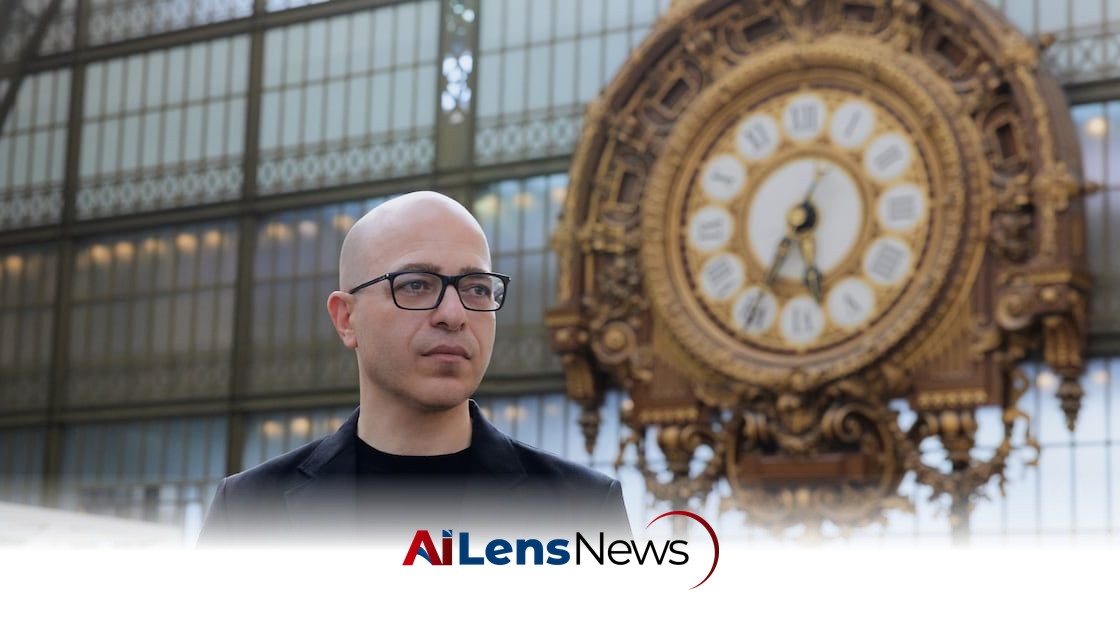


Franco-Egyptian artist Youssef Nabil's exhibition at the Musée d'Orsay reclaims the Orientalist gaze, presenting a personal narrative through photography.
Riyadh, Saudi Arabia Jul 18, 2026 ALN: In the Musée d’Orsay’s Orientalist galleries, the exhibition featuring the works of Youssef Nabil presents a compelling counter-narrative to traditional Orientalist perspectives. At first glance, Nabil’s photographs may seem modest in comparison to the grandiose paintings that dominate the space. Their smaller size, softer colors, and intimate subjects—often depicted in states of solitude, sleep, or contemplation—create a stark contrast to the dramatic and larger-than-life canvases that surround them. However, this subtlety does not diminish their impact. Instead, the intimacy of Nabil’s work provides a different kind of strength, one that challenges the viewer to reconsider the narratives constructed by the Orientalist artists of the past.
Orientalist paintings, produced predominantly by Western artists, often reflect a third-person perspective that is steeped in foreign observation, imagination, and fantasy. These artworks typically portray the Middle East and North Africa through a lens that is not only detached but also frequently romanticized or exoticized. In contrast, Nabil offers a first-person perspective that is deeply rooted in his own experiences and complex relationship with his homeland, Egypt. His work invites viewers to engage with the region not as outsiders but as participants in its rich cultural tapestry.
The exhibition, titled "De Rever Encore"—translated as "To Dream Again"—marks a significant milestone as it is the first showcase of a contemporary artist within the museum’s Orientalist galleries. The selection of Youssef Nabil for this honor carries profound significance. The Franco-Egyptian photographer and filmmaker first visited the Musée d’Orsay in 1992 at the young age of 19, a pivotal moment in his life, as he had never previously left Egypt. This early encounter with art profoundly influenced his creative trajectory.
Among the works that left a lasting impression on Nabil was Pierre Puvis de Chavannes’s 1883 painting "The Dream." This artwork features a sleeping man reclined beneath a tree, with three ethereal figures representing love, glory, and wealth hovering above him. Nabil later paid homage to this painting in his 2021 piece "The Dream, Self-Portrait," where he inserted his own sleeping figure into the original composition. This act of artistic homage creates a compelling narrative, completing a circle that reflects his journey from an impressionable young artist to a recognized figure in the same institution that inspired him.
In the context of the MENA (Middle East and North Africa) region, the term "Orientalism" has evolved to carry a predominantly negative connotation, often associated with colonialism and cultural appropriation. Nabil’s exhibition, however, refrains from outright rejection of the museum’s collection. Instead, it acknowledges the complexities and contradictions inherent in Orientalism. Nabil demonstrates a nuanced understanding of the problematic dynamics between Western artists and the cultures they depict, recognizing the unequal power relations that have historically shaped representations of the East.
Despite this critical awareness, Nabil expresses a certain affection for the emotional and visual worlds constructed by Orientalist artists. He appreciates the melodrama, sensuality, and rich color palettes that characterize their works. In discussing figures such as Jean Lecomte du Nouy and Alexandre Cabanel, Nabil has articulated his view that their paintings depict "a beautifully documented Orient, maybe fantasized, but which exists for me." This perspective reflects a complex relationship with the past, where he acknowledges the allure of the imagery while simultaneously interrogating its implications.
Nabil's approach to his subject matter diverges significantly from traditional Orientalist depictions. While he employs similar visual codes, his representation of Egypt is personal and intimate rather than ethnographic. The figures in his photographs include friends, artists, actors, and self-portraits, all of whom contribute to a narrative that is distinctly his own. The theatricality of his settings draws inspiration from the Egyptian cinema he cherished as a child, rather than from a European traveler’s quest for the exotic. This conscious choice allows Nabil to reclaim the narrative and present a vision of Egypt that is authentic and deeply personal.
The resulting images possess a kitschy quality, yet they resonate with emotional depth and poignancy. Nabil employs a unique technique, shooting in black and white before hand-coloring each print. This method, which he learned from some of Egypt’s last studio portrait retouchers, imbues his photographs with a rich and vibrant aesthetic. The skin tones, bright reds, and deep blues evoke the publicity photographs and hand-tinted images that were emblematic of the golden age of Egyptian cinema, further grounding his work in a cultural context that is both nostalgic and innovative.
The hand-coloring technique that Nabil employs lends his photographs an ethereal and otherworldly quality. They often appear as memories that have been altered by the passage of time, capturing moments that are simultaneously glamorous and tinged with a sense of loss. Beneath the surface of beauty, there often lies a funereal undertone, reflecting the inevitability of change and the transient nature of existence. Nabil himself has articulated a profound connection between his work and the theme of mortality, stating that he "discovered death through cinema." As a child, he found solace in the idea that images could preserve the essence of actors long after their lives had ended—a concept that resonates deeply within his photography.
Through his art, Nabil engages in a similar act of preservation, capturing the essence of people and places while acknowledging their eventual disappearance. This duality is evident in works such as "Say Goodbye, Self-Portrait, Alexandria," where Nabil stands facing the sea, his back turned to the camera, evoking a sense of farewell. In another piece, "I Will Go to Paradise, Self-Portrait, Hyeres," his body appears suspended between departure and disappearance, capturing the liminal space between existence and oblivion. Additionally, "Self-Portrait with Roots, Los Angeles" features Nabil asleep against the exposed roots of a tree, echoing the dreamlike quality of Odilon Redon’s "Sleep of Caliban." These works exemplify how Nabil’s photography resonates with themes of memory, loss, and the search for identity within the context of a rapidly changing world.
In conclusion, Youssef Nabil’s exhibition at the Musée d’Orsay serves as a vital intervention in the ongoing conversation about Orientalism and representation. By presenting a personal and introspective perspective, Nabil challenges viewers to reconsider the narratives that have historically shaped perceptions of the Middle East and North Africa. His work not only honors the artistic legacy of the Orientalists but also reclaims agency for those who have been depicted, offering a fresh lens through which to engage with the complexities of identity, memory, and cultural heritage. As the exhibition unfolds within the hallowed halls of the Musée d’Orsay, it invites audiences to reflect on their own relationships with the images and stories that shape their understanding of the world.
To learn more about the latest developments in Visual Arts, stay updated with our exclusive reports and analyses on AiLensNews.

