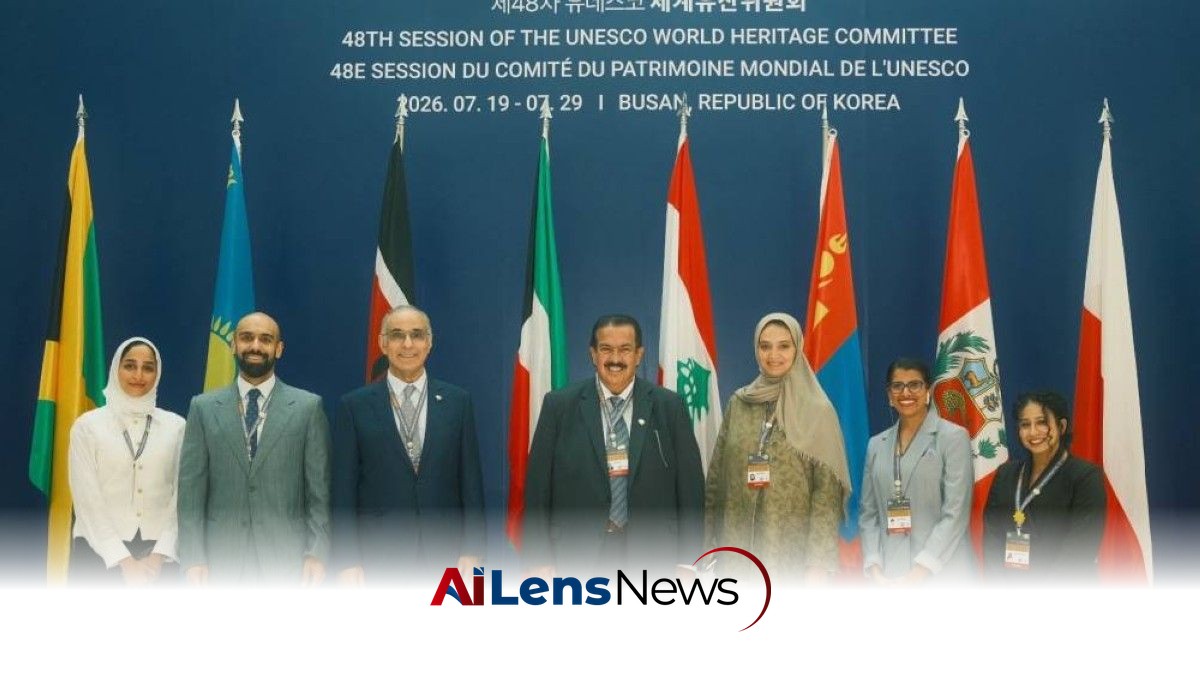



The National Council for Culture, Arts and Letters (NCCAL) of Kuwait emphasizes its commitment to UNESCO's initiatives for safeguarding cultural and natural heritage during the 48th World Heritage Committee session in Busan.
Kuwait City, Kuwait Jul 25, 2026 ALN: The National Council for Culture, Arts and Letters (NCCAL) has reaffirmed the State of Kuwait’s commitment to supporting the efforts of the United Nations Educational, Scientific and Cultural Organization (UNESCO) in protecting cultural and natural heritage. This commitment is underscored by Kuwait's active participation in international forums focused on heritage protection, which is crucial in a world where cultural identities and natural landscapes are increasingly threatened by globalization, urbanization, and climate change.
The statement from NCCAL was issued during Kuwait’s participation in the 48th session of the UNESCO World Heritage Committee, which took place in Busan, Republic of Korea, and was set to conclude on July 29. This session is significant as it brings together member states to discuss and make decisions regarding the preservation of cultural and natural heritage sites worldwide. The Kuwaiti delegation to this important meeting is headed by the country’s Permanent Delegate to UNESCO, Ambassador Dr. Ali Al-Mudhaf. The delegation also includes the Secretary General of the Council, Dr. Mohammad Al-Jassar, along with a number of specialists in the fields of cultural and natural heritage.
The World Heritage Committee is one of UNESCO’s most prominent bodies, tasked with the implementation of the 1972 Convention Concerning the Protection of the World Cultural and Natural Heritage. This convention was established to identify and protect the world’s most important cultural and natural sites, recognizing their outstanding universal value. The committee is responsible for several critical functions, including reviewing nominations for new sites to be inscribed on the World Heritage List, assessing the state of conservation of existing sites, making decisions related to their protection, and discussing policies aimed at enhancing international cooperation in heritage preservation.
Kuwait's involvement in the World Heritage Committee is particularly notable. The country won a seat on the committee, becoming one of 21 member states representing the Arab Group for a four-year term. This membership is a significant achievement, reflecting Kuwait's dedication to cultural heritage and its role in regional cooperation. The elections for this position were held at UNESCO headquarters in Paris in November 2025, indicating Kuwait's growing influence and commitment to cultural affairs on an international scale.
The importance of UNESCO's work cannot be overstated. The organization plays a pivotal role in promoting peace and security through international cooperation in education, the sciences, and culture. By safeguarding cultural and natural heritage, UNESCO helps foster a sense of identity and belonging among communities, while also promoting sustainable development through tourism and the preservation of cultural practices. The recognition and protection of heritage sites can also stimulate local economies, creating jobs and fostering community pride.
As globalization continues to reshape cultural landscapes, the role of organizations like UNESCO becomes even more critical. Many sites of cultural and natural significance face threats from development, environmental degradation, and conflict. The World Heritage Committee’s decisions can have far-reaching implications, influencing national policies and encouraging member states to prioritize heritage conservation in their agendas. For instance, the inclusion of a site on the World Heritage List can enhance its visibility and attract funding for its preservation, while also increasing awareness of its cultural significance among local populations and visitors alike.
Furthermore, the exchange of expertise and collaboration among member states is essential in addressing the challenges faced in heritage preservation. The NCCAL's commitment to enhancing its presence in international forums is a step towards fostering such cooperation. By engaging with other nations and organizations, Kuwait can share its experiences and learn from others, thereby strengthening its own heritage preservation efforts. This collaborative approach not only benefits Kuwait but also contributes to the global dialogue on heritage conservation, where countries can learn from each other's successes and challenges.
The implications of Kuwait's active role in UNESCO extend beyond cultural preservation. They also highlight the importance of cultural diplomacy in fostering international relations. By advocating for cultural heritage, Kuwait positions itself as a leader in the Arab region and beyond, promoting values of respect, understanding, and cooperation among diverse cultures. Cultural diplomacy can serve as a bridge between nations, facilitating dialogue and collaboration in various fields, including education, science, and the arts. This can lead to stronger bilateral and multilateral relationships, enhancing Kuwait's standing on the global stage.
In addition to its role in UNESCO, Kuwait has its own rich cultural heritage that it seeks to protect and promote. The country is home to various historical sites, museums, and cultural institutions that reflect its unique identity and history. The preservation of these sites is not only vital for the Kuwaiti people but also contributes to the global narrative of cultural diversity and heritage. Sites such as the Kuwait National Museum, the Sadu House, and the historical Al-Sadu weaving arts are integral to understanding the country’s past and present, and they serve as focal points for cultural education and tourism.
As Kuwait continues to engage with UNESCO and other international bodies, it is essential for the nation to develop comprehensive strategies for heritage management that involve local communities, stakeholders, and experts. This collaborative approach will ensure that heritage preservation efforts are sustainable and effective, allowing future generations to appreciate and learn from their cultural and natural heritage. Engaging local communities in the preservation process not only empowers them but also fosters a sense of ownership and pride in their cultural identity.
In conclusion, the reaffirmation of Kuwait's support for UNESCO's heritage protection efforts by NCCAL signifies a commitment to cultural cooperation and the safeguarding of our shared heritage. As the world faces increasing challenges in preserving cultural and natural sites, Kuwait's active participation in international forums and its membership in the World Heritage Committee will play a crucial role in shaping the future of heritage conservation, not just regionally, but globally as well. By prioritizing cultural heritage, Kuwait not only protects its own history but also contributes to the preservation of the world's cultural diversity, ensuring that future generations can learn from and appreciate the rich tapestry of human heritage.
To learn more about the latest developments in Cultural Events, stay updated with our exclusive reports and analyses on AILensNews.

