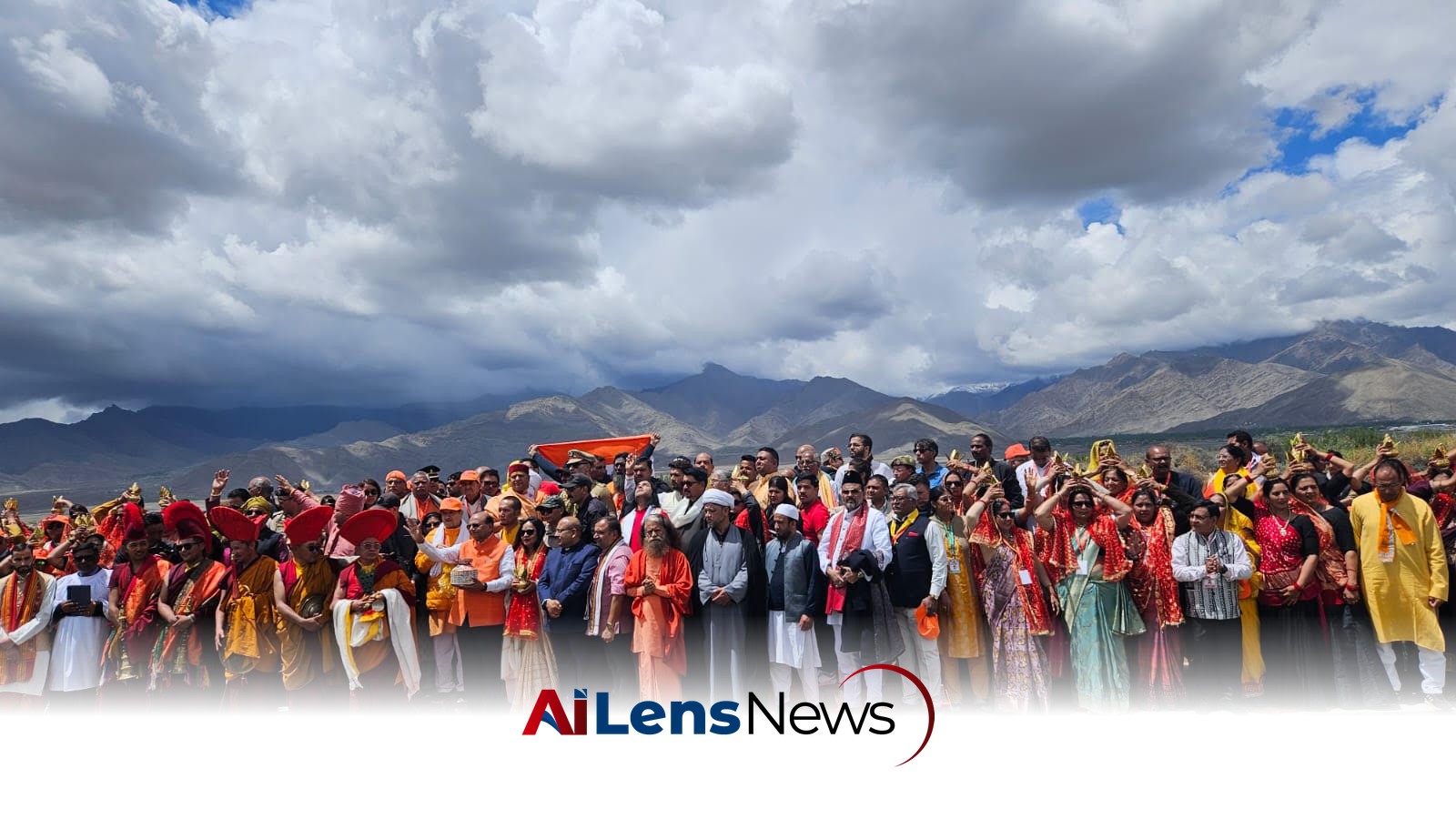


The 30th Sindhu Darshan Yatra in Ladakh highlights the significance of the Sindhu Mahakumbh as a celebration of India's civilizational heritage and national unity.
New Delhi, India Jul 21, 2026 ALN: The successful conclusion of the 30th Sindhu Darshan Yatra in Ladakh has once again highlighted the growing significance of the Sindhu Mahakumbh as a unique celebration of India’s civilizational heritage, cultural harmony, and national integration. This event, which has become a hallmark of cultural expression in the region, draws participants from diverse backgrounds, uniting them in a shared respect for the rich traditions and history that the Sindhu River embodies.
The Sindhu River, known as the Indus River in , is one of the longest rivers in Asia, flowing through China, India, and Pakistan. Its name is etymologically linked to the term 'India,' as the river was historically referred to as the 'Sindhu' by ancient civilizations. The river has been a lifeline for various communities residing along its banks, providing water, sustenance, and a means of transportation for centuries. The significance of the river extends beyond mere geography; it represents the cradle of ancient civilizations and has been a witness to the evolution of cultural practices and societal structures in the region.
Organized annually by the Sindhu Darshan Yatra Samiti, the yatra traces its origins to 1997 when the first pilgrimage was led by former Union Home Minister, L.K. Advani, and envisioned by social reformer Indresh Kumar. The initiative aimed to promote national integration and cultural awareness among the diverse populations of India. Since then, it has evolved into a national gathering honoring the sacred Sindhu River, from which India derives its name. The festival serves as a reminder of the shared heritage that binds the people of India, regardless of their regional or cultural differences.
Held at the picturesque Sindhu Ghat near Leh, the Sindhu Festival combines sacred rituals, prayers, folk performances, cultural exchanges, and interactions among artists, scholars, and devotees from across the country. This multifaceted event not only celebrates the spiritual aspects of the river but also showcases the artistic expressions of various communities. Performances by local musicians, dancers, and artisans provide a platform for showcasing the rich cultural tapestry of India, fostering a sense of pride and belonging among participants.
Against Ladakh’s dramatic Himalayan landscape, the festival has also become increasingly popular among travel enthusiasts, photographers, and spiritual trekkers seeking a meaningful blend of culture and adventure. The breathtaking scenery of the Himalayas serves as a backdrop to the festival, enhancing its appeal to those looking to immerse themselves in both nature and spirituality. Many visitors report feeling a deep connection to the land and its history, reinforcing the idea that the Sindhu Mahakumbh is not just an event but an experience that resonates on multiple levels.
With Vijay Shankar Mishra, National Vice President, Himalay Pariwar (Rastriya Swayamsevak Sangh) at the helm, the gathering also provides a platform for discussions on preserving Himalayan heritage, environmental conservation, the Kailash-Mansarovar route, constitutional recognition for the Bhoti language, and strengthening emotional bonds with India’s border regions. These discussions are crucial in the context of modern challenges faced by the Himalayan ecosystem, including climate change, deforestation, and the impact of tourism. By addressing these issues, the festival aims to foster a sense of responsibility among attendees to protect and preserve the unique environment of the Himalayas for future generations.
Reflecting on this year’s milestone celebration, Sudeep Saha, State President, Himalay Pariwar (Rastriya Swayamsevak Sangh), Maharashtra, said, ‘Standing before the ever-flowing Sindhu is a reminder that this river carries our civilization, history, and national identity. The Sindhu Mahakumbh reconnects people with these timeless values while inspiring unity across regions and cultures. As we celebrate the 30th Sindhu Darshan Yatra, I invite more people to experience the unique confluence of spirituality, heritage, and national pride at the Sindhu Darshan Festival.’ His words encapsulate the essence of the festival, emphasizing the importance of collective memory and shared identity in fostering unity among the diverse peoples of India.
Today, the Sindhu Mahakumbh stands as a distinctive celebration where faith, history, culture, and the Himalayas come together to create an unforgettable national experience. The event not only serves as a pilgrimage for many but also acts as a cultural bridge, connecting individuals from various backgrounds and regions. By participating in the Sindhu Mahakumbh, attendees engage in a collective reaffirmation of their shared heritage and values, reinforcing the idea that despite differences, there exists a unifying thread that binds all Indians.
The implications of the Sindhu Mahakumbh extend beyond the immediate celebration. As it gains popularity, it also raises awareness about the historical and cultural significance of the regions surrounding the Sindhu River. This, in turn, can lead to increased tourism, which has the potential to boost the local economy while also posing challenges related to sustainability and resource management. The festival's emphasis on environmental conservation is particularly relevant in this context, as it encourages thoughtful engagement with the natural world.
Moreover, the Sindhu Mahakumbh serves as a platform for dialogue on contemporary issues faced by the Himalayan regions, including migration, climate change, and cultural preservation. As the world becomes increasingly interconnected, the need for understanding and cooperation among diverse communities has never been more critical. The Sindhu Mahakumbh embodies this spirit of unity and collaboration, showcasing the ways in which cultural celebrations can foster dialogue and understanding among different groups.
In conclusion, the Sindhu Mahakumbh is more than just a festival; it is a vital expression of India's rich heritage and cultural diversity. Its successful execution over the past three decades underscores its importance as a unifying force in a rapidly changing world. As participants gather to celebrate the sacred Sindhu River, they not only honor their past but also pave the way for a more inclusive and harmonious future, where the values of unity, respect, and shared identity continue to thrive.
To learn more about the latest developments in Cultural Events, stay updated with our exclusive reports and analyses on AiLensNews.

