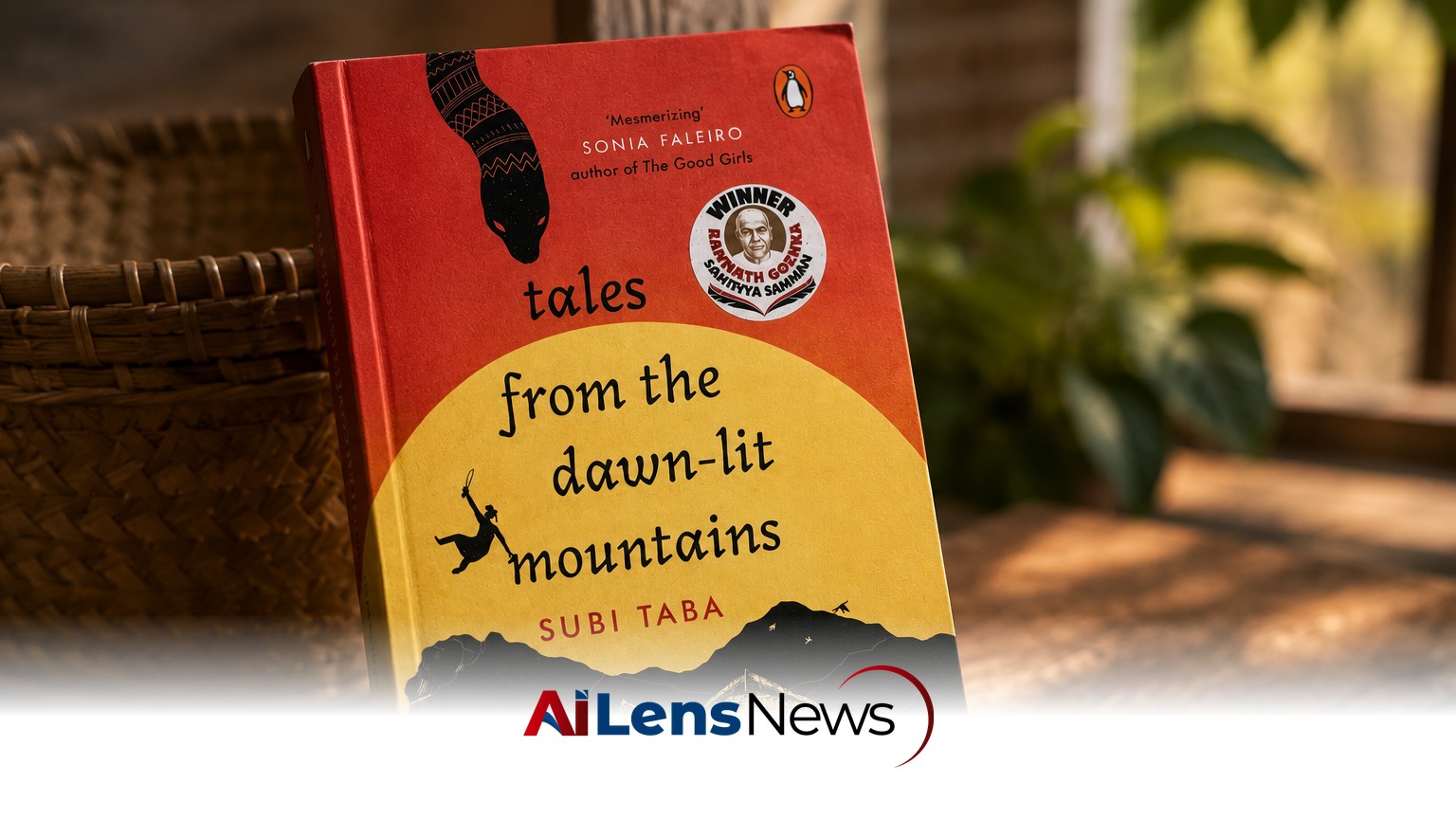


Subi Taba's book, 'Tales from the Dawn-lit Mountains,' reshapes how we view our villages, intertwining memory and nature in profound narratives.
Kohima, India Jul 23, 2026 ALN: I met Subi Taba before I read her book.
It was at the Ziro Festival of Music and Literature, an event known for its vibrant celebration of literature and music in the picturesque northeastern state of Arunachal Pradesh, India. This festival attracts a diverse array of authors, musicians, and literature enthusiasts, making it a melting pot of ideas and creativity. What struck me wasn’t simply that she had written a book. It was how she spoke about it. She reminded me of a startup founder relentlessly pitching an idea she believed the world needed.
Subi Taba's passion for storytelling was palpable. She spoke about convincing Penguin, refining her pitch, and refusing to give up until someone believed these stories deserved to exist in print. Her determination reflected a broader narrative of resilience often found in the creative journeys of many authors, particularly those from marginalized communities. In a world where mainstream publishing tends to favor certain narratives, Taba’s commitment to sharing her cultural heritage is a testament to the power of perseverance.
As someone who has built things from scratch, I recognized that obsession. Every founder has one idea they are unwilling to let go of. For Subi Taba, these were the stories. They are not just tales; they are vessels of culture, memory, and identity. Now that I have finished Tales from the Dawn-lit Mountains, I understand why.
It is a collection of worlds that have survived for generations—not in libraries or archives, but in memory. Passed down around hearths, whispered by grandparents, carried through rituals, forests, and rivers, they have endured because people believed they mattered. Oral traditions like these are crucial for preserving the histories and cultures of indigenous communities. They serve as a bridge between generations, connecting the past with the present and ensuring that the wisdom of elders is not lost.
The first thing that overwhelmed me was the imagery. Subi Taba has an extraordinary ability to make the landscape breathe. The forests are alive. Mountains remember. This vivid portrayal of nature is not merely decorative; it plays a central role in the stories, reflecting the deep connection many indigenous cultures have with their environment. Nature is not just a backdrop; it is a character in its own right, influencing the lives and destinies of the people who inhabit these landscapes.
Rivers seem to carry memory. Hornbills, cicadas, shamans, guardian spirits, and ancient villages never feel like literary inventions. They belong naturally to the world she creates. Each element is imbued with significance, drawing from the rich tapestry of beliefs and practices that characterize the cultures of Arunachal Pradesh. This authenticity allows readers to immerse themselves in a worldview that may be vastly different from their own.
Some of the stories are dark. There are headhunters driven by honour and revenge, shamans whose power extends beyond death, slave girls carrying impossible burdens, spirits that refuse to leave, and curses that continue to haunt generations. Yet these stories never read like horror. Nor do they preach. They feel like inherited memory—stories told not merely to entertain, but to preserve a way of understanding the world. This preservation of cultural narratives is vital in an age where globalization often threatens to homogenize distinct identities.
Growing up in the Sikkim Himalayas, I too heard stories from my grandmother about jungle spirits, guardian deities, and sacred places that demanded respect. Reading Taba’s stories felt strangely familiar. It wasn’t as though I was discovering another culture. It felt as though someone had finally written down stories that many of us grew up hearing but rarely see acknowledged in contemporary literature. This recognition of shared experience is important; it fosters a sense of belonging and continuity among readers from similar backgrounds.
The stories refused to leave me after I closed the book. Now, when I walk through my farm, I find myself looking differently at the stinging nettle that grows along the path. Could it, too, carry a soul? This shift in perception illustrates the profound impact literature can have on our understanding of the world around us. It encourages us to view the mundane with a sense of wonder and respect, reminding us that every element of our environment has its own story and significance.
Yesterday, a pig was slaughtered in my village. I had bought feed for that pig. I had watched it grow. It had become familiar. After reading Taba’s story, I could not look at it in quite the same way. Pork somehow did not taste the same. This moment exemplifies how literature can alter our relationship with life and death, prompting us to reflect on the ethical implications of our choices and the interconnectedness of all living beings.
The story of the slave girl and the mystery of the three souls stayed with me long after I finished reading. So did the vanished village of Pakke, watched over by its guardian python. It made me wonder whether every village has stories that have slipped away with time. Perhaps mine does too. This contemplation of lost narratives emphasizes the importance of actively seeking out and preserving local histories, as they hold the key to understanding our identity and place in the world.
The headhunters lingered in my thoughts. They remind us that these mountains were once governed by entirely different ideas of courage, justice, and survival. Taba neither romanticizes nor condemns that past. She simply allows it to exist honestly, asking readers to understand rather than judge. This balanced portrayal encourages a nuanced understanding of history, fostering empathy and insight into the complexities of human behavior and societal structures.
One story that perfectly captures the spirit of this collection is that of a Scorpio vehicle entangled in the lingering curse of a powerful shaman. It becomes a metaphor for modern life itself. We may drive new cars, build new roads, and move to cities, but perhaps we never entirely leave behind the beliefs, memories, and stories that shaped those who came before us. This metaphor resonates deeply in a rapidly changing world where technology and tradition often clash, reminding us of the importance of acknowledging our roots.
That is the achievement of this book. These are not stories preserved behind museum glass. They are living stories. Stories that continue to shape how people love, mourn, marry, hunt, and remember. Stories that remind us that nature is not merely scenery but a living presence deserving of respect. This dynamic representation of culture challenges the notion of static traditions, illustrating how stories evolve while remaining anchored in their origins.
As a journalist, I have spent much of my career chasing facts. Facts tell us what happened. They are indispensable. But they rarely tell us what people fear, what they dream about, or why certain places continue to inspire reverence long after the original stories have faded. Fiction can. In this way, Taba’s work serves as a crucial counterpoint to conventional narratives, inviting readers to engage with the emotional and spiritual dimensions of human experience.
Tales from the Dawn-lit Mountains reminds us that long before history was written down, it was spoken around fires, carried by grandmothers, whispered through forests, and remembered in stories. Those stories are not simply entertainment. They are archives of a people’s imagination. This conceptualization of storytelling as an archive emphasizes the role of literature in preserving cultural heritage and fostering community identity.
What makes this book particularly important is that it does not package Arunachal Pradesh as an exotic frontier for outsiders. It allows the reader to inhabit its worldview from within. This perspective is vital in an era where narratives about indigenous cultures are often filtered through a Western lens, leading to misrepresentations and stereotypes. Taba’s authentic voice offers a refreshing counter-narrative that celebrates the richness of her culture.
The supernatural and the natural coexist without explanation because, for generations, that is how many communities have understood the world around them. That authenticity is the book’s greatest strength. It invites readers to embrace the complexity of existence, where the boundaries between the physical and spiritual realms are fluid and interconnected.
Subi Taba has transformed oral tradition into literature without stripping it of its mystery. She has made deeply local stories feel profoundly universal. This transformation is significant as it allows readers from diverse backgrounds to find common ground in the themes of love, loss, and resilience that permeate her narratives.
When I finished the book, I wasn’t thinking about the characters anymore. I was thinking about my own village. About the forests I walk through every day. About the old stories my grandmother told me. About the spirits we stopped talking about but perhaps never stopped believing in. This introspection highlights the transformative power of literature, prompting readers to reflect on their own lives and the narratives that shape their identities.
Perhaps that is the highest compliment one can pay a writer. Not that she created unforgettable stories, but that she made me look at my own world differently. This ability to inspire change in perspective is a hallmark of impactful literature, reminding us of the profound connections that exist between our individual experiences and the stories we encounter.
I hope Subi Taba has many more books ahead of her. Because the hills of Arunachal Pradesh—and indeed, the entire Northeast—still hold countless stories waiting to be told. The potential for further exploration of these narratives is immense, and Taba’s work serves as a catalyst for future storytellers to delve into their own cultural heritages.
And after reading Tales from the Dawn-lit Mountains, I suspect many of us will return to our own landscapes wondering what stories have been quietly waiting for us all along. This lingering curiosity is a testament to the power of storytelling to ignite imagination and inspire a deeper appreciation for the rich tapestry of human experience.
To learn more about the latest developments in Literature & Books, stay updated with our exclusive reports and analyses on AiLensNews.

