

Governor KT Parnaik highlights the potential of RIWATCH to become a leading center for comparative civilizational studies and indigenous research.
Itanagar, India Jul 25, 2026 ALN: ITANAGAR, 24 Jul: Governor KT Parnaik stated that the Research Institute of World’s Ancient Traditions, Cultures and Heritage (RIWATCH) has the potential to become a global hub for comparative civilisational studies, indigenous research, and intercultural dialogue, attracting scholars, researchers, and students from across the world.
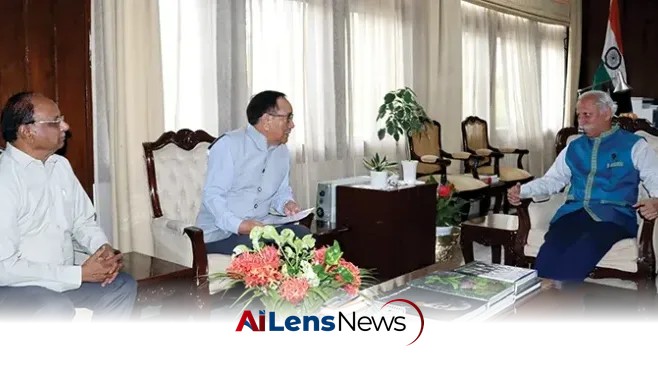
The governor made this observation during a meeting with the governing council of RIWATCH at the Lok Bhavan here on Friday. This meeting is part of a broader initiative to enhance the visibility and impact of RIWATCH on both a national and international scale. The discussion centered around the institute’s future and its role in the global academic landscape, emphasizing the need for institutions that bridge traditional knowledge with contemporary challenges.
During the meeting, they discussed the vision of elevating RIWATCH to UWATCH (University of World’s Ancient Traditions, Cultures and Heritage), envisaged as a globally recognised centre of excellence for the study, preservation, and promotion of indigenous knowledge systems, traditional cultures, heritage studies, and sustainable living practices. This transformation is seen as a natural progression for RIWATCH, which has already established a solid foundation in cultural research. The proposed change to UWATCH signifies a commitment to creating a more formal academic structure that can support advanced research and education.
“Such an institution would not only preserve humanity’s ancient wisdom but also inspire future generations to draw lessons from traditional knowledge in addressing contemporary challenges and building a more sustainable and harmonious world,” he said. This statement underscores the growing recognition of the importance of indigenous knowledge in tackling modern issues such as climate change, biodiversity loss, and social inequality. The governor's remarks highlight a shift in how societies are beginning to understand the value of integrating traditional wisdom into modern practices, particularly in the face of global crises.
He lauded RIWATCH for its 15 years of contribution to research, documentation, preservation, and promotion of the rich cultural heritage of the region. Established in 2009 in Roing, RIWATCH has emerged as one of the leading cultural research institutions in Northeast India, serving as a bridge between traditional wisdom and contemporary knowledge systems. This bridging role is particularly crucial in a region where diverse cultures and languages coexist, often facing the threat of marginalization in the face of globalization. The preservation of these diverse cultures is not merely an academic exercise; it is essential for maintaining the identity and heritage of the indigenous populations.
The governor noted that RIWATCH, through its ethnographic museum, documentation centre, centre for mother languages, research publications, audiovisual archives, and community-based initiatives, has played a vital role in safeguarding the invaluable cultural legacy of the indigenous communities of the state. The ethnographic museum, in particular, serves as a repository of artifacts and narratives that reflect the rich tapestry of local cultures, providing visitors with insights into the lives and traditions of the indigenous peoples. This museum not only serves as an educational resource but also as a platform for cultural exchange and understanding.
“RIWATCH has documented oral traditions, folk narratives, rituals, languages, and traditional ecological knowledge, and also fostered academic collaborations with national and international universities and research institutions,” he added. These collaborations are essential for enhancing the research capabilities of RIWATCH and for promoting cross-cultural exchanges that can enrich the understanding of global heritage. By partnering with other institutions, RIWATCH can leverage diverse expertise and resources, ultimately leading to more impactful research outcomes.
The governor also commended its efforts in promoting cultural empowerment, linguistic preservation, sustainable development, and community participation, thereby creating a model where heritage conservation contributes to social and economic progress. This holistic approach is increasingly being recognized as vital for the sustainable development of communities, especially in regions rich in biodiversity and cultural diversity like Northeast India. The interplay between cultural preservation and economic development is particularly significant in rural areas, where traditional practices can offer sustainable alternatives to modern industrial approaches.
Moreover, the vision for RIWATCH to evolve into UWATCH aligns with global trends towards interdisciplinary studies that combine heritage conservation with environmental sustainability and social equity. As the world faces unprecedented challenges, including climate change and social unrest, institutions that can offer innovative solutions rooted in indigenous knowledge are becoming increasingly valuable. The integration of these disciplines can lead to new methodologies and frameworks that address complex global issues more effectively.
RIWATCH Chairman Dr. Joram Begi led the council members. The meeting was also attended by RIWATCH Executive Director Vijay Swami, its academic adviser Dr. AK Tripathy, and member Tayum Tok. The presence of these key figures highlights the collaborative effort required to realize the ambitious vision for RIWATCH. Their collective expertise and commitment to cultural preservation are crucial in navigating the complexities involved in transforming RIWATCH into a global academic hub. This leadership team is tasked with not only guiding the institute’s research direction but also fostering partnerships that can enhance its global standing.
The implications of establishing RIWATCH as a global centre extend beyond academia. It has the potential to foster tourism, enhance cultural exchanges, and promote local economies through the sustainable use of cultural resources. By attracting scholars and students from around the world, RIWATCH could become a melting pot of ideas and innovations, further enriching the cultural landscape of the region. The anticipated influx of visitors and researchers could also stimulate local businesses and create job opportunities, thereby contributing to the economic vitality of the surrounding communities.
In conclusion, Governor KT Parnaik’s vision for RIWATCH reflects a growing recognition of the importance of cultural studies in addressing contemporary global challenges. As RIWATCH embarks on this transformative journey, it stands to not only preserve the rich heritage of Northeast India but also to contribute significantly to the global discourse on culture, sustainability, and social justice. The establishment of UWATCH could mark a significant milestone in the recognition of indigenous knowledge systems as integral to the future of global civilization. This evolution is not just about academic prestige; it is about empowering communities, preserving traditions, and fostering a dialogue that respects and integrates diverse cultural perspectives in an increasingly interconnected world.
To learn more about the latest developments in Cultural Events, stay updated with our exclusive reports and analyses on AiLensNews.

