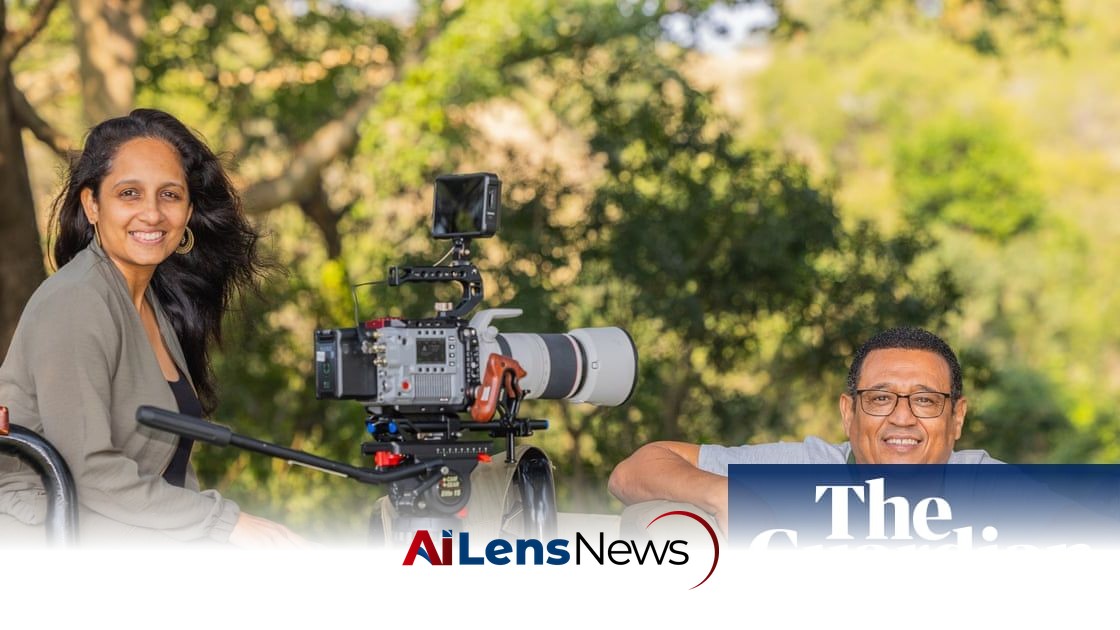


National Geographic explorers establish a dive lab to empower African filmmakers in wildlife storytelling, addressing representation gaps in the industry.
London, United Kingdom Jul 12, 2026 ALN: When Pragna Parsotam-Kok and Noel Kok created a wildlife series for South African television in 2015, they were surprised by the difficulties in accessing animals for filming and the scarcity of African wildlife documentary makers. This realization prompted them to establish the Nature Environment and Wildlife Conservation Trust (NEWF) and organize a conference for African wildlife filmmakers, the inaugural event taking place in 2017. The Koks’ initiative came at a crucial time when the representation of African narratives in wildlife documentaries was primarily dominated by non-African filmmakers. This lack of representation not only marginalized local voices but also led to a disconnect between the stories being told and the realities of the African ecosystems they depicted.
However, in 2018, the couple faced another challenge: they could not find any African underwater filmmakers to participate in a panel discussion about oceans. This search revealed a startling fact: many marine biologists in Africa were unable to swim, let alone scuba dive. This gap highlighted a significant barrier to entry for many aspiring filmmakers and scientists in the region, as practical skills related to underwater exploration were almost non-existent among local talent. The Koks recognized that this limitation not only affected documentary filmmaking but also hindered broader engagement with marine conservation efforts across the continent.
In response, the Koks organized NEWF’s first dive “lab” for filmmakers and scientists in 2019. This innovative program aimed to provide hands-on training and experience in diving, thus equipping participants with the skills necessary to capture underwater narratives authentically. The initial cohort of 10 participants has since grown to nearly 400 fellows from 37 African countries and 13 additional nations in the global south, as the Koks strive to transform the wildlife documentary landscape. This exponential growth signifies a burgeoning interest in wildlife filmmaking among Africans, which could lead to a more diverse range of stories and perspectives being shared globally.
“I like to joke that black African nature, environment, and wildlife filmmakers were rarer than most of the species scientists and conservationists were trying to protect on the continent,” Noel Kok remarked. He emphasized the importance of authentic storytelling, stating, “The fact that we were excluded from telling the stories of Africa’s wildlife felt incomplete.” This sentiment underscores the broader implications of representation in media; when local filmmakers tell their own stories, they bring a depth of understanding and cultural context that is often absent in externally produced content.
Since then, over 200 divers have been trained in Sodwana Bay, located on South Africa’s northeast coast, which is home to the continent's southernmost tropical coral reefs. The region is not only significant for its biodiversity but also serves as a vital area for marine conservation efforts. Additionally, hundreds of fellows have received training in wildlife filmmaking on land at Bayala, a private game reserve that offers a rich tapestry of African wildlife and habitats for storytelling. By providing training in both marine and terrestrial environments, NEWF is fostering a generation of well-rounded filmmakers who can tackle a variety of conservation issues.
In 2021, NEWF expanded its offerings to include composition workshops. “One of my biggest frustrations is the lion chasing the buck on the African plain, with Mozart and his 50-piece orchestra going crazy in the background,” Kok noted. “We love Mozart and Beethoven, but music should be representative of the region.” This initiative aims to ensure that the soundscapes accompanying wildlife documentaries resonate with the cultural and environmental context of Africa, further enhancing the authenticity of the stories being told.
Two years later, a film about Botswana’s Okavango Delta, featuring music composed by NEWF fellows including local musician Koolkat Motyiko, won the award for best original score at the Jackson Wild film festival, triumphing over a score by renowned composer Hans Zimmer for David Attenborough’s Frozen Planet II. This recognition not only highlights the creative talents emerging from NEWF’s programs but also signifies a shift in the global wildlife documentary landscape towards valuing local voices and perspectives.
In 2019, the Koks met local diver Silindile Mbuyazi, who sought to dive to find her brother's body, lost in Sodwana Bay in 2015. Despite warnings from her community about a mythical seven-headed snake in the waters, she began her diving journey in 2018. Mbuyazi's story is emblematic of the personal connections many individuals have with the ocean, as well as the cultural narratives that can sometimes deter engagement with marine environments. While she did not find her brother, Mbuyazi discovered a new passion for the ocean, even recognizing a green turtle as her grandmother, who raised her and passed away in 2010. “I found myself,” Mbuyazi, now 37, shared. “I fell in love with the ocean.” Her journey reflects the transformative power of diving, as it not only allowed her to connect with her personal history but also opened doors for her to contribute to marine conservation efforts through education and filmmaking.
In 2022, Mbuyazi began teaching diving with NEWF, and she and the Koks recognized the need for a dedicated base to reduce costs and facilitate longer workshops. That year, NEWF secured annual funding of $1 million to $1.5 million from National Geographic for the Africa Refocused program, a five-year initiative involving workshops, residencies, and the construction of a dive and filmmaking center in Sodwana Bay. This funding represents a significant investment in the future of wildlife filmmaking in Africa, providing resources that will help sustain and expand NEWF’s mission.
Named eKhaya, meaning “home” in Zulu, the center opened in November 2023 on land belonging to Mbuyazi's grandmother. It features an editing suite, a 3.5-meter dive pool, and 12 rooms for fellows. The establishment of eKhaya not only provides a physical space for training and collaboration but also embodies the cultural significance of home and community in the context of environmental stewardship. It serves as a hub for creativity, learning, and the sharing of stories that resonate with local and global audiences.
In mid-June, eKhaya buzzed with activity. An induna (a traditional Zulu official) was touring the facility, while a group of musicians rehearsed in the recording studio for a performance at the National Geographic Explorers festival in Washington, D.C. This event underscores the growing recognition of the cultural contributions being made by African filmmakers and artists in the global conservation narrative. Local interns, taught by staff who had only learned to swim the previous year, were learning to swim and eventually dive. NEWF currently has 30 interns in its second 12-month cohort, working on projects ranging from volunteering with elderly locals to conducting rock pool research. This hands-on approach not only empowers young people but also fosters a sense of community and responsibility towards local ecosystems.
Meanwhile, the Koks are negotiating new funding from National Geographic and have aspirations for various projects, including acquiring a dive boat and constructing a six-person fellows’ house in Bayala. These developments could further enhance the capacity of NEWF to train and support aspiring filmmakers, ensuring that the next generation of wildlife documentaries is rich in local knowledge and perspectives.
Early the next day, Ethiopian filmmaker Elshadye Berhanu crouched on the side of an adapted safari vehicle, her lens focused on six cheetahs—two mothers and their juvenile cubs. “It’s very uncommon to see two female cheetahs bonding together and raising their children,” Berhanu noted, as she participated in a two-month NEWF residency to create a film about the cheetahs and another about Mbuyazi, which is set to be completed this year. Berhanu’s work exemplifies the potential for NEWF fellows to document unique wildlife behaviors that may have been overlooked in traditional documentaries, thus contributing to a richer understanding of African wildlife.
Reflecting on her experience, Berhanu expressed gratitude for the practical and creative skills she gained since attending a one-week NEWF workshop in November 2024. “With the cheetahs’ story, when I’m staying with them, I understand each and every part of it—it’s very deep,” she said. “Being able to film that, from your eyes, it just makes me happy.” Her sentiment reveals the profound connection that filmmakers can develop with their subjects, leading to narratives that resonate deeply with audiences. As NEWF continues to grow and evolve, it stands as a testament to the power of local voices in wildlife storytelling and the importance of fostering a new generation of conservationists and filmmakers in Africa.
To learn more about the latest developments in Film & Cinema, stay updated with our exclusive reports and analyses on AiLensNews.

