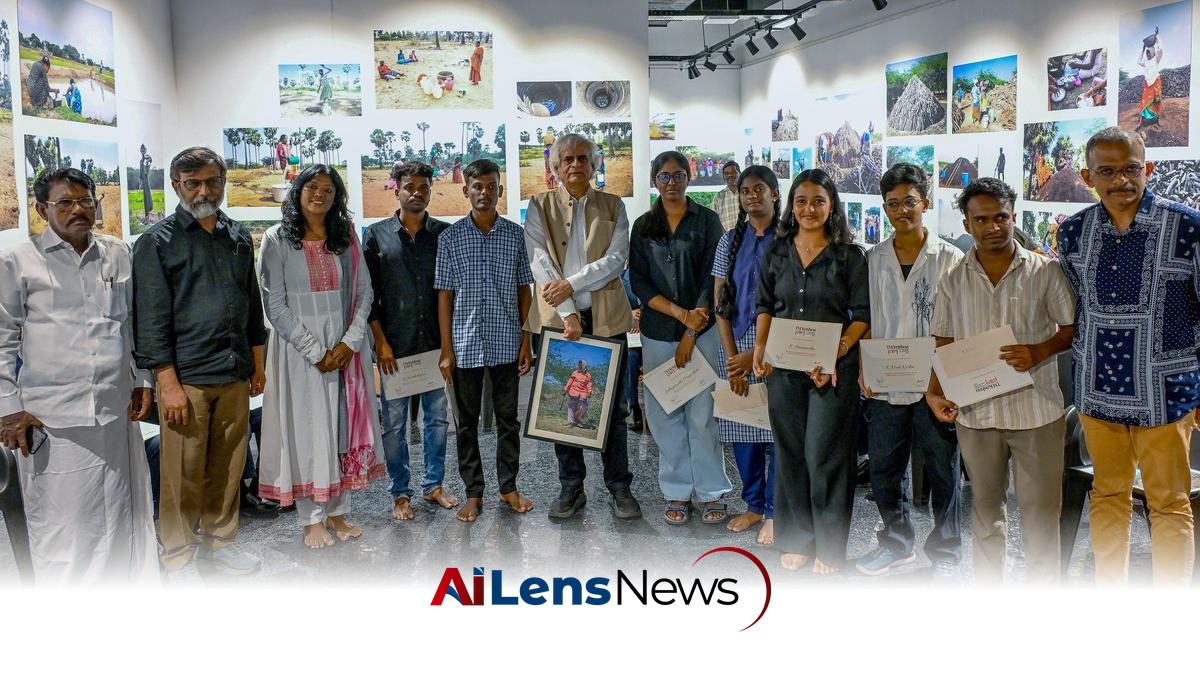


The T.M. Krishna–PARI Award 2026 honors seven young photojournalists for their impactful contributions to art and journalism, presented in Chennai.
Chennai, India Jul 11, 2026 ALN: The T.M. Krishna–PARI Award 2026 serves as a significant recognition within the realms of art and journalism, particularly focusing on the contributions of young photojournalists who strive to amplify the voices of historically marginalized communities. This award is not merely a recognition of talent but also an encouragement for emerging artists to continue their important work in documenting social issues through the lens of photography. The award ceremony took place at the Lalit Kala Akademi in Chennai, a prominent venue known for promoting the arts in India, and was attended by notable figures from various fields.
The award was presented to seven young photojournalists: K. Mukesh, Karthikeyan R., Keerthi S., Hairunisha K., Noor Nisha K., K. Ravikumar, and Subagomathi Muppidathi. Each of these individuals has shown remarkable dedication to their craft, capturing compelling narratives that resonate with the experiences of underrepresented groups. Their training was overseen by acclaimed photographer M. Palani Kumar, who is known for his commitment to social issues and has played a pivotal role in nurturing young talent through the People's Photographers Collective. This collective focuses on empowering photographers to tell stories that are often overlooked by mainstream media.
The recognition provided by the T.M. Krishna–PARI Award is significant not only in terms of the accolade itself but also in the financial support it offers. Each awardee received a cash prize of ₹30,000, which acknowledges their hard work while providing them with resources to further their artistic endeavors. This financial support can be crucial for young photographers who often face challenges in funding their projects, especially those that require extensive travel or resources to document social issues effectively. The ability to access funds can make a substantial difference in the quality and reach of their work, allowing them to explore diverse narratives and share them with broader audiences.
During the award ceremony, T.M. Krishna, a renowned Carnatic musician and author, emphasized the importance of the award in inspiring the recipients to continue their work. He stated,
"The idea is that this award is just a little step to inspire them to do more and thank them also for what they did; also see them do much more in this intersection of photography and journalism."This sentiment reflects a broader understanding of the role of art in society, where photography can serve as a powerful tool for advocacy and change. Krishna's words highlight the transformative potential of art and journalism when they intersect, creating a platform for voices that are often silenced or overlooked.
The event also featured a display of photographs by another group of young photographers trained by Mr. Palani Kumar. Veteran journalist and author P. Sainath commented on the significance of the displayed works, noting that they captured the essential role women and girls play in water collection across the country, stating,
"In this country, 80% of water collection time is by women and girls and the photographs perfectly capture that."Sainath's observation highlights a critical social issue, as the burden of water collection often falls disproportionately on women, affecting their education and economic opportunities. By showcasing such themes, these young photographers contribute to raising awareness about gender disparities and the everyday struggles faced by women in rural and urban settings. The visual representation of these issues serves not only to inform but also to evoke empathy and understanding among viewers, prompting conversations that can lead to social change.
The event also included speeches from other distinguished guests, such as writer and journalist Jeyarani and human rights activist Thirumurugan Gandhi. Their participation underscores the interdisciplinary nature of the event, where art, journalism, and activism intersect. The involvement of such figures further legitimizes the work of the young photographers and emphasizes the importance of storytelling in advocating for social justice. Their presence at the ceremony illustrates a collective recognition of the value that photography and journalism hold in shaping public consciousness and influencing policy discussions.
Another batch of Mr. Kumar's students also exhibited their works, which depicted the lives of workers engaged in various forms of labor, including salt-pan work, palmyra product collection, and wood charcoal production. This exhibition served as a poignant reminder of the labor that often goes unnoticed in society, highlighting the dignity and struggles of workers in these sectors. The portrayal of these subjects not only humanizes their experiences but also invites viewers to reflect on the socioeconomic conditions that shape their lives. By focusing on the narratives of laborers, the photographers challenge the often romanticized views of work and bring to light the harsh realities faced by many.
Mr. Palani Kumar, who proposed the vote of thanks, has been instrumental in fostering a community of socially conscious photographers. His efforts through the People's Photographers Collective aim to create a platform where young artists can explore their creativity while addressing pressing social issues. This collective not only provides training but also encourages collaboration among photographers, enabling them to share resources and ideas, which is vital in a field that often relies on individual narratives. By building a supportive network, Kumar is helping to cultivate a generation of photographers who are not only skilled in their craft but also aware of their social responsibilities.
The T.M. Krishna–PARI Award is part of a larger movement to recognize and support the arts as a medium for social commentary and change. In a world increasingly dominated by digital media and rapid information consumption, the role of photography in conveying complex stories and emotions remains invaluable. Awards like these not only highlight the importance of visual storytelling but also encourage a new generation of artists to engage with their communities and address societal challenges through their work. The recognition of young photojournalists through this award is a testament to the belief that art can be a catalyst for dialogue and transformation.
In conclusion, the T.M. Krishna–PARI Award 2026 represents a significant step in acknowledging the contributions of young photojournalists who are dedicated to telling the stories of marginalized communities. As these artists continue to develop their skills and expand their narratives, the impact of their work will likely resonate beyond the confines of the art world, influencing public discourse and fostering greater awareness of the issues that affect many in society. The support and recognition they receive through such awards are crucial in empowering them to pursue their passion and make a meaningful difference through their art. The T.M. Krishna–PARI Award not only celebrates the achievements of these young talents but also reinforces the idea that photography is a vital tool for social change, capable of inspiring empathy and action in the face of injustice.
To learn more about the latest developments in Visual Arts, stay updated with our exclusive reports and analyses on AiLensNews.

