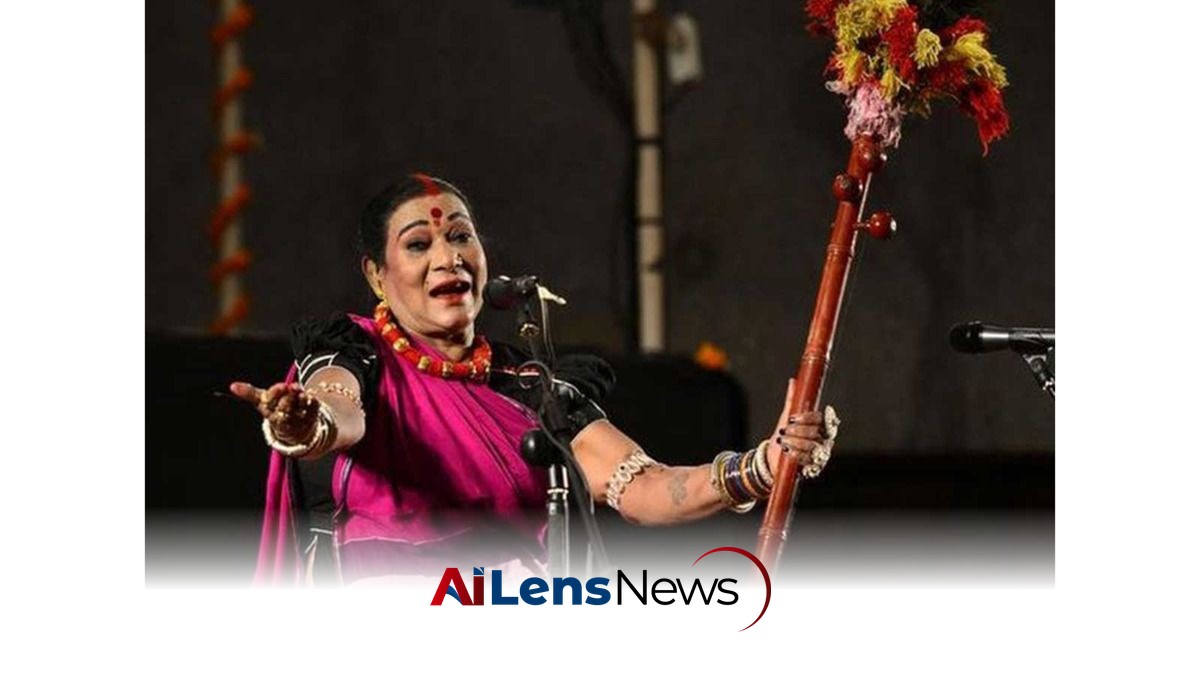


Padma Vibhushan awardee Teejan Bai, a renowned exponent of Pandavani, passed away in Raipur after a prolonged illness, leaving a significant void in Indian folk art.
Itanagar, India Jul 12, 2026 ALN: Padma Vibhushan awardee and renowned Pandavani exponent Teejan Bai died in Raipur on July 5, after a prolonged illness. She was 72.
According to reports, the veteran folk artist had been undergoing treatment at AIIMS Raipur for several weeks. Her health deteriorated in the early hours of Sunday, and she passed away at around 3.15 am.
Chhattisgarh Chief Minister Vishnu Deo Sai confirmed her death and paid tribute to her contribution to Indian folk traditions. He said Teejan Bai had earned some of the country's highest civilian honours and had taken the cultural heritage of Chhattisgarh to audiences across India and abroad.
Born on April 24, 1956, in Ganiyari village of Durg district, Teejan Bai emerged as one of India's most celebrated folk performers. She made her public debut at the age of 13 and devoted more than five decades to preserving and promoting Pandavani, the traditional musical storytelling form based on episodes from the Mahabharata.
Pandavani is a unique narrative art form that combines music, dance, and drama, originating from the state of Chhattisgarh. The performances revolve around the epic tales of the Mahabharata, with a focus on the characters and their moral dilemmas, often reflecting contemporary issues. This art form serves not only as entertainment but also as a means of imparting moral lessons and cultural values to the audience.
Teejan Bai is widely credited with breaking long-standing gender barriers in the art form. At a time when women traditionally performed Pandavani in the seated Vedamati style, Teejan Bai became the first woman to perform in the standing Kapalika style, a format that had largely been associated with male performers. This transition was significant, as it not only showcased her talent but also challenged the patriarchal norms that had dominated the art form for centuries.
Her performances introduced Pandavani to audiences across Asia, Europe, and other parts of the world, helping bring wider recognition to Chhattisgarh's folk heritage. Despite facing social opposition during the early years of her career, she remained committed to the tradition and inspired generations of artists. Her resilience and dedication to her craft made her a role model for many aspiring performers, especially women in the arts.
Teejan Bai's influence extended beyond her performances. She was instrumental in reviving interest in Pandavani, which had seen a decline in popularity. Through her innovative storytelling techniques and expressive performances, she breathed new life into the art form, attracting younger audiences and encouraging them to explore their cultural roots. She conducted workshops and training sessions, nurturing a new generation of Pandavani performers.
Over the years, Teejan Bai received several prestigious honours for her contribution to Indian folk culture, including the Padma Shri, Padma Bhushan, Padma Vibhushan, and the Sangeet Natak Akademi Award. These accolades reflect not only her artistic excellence but also her role as a cultural ambassador for India. She was recognized for her ability to convey complex emotions and narratives through her performances, making the ancient tales of the Mahabharata accessible and relevant to contemporary audiences.
Her legacy is also marked by her commitment to social causes, particularly in advocating for women's rights and empowerment. Teejan Bai often used her platform to address issues faced by women in society, encouraging them to pursue their passions and break free from societal constraints. Her life and work have inspired many to challenge gender stereotypes in various fields, particularly in the performing arts.
The impact of Teejan Bai's passing will be felt deeply within the cultural community of Chhattisgarh and beyond. Her contributions to Pandavani and Indian folk traditions have left an indelible mark, and her absence will be keenly felt by her peers, students, and admirers. Many artists and cultural activists are likely to honor her memory by continuing her work in promoting and preserving traditional art forms.
In recent years, there has been a renewed interest in folk arts across India, with various initiatives aimed at reviving and promoting traditional performances. Teejan Bai's legacy will serve as a guiding light for these efforts, reminding us of the importance of preserving cultural heritage while also adapting to the changing times. Her life story exemplifies the power of art to transcend boundaries, challenge norms, and inspire change.
The art of Pandavani itself has roots that extend back to the oral traditions of storytelling in India, where tales from epics like the Mahabharata were passed down through generations. This art form not only entertains but also educates, providing audiences with insights into moral dilemmas and ethical questions that resonate even today. By performing these stories, Teejan Bai not only kept the tradition alive but also made it relevant to modern audiences, ensuring that the lessons of the past continue to be shared.
As tributes pour in from across the country, it is evident that Teejan Bai's influence will endure. Her contributions to the arts and her role as a pioneer for women in performance will continue to inspire future generations. The cultural landscape of India is richer for her presence, and her legacy will be celebrated for years to come. The loss of such a prominent figure in the arts raises important questions about the future of traditional art forms and the need for continued support and recognition of artists who dedicate their lives to preserving cultural heritage.
In the wake of her passing, discussions about the importance of folk arts and the role of women in these traditions are likely to gain momentum. Teejan Bai's life serves as a reminder of the barriers that still exist and the work that remains to be done in promoting gender equality and empowering women within the arts. Her story is one of perseverance, talent, and the transformative power of art, and it will undoubtedly inspire future generations to pursue their artistic passions and challenge societal norms.
To learn more about the latest developments in Performing Arts, stay updated with our exclusive reports and analyses on AiLensNews.

