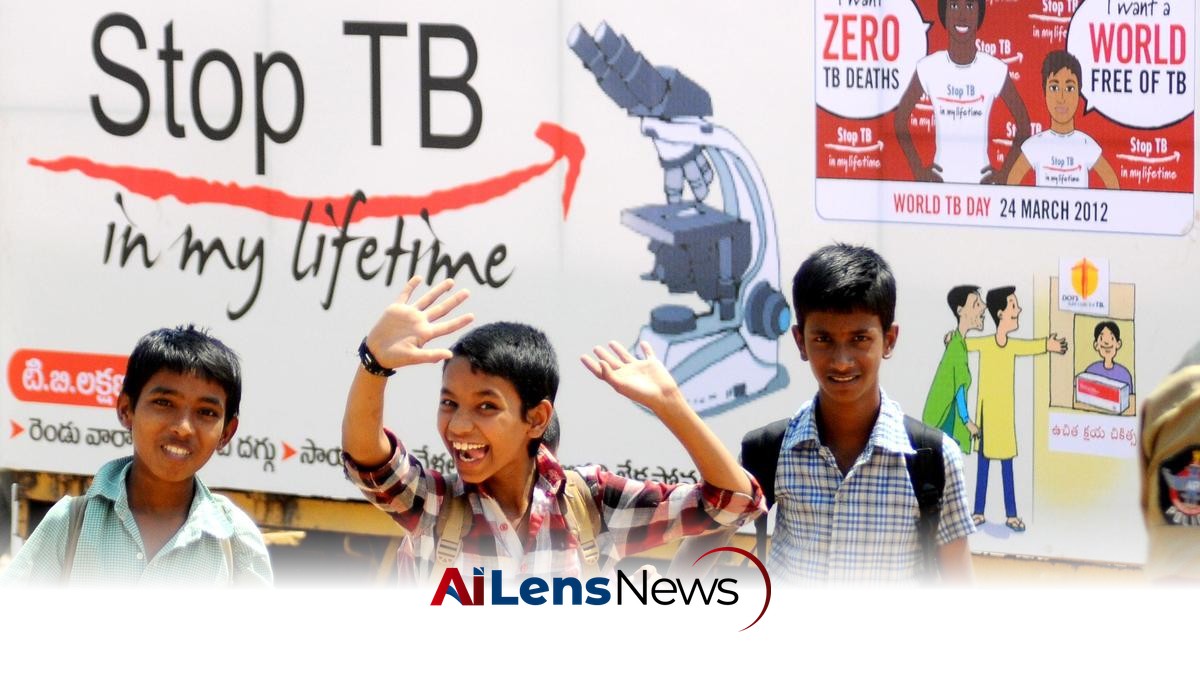


Diagnosing childhood TB in India remains challenging due to vague symptoms, stigma, and reliance on private healthcare.
New Delhi, India Jul 4, 2026 ALN: When Anika Khanum*, a 12-year-old from Kayakuchi, about 10 km from Barpeta town in Assam, began having a cough and high fever in December 2025, her parents first took her to a local private doctor. Anika hails from an agrarian family of seven. All seven shared a single room that doubled as a bedroom, living room, and makeshift kitchen.
“We would hear Anika coughing through the night. She would also have chills and tremors. The bed we shared would be wet with sweat when we checked in the morning,” said her mother.
The local doctor diagnosed her with typhoid, after a Widal test. She received injections for 14 days, to no avail. Her fever and cough persisted. “There was no X-ray facility at the clinic,” said Anika’s mother. Anika’s older brother Abdul, 17, had been treated for TB just a year earlier, according to her parents. They shared this information with the doctor, but TB was not suspected.
After a month of suffering—during which Anika sat for her class 7 final exams—her parents took her to another private doctor, who prescribed antibiotics and cough syrup. Another month passed before her oldest brother, who worked at a pharmacy outside town, visited and took her to Barpeta District Hospital, 24 km away. There, Anika received her first X-ray, which showed signs of TB.
After another month, Anika underwent sputum testing, and by March, the results confirmed drug-resistant TB. She was immediately started on treatment. Two months later, her fever has subsided and she is able to eat. “She looks much better now,” her mother said.
Anika’s case is not isolated. In India, diagnosing childhood TB is fraught with challenges.
India bears the world’s largest burden of childhood tuberculosis, with an estimated 3.3–3.4 lakh children developing the disease each year—nearly 28% of the global total. However, children account for only about 6% of TB cases notified to the National TB Elimination Programme (NTEP), highlighting the persistent challenges to diagnosing and detecting the condition.
While a high suspicion of TB was warranted in a patient like Anika, who lived in an overcrowded home and had a brother recently treated for TB, her diagnosis was delayed for months. “For a patient with cough and fever for more than two weeks, especially in a country like India, TB becomes one of the top things a doctor thinks of. However, it is not very straightforward when it comes to children,” says Swathi Krishna, a public health doctor and former consultant with the NTEP.
Although Anika had a cough—a classic symptom of TB—many children do not. “Many simply have weight loss, poor appetite and other vague symptoms, so it becomes difficult to identify the right patients,” Dr. Swathi says.
Stigma also contributes to delays. “As soon as parents hear the word ‘TB’, they abandon one doctor and go to the next. Only after two or three doctors suggest testing do they agree. By then, weeks have been lost,” says Mridul Bharati Nath, district TB officer, Kamrup Metropolitan, Assam.
Even though the government has strengthened diagnostics under the NTEP, parents often take children to private doctors first. While government initiatives in Assam and elsewhere have tried to strengthen links with private practitioners to encourage reporting, referrals and for training sessions in diagnosis, efforts have met with only limited, uneven success.
According to Dr. Swathi, most patients receive a diagnosis only at the third centre they visit. “This is definitely worse for children, from what I have seen,” she says.
Patient pathway studies in India have found that TB patients typically consult two to three healthcare providers before receiving a diagnosis. No such studies, however, have been done on children so far.
While Anika was old enough to produce sputum for testing, many younger children cannot. “Most children cannot cough out sputum; they only spit out saliva,” says Dr. Nath. “When that happens, tests come back negative because TB bacteria are not present in saliva. To obtain sputum, we may perform a bronchoscopy under anaesthesia or collect gastric aspirates through a tube inserted into the stomach,” he says.
Parents are often apprehensive about these procedures. “These tests rely on the assumption that the child has swallowed sputum that can be recovered from the stomach. They are also technically-demanding procedures that many peripheral facilities are not trained to perform well,” says Dr. Swathi.
Yet avoiding microbiological testing has consequences.
Anika’s sputum test showed resistance to rifampicin, one of the key drugs used to treat TB. Her regimen was modified accordingly, replacing rifampicin with levofloxacin—a decision that would not have been possible without laboratory confirmation.
However, many parents decline invasive tests, forcing doctors to rely on chest X-rays or Mantoux testing alone. This can lead to uncertainty about whether children are receiving the most appropriate treatment.
Worse still is when TB affects organs outside the lungs. Known as extrapulmonary TB, it can affect almost any part of the body. In children, one of the most common forms is lymph node TB.
When Aminul*, the 11-year-old son of stonemasons living about 20 km from Barpeta town, developed a swelling on the left side of his neck, his mother became worried. “It kept increasing in size for a few months and began oozing pus,” she says. Aminul had also lost considerable weight during that time.
His mother took him to a private doctor, but they could not make a diagnosis. They suggested a biopsy. “They warned me it could be cancer,” she says.
“We got a biopsy and the report was negative for TB,” she says. But it was not cancer either. The doctor ultimately started Aminul on TB treatment despite the negative report. This is often the case with extrapulmonary TB, where laboratory tests can frequently come back negative.
“I was very anxious because we did not have a definite diagnosis. I wasn’t sure if he would get better at all,” his mother says.
Today, Aminul has completed treatment. He has been back in school for four months, as TB becomes non-infectious after two months of appropriate treatment.
“My friends were excited to have me back,” he says. “They knew about my diagnosis. They didn’t care. They only wanted to play with me.”
Anika’s experience has been different. Even among children, the stigma of TB is starkly shaped by gender.
“I am worried because I haven’t started my period yet,” she says. “My mother is scared it is because of TB. She worries about who will marry me if something goes wrong later.”
Despite this, Anika’s brothers remain hopeful. “I have seen people in my village take the medicines and completely recover. Even I got better,” says Abdul. “We think TB is a treatable disease, and that Anika will get better too.”
(*Names have been changed to protect privacy)
(Dr. Christianez Ratna Kiruba is an internal medicine physician and a freelance health journalist based in Guwahati, Assam.)
To learn more about the latest developments in Corporate & Industry Insights, stay updated with our exclusive reports and analyses on AiLensNews.

