

Explore the implications of lifted gas curbs in India, highlighting benefiting sectors and future energy resilience strategies.
New Delhi, India Jul 6, 2026 ALN: On July 4, 2026, the Indian government announced the lifting of emergency curbs that had been imposed on the supply of natural gas during the West Asia crisis that began in March of the same year. The decision was made in light of a ceasefire and ongoing negotiations in the region, along with the resumption of sea traffic through the strategically important Strait of Hormuz, which is a critical passage for global oil and gas shipments. The lifting of these restrictions aims to restore gas supplies to essential sectors including fertilizer plants, refineries, distributors, and various industrial users. The Petroleum and Natural Gas Ministry issued a notification amending the Natural Gas (Supply Regulation) Order, 2026, which previously prioritized the sale of domestically produced natural gas and imported Liquefied Natural Gas (LNG) based on a priority list established during the U.S.-Israel conflict with Iran.
In the context of the crisis, on March 12, Union Minister for Petroleum and Natural Gas Hardeep Singh Puri presented a detailed “immediate priority sequence” to Parliament, outlining how gas supplies would be managed. Under this scheme, domestic piped gas for households and Compressed Natural Gas (CNG) for vehicles were guaranteed 100% supply without any cuts. Industrial and manufacturing consumers were allocated up to 80% of their average gas consumption over the previous six months, while fertilizer plants were earmarked for 70% of their usual supply to safeguard agricultural inputs ahead of the crucial sowing season. Refineries and petrochemical units faced managed reductions in supply, with gas redirected to higher-priority sectors, reflecting the government's strategy to balance needs during a time of crisis.
The decision to relax the restrictions comes after the government took a series of measures aimed at improving the overall supply of gas in response to an enhanced supply situation. On June 25, the government reinstated the supply of industrial and commercial LPG to levels that existed prior to the outbreak of the West Asia crisis. The Petroleum Ministry indicated that this move would provide significant relief to industrial and commercial LPG consumers by removing all sectoral restrictions on the supply of non-domestic packed LPG, thereby restoring supplies to pre-crisis levels.
The lifting of gas curbs is expected to yield significant benefits for various sectors, particularly refineries, city gas distributors, and industries such as ceramics that rely heavily on a stable supply of natural gas at reasonable prices. According to Prashant Vashisht, a senior vice-president at the ratings agency ICRA, the primary beneficiaries of this policy change will be industrial and commercial users of natural gas, as supplies to fertilizer units and domestic users are now largely normalized.
Vashisht elaborated on the challenges faced by different sectors during the emergency measures, noting that city gas distributors struggled to meet the demands of their industrial and commercial clients. He highlighted that certain industries were unable to secure even alternative fuels to maintain operations. For example, hotels had to halt the preparation of food items that required significant energy input. Additionally, gas supplies to sectors such as ceramics, power, sponge iron, and petrochemicals were severely curtailed. With the lifting of restrictions, factories that had been operating at reduced capacity can now potentially ramp up production as fuel supplies become available.
During the peak of the West Asia crisis in March, the ceramic manufacturing units in Gujarat's Morbi district were particularly hard hit, with reports indicating that approximately 600 factories and around 400,000 workers faced adverse impacts due to shortages of propane and natural gas, both of which are critical in the production of ceramics.
Fertilizer plants are known to be the largest consumers of LNG in India. According to a report published in July 2025 by the Institute for Energy Economics and Financial Analysis, the fertilizer sector has accounted for nearly all of India’s LNG demand growth since the fiscal year 2016. In earlier discussions, Vashisht noted that approximately 30% of natural gas consumption is utilized for fertilizer production, while power generation accounts for 13%, and city gas distribution makes up 21% of the total consumption.
The production of urea, which contains around 46% nitrogen and is the most commonly used nitrogen fertilizer, involves converting natural gas (methane) into ammonia and subsequently combining it with carbon dioxide. This energy-intensive process underscores the critical role that LNG plays in fertilizer manufacturing.
It is important to distinguish between LPG (Liquefied Petroleum Gas) and LNG (Liquefied Natural Gas). LPG, which is predominantly used as cooking gas in India, is composed of propane and butane, and is stored as a liquid under pressure in cylinders. India imports approximately 60% of its LPG, and during the crisis when supplies via the Strait of Hormuz were disrupted, the country turned to the U.S. for LPG, primarily sourcing it from the Gulf coast.
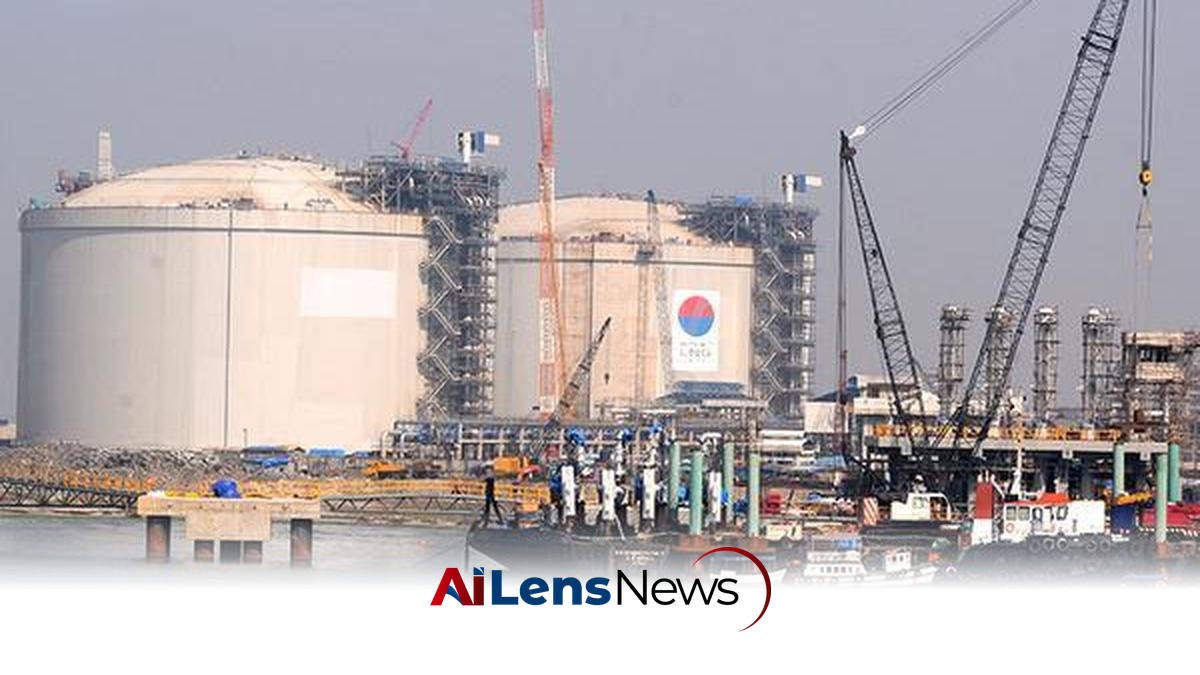
On the other hand, LNG is primarily composed of methane. It is cooled to around -160°C to liquefy it, allowing for transportation in specialized tankers. Once it reaches port terminals, LNG is re-gasified in vaporizers (heat exchangers) before being distributed through pipelines. India imports about half of its LNG, with a significant portion traditionally sourced from Qatar under long-term contracts. However, following the conflict that affected Qatar's gas fields, the country’s LNG exports dwindled, leading India to diversify its sources, with the U.S. (26%), Oman (24%), Nigeria (22%), and Angola (16%) emerging as major suppliers.
In light of the recent developments, India has been actively working to diversify its energy sources to enhance energy security. As Union Minister Hardeep Singh Puri noted in a recent blog post, the expansion of India's crude import basket from 27 countries to 41, the doubling of import terminals, and the establishment of pipelines and reserves over the past decade under Prime Minister Modi's leadership were crucial in maintaining energy supply during the crisis when the Strait of Hormuz was closed. These measures have proven to be instrumental in ensuring that the lights remained on across the country.
The path forward involves a focus on capacity building and resilience in the energy sector. Puri emphasized the importance of learning from the recent experience, stating that the government will work on building additional capabilities to further strengthen India's energy resilience. This includes enhancing infrastructure, diversifying supply chains, and investing in renewable energy sources to mitigate the risks associated with geopolitical tensions that can disrupt energy supplies. As the global energy landscape continues to evolve, India's proactive approach to energy security will be vital in ensuring a stable and sustainable energy future.
To learn more about the latest developments in Corporate & Industry Insights, stay updated with our exclusive reports and analyses on AiLensNews.

