

Wayanad faces escalating ecological crises and deadly landslides due to unscientific development and policy conflicts. Heavy rains exacerbate the risks, highlighting the need for sustainable practices.
New Delhi, India Jul 9, 2026 ALN: Wayanad is a landscape structurally holding its breath. For anyone tracking the changing terrain of the Western Ghats, this picturesque high-range district in Kerala has rapidly transitioned from a misty haven into a zone of cascading ecological crises. The Western Ghats, a UNESCO World Heritage Site, is known for its rich biodiversity, including numerous endemic species of flora and fauna. However, it has been facing severe environmental challenges due to climate change, deforestation, and unregulated development.
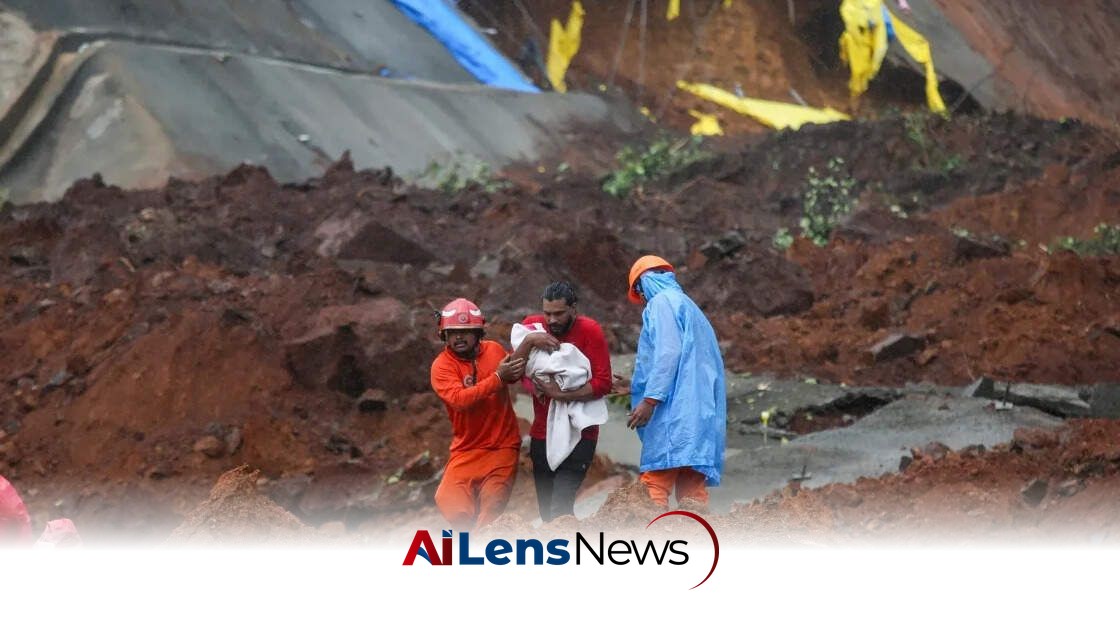
The most recent warning shot echoed through the valleys last week at the construction site of the multi-crore Anakkampoyil–Kalladi–Meppadi twin-tube tunnel road project near Meenakshi Bridge. Following a relentless deluge of over 225 millimetres of rain, a massive mountain flank gave way, burying labor camps, heavy machinery, and engineering staff under feet of suffocating slush. This incident not only highlights the dangers of construction in ecologically sensitive areas but also raises questions about the adequacy of safety measures and risk assessments in place for such projects.
Six lives were lost and two individuals remain missing. The VD Satheesan-led state government classified the event as a tragic consequence of unscientific development, pointing out that massive mounds of excavated earth had been left stacked right at the mouth of the tunnel before the monsoon arrived. This situation underscores the critical need for better planning and adherence to environmental regulations in construction activities, especially in areas prone to landslides and flooding.
This disaster occurred just two years after the deadliest landslide event in Kerala’s recorded history. In July 2024, a terrifying cloudburst triggered a massive structural collapse high above the tea plantation village of Mundakkai. A hyper-concentrated avalanche of boulders, uprooted forests, and liquid mud swept down the valley, completely erasing the downstream village of Chooralmala. The catastrophic failure left over 420 people dead or permanently missing, rewriting the map of the district overnight. The scale of this disaster was unprecedented, and it served as a grim reminder of the vulnerabilities faced by communities living in high-risk areas.
However, the precedent for these twin tragedies had already been set earlier. During the severe floods of August 2019, an entire hillside dropped over a plantation community in Puthumala, killing 17 people and burying workers' quarters and a local temple under a sea of red mud. Even further back, the historic pan-Kerala floods of August 2018 served as the ultimate prelude, with Wayanad sustaining nearly 250 minor-to-medium landslides and widespread land subsidence. These events have not only claimed lives but have also caused significant setbacks for the region, which relies heavily on agriculture and tourism.
These recurring disasters are profoundly interconnected. They cluster around the Meppadi panchayat and the surrounding Camel's Hump mountain range, sharing the same structural foundation. Millions of years of heavy tropical weathering have turned the top layer of these mountains into a thick, porous, clay-heavy soil that rests precariously on a slick, hard bedrock base. This geological composition makes the region particularly susceptible to landslides, especially under conditions of heavy rainfall.
When intense monsoon rains hit the mountain peaks, the water saturates the loose topsoil and creates a hidden subterranean hazard known as soil piping. Water seeping underground eats away at the internal dirt layers, forming secret, hollow pipelines beneath the surface. As the downpour continues, water pressure builds up dramatically inside these hidden tubes. Eventually, the internal pipes burst simultaneously across the ridge, causing the entire hillside to liquefy and slide off its smooth rock base like wet snow off a tin roof. The tragedy of Wayanad's geography is that what happens on one mountain peak rarely stays there, as the interconnectedness of the region's hydrology means that a disaster in one area can trigger catastrophic events in others.
The entire region is tied together by a complex hydrologic network of steep mountain streams that feed directly into major river channels like the Punnapuzha and Iruvanjippuzha. These rivers act as connected water highways. When a cloudburst hits the high ridges, the water channels down through the valleys with immense velocity. This rapid flow can exacerbate flooding and increase the risk of landslides downstream, affecting communities that may be far removed from the initial point of rainfall.
Compounding the physical instability of the mountains is a deep administrative and political conflict centred around how, and where, humanity should build. Wayanad is officially classified within the Ecologically Sensitive Area (ESA) framework of the Western Ghats, a biological treasure house meant to be protected from high-impact development. This classification aims to preserve the delicate ecosystems and biodiversity of the region, which are already under threat from climate change and human activities.
Yet, the pressure to build all-weather transit corridors has led to a dangerous policy paradox. The state’s infrastructure ambitions have consistently pushed past these ecological boundaries, turning the high-range district into a testing ground for heavy engineering in a region that cannot support it. This conflict between development and conservation is not unique to Wayanad but is reflective of broader issues facing many ecologically sensitive areas in India.
The central flashpoint is the Rs 2,134-crore Anakkampoyil–Kalladi–Meppadi Twin-Tube Tunnel Road project. Spearheaded to bypass the congested, landslide-prone Thamarassery Ghat road and provide rapid connectivity between Kozhikode and Wayanad, the 8.7-kilometer mega-project requires extensive, deep-rock blasting. Government review records reveal that environmental clearances were heavily debated, primarily because nearly 80% of the twin tunnels slice directly beneath 17 hectares of protected forest land. Geologists have long warned that executing high-intensity blasting in this specific corridor is equivalent to an engineered catastrophe. The risks associated with such projects are compounded by the ongoing effects of climate change, which can lead to more extreme weather events.
This aggressive infrastructure push operates in direct friction with local conservation mandates. While the Supreme Court and federal environmental ministries have tried to enforce a strict one-kilometre Eco-Sensitive Zone (ESZ) buffer surrounding the Wayanad Wildlife Sanctuary to restrict heavy construction, these protections face intense pushback. Local political interests and pressures often undermine conservation efforts, leading to a situation where ecological guidelines are frequently overlooked in favor of short-term developmental gains.
This ongoing friction has trapped Wayanad in an incredibly dangerous state of limbo. While defensive local politics and administrative delays stall critical, region-wide ecological regulations, high-impact infrastructure projects continue to cut, blast, and poke at an already unstable mountain system. The consequences of this policy limbo could be dire, not just for Wayanad but for the entire Western Ghats, which play a crucial role in regulating the regional climate and supporting biodiversity.
As the region grapples with the dual challenges of development and conservation, the need for a balanced approach has never been more urgent. Policymakers must prioritize sustainable practices that consider the long-term health of the ecosystem while also addressing the infrastructural needs of local communities. The lessons learned from the tragedies of Wayanad should serve as a clarion call for responsible governance and environmental stewardship in one of India’s most vulnerable regions.
To learn more about the latest developments in Corporate & Industry Insights, stay updated with our exclusive reports and analyses on AiLensNews.

