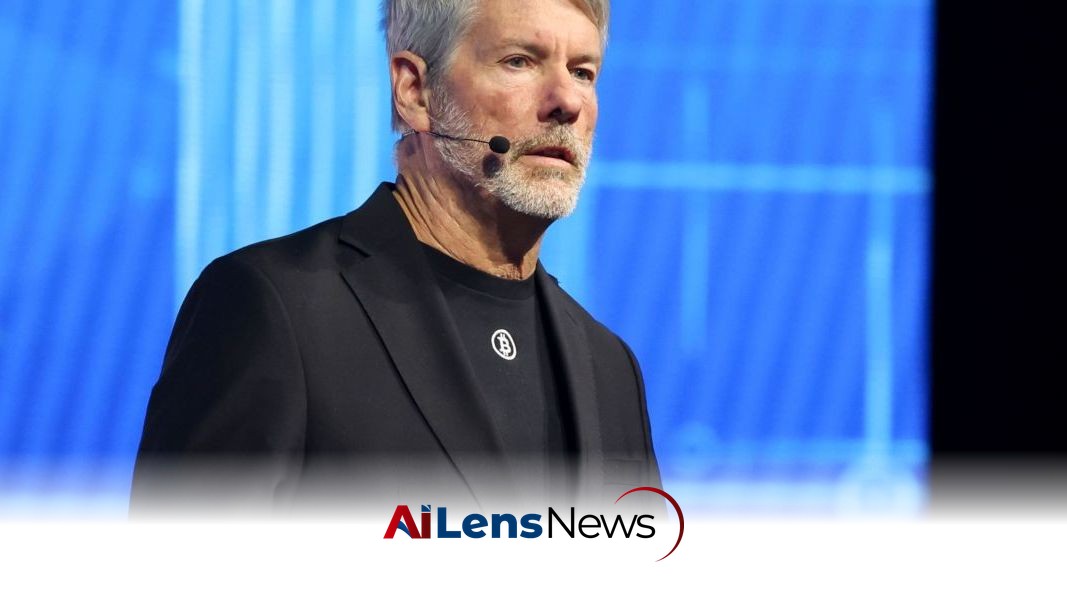


Billionaire Michael Saylor disputes Elon Musk's vision of AI rendering money irrelevant, arguing that human desires for status will persist.
Washington DC, United States Aug 12, 2026 ALN: Elon Musk, the CEO of Tesla and SpaceX, has been a prominent advocate for the transformative potential of artificial intelligence (AI). He has made bold predictions about how AI will fundamentally change the fabric of society, suggesting that work could become optional, goods and services will become abundant, and the concept of money might become obsolete as AI drives towards a "universal high income." However, not everyone shares Musk's optimistic outlook. Michael Saylor, a billionaire entrepreneur and the founder of the software firm Strategy, has articulated a more skeptical view regarding the implications of AI on wealth and status.
In a recent interview on the podcast Diary of a CEO, hosted by Steven Bartlett, Saylor expressed his reservations about Musk's predictions. He stated, "Everybody doesn’t get a Hampton’s house. Everybody doesn’t get their own private jet. They don’t get their own private yacht." This statement underscores his belief that while AI may indeed make basic necessities more affordable or even free, it will not diminish the intrinsic value of money or the desire for luxury and status.
Saylor's perspective hinges on the idea that as basic goods become more accessible, people's spending habits will naturally gravitate toward acquiring scarcer goods that symbolize wealth and social status. He elaborated, saying, "If I give you universal healthcare, people want private healthcare. If I give everybody a house, someone’s going to want a house twice as big." This sentiment reflects a broader understanding of human nature, which he characterizes as status-oriented, suggesting that the pursuit of luxury and exclusivity will persist even in a world where basic needs are met.
To bolster his argument, Saylor drew upon historical examples where technological advancements have led to increased accessibility of goods and services that were once considered luxuries. He noted that throughout history, technology has played a pivotal role in making essential resources more widely available. For instance, he pointed out that clean water and advanced medical care, which were once privileges reserved for the elite, are now commonplace in many developed nations. He remarked, "Henry VII didn’t have dental crowns. He didn’t have X-rays. We get modern medical care. The infant mortality rate has plunged. Life is safer. Clean water, clean air, right, clean food—and technology gave them to us."
However, Saylor argues that the increase in abundance does not eliminate the human desire for more; rather, it shifts the baseline for what is considered luxurious. He stated, "What happened with the explosion of affluence? Massive utilitarian entitlement. Everybody gets a car, but how many people get a Porsche? What happens with humanity is we always invent the luxury car—we come up with the trophy asset." This observation highlights the relentless nature of human aspiration, where the attainment of one level of comfort leads to the desire for even greater status symbols.
Modern consumption patterns further illustrate this point. Saylor pointed to the dining culture in cities like New York, where individuals may choose to spend exorbitant amounts on meals despite the availability of affordable food options. He posed the rhetorical question, "Why do we go to restaurants and pay $300 to eat at a restaurant because you can actually feed yourself on three bucks a day?" This behavior underscores the notion that even in an era of abundance, the pursuit of unique and exclusive experiences remains a significant driver of consumer behavior.
While Musk and Saylor diverge in their views on the extent of AI's impact on abundance and wealth distribution, they are not alone in their contemplation of AI's potential to reshape society. Other prominent figures in the tech industry share their insights on the future of AI and its implications for humanity. For instance, Dennis Hassabis, the chairman of Google DeepMind, has expressed a similarly optimistic view about the transformative power of AI. He has predicted that in the next decade, society could enter a new golden era of discovery, likening it to a renaissance fueled by breakthroughs in medicine, energy, and beyond. Hassabis envisions a future where humanity may even achieve the capability to explore the galaxy.
Billionaire venture capitalist Vinod Khosla has also weighed in on the potential economic impact of AI. He argues that while AI could lead to unprecedented productivity and abundance, the benefits will depend significantly on how governments and societies respond to the inevitable job displacement that accompanies technological advancements. Khosla has suggested that universal basic income (UBI) may serve as a crucial equalizer in this new economic landscape. He emphasized the importance of ensuring that median income rises in tandem with average income, highlighting the need for proactive measures to address the challenges posed by automation and AI.
The ongoing debate between figures like Musk and Saylor underscores a broader conversation about the role of technology in society and the complexities of human desire. As AI continues to evolve and integrate into various sectors, its impact on wealth distribution, social status, and consumer behavior will likely remain a topic of significant discussion. Stakeholders from various fields, including technology, economics, and social policy, will need to collaborate to navigate the challenges and opportunities presented by this rapidly changing landscape.
In conclusion, the contrasting views of Elon Musk and Michael Saylor regarding the future of AI and its implications for wealth and status highlight the multifaceted nature of technological advancement. While Musk envisions a world of abundance where work becomes optional, Saylor cautions against underestimating the enduring human desire for luxury and exclusivity. As society stands on the brink of significant technological change, the dialogue surrounding AI's potential will continue to evolve, shaping the future of work, consumption, and social dynamics in ways that remain to be fully understood.
To learn more about the latest developments in Financial Literacy, stay updated with our exclusive reports and analyses on AiLensNews.

