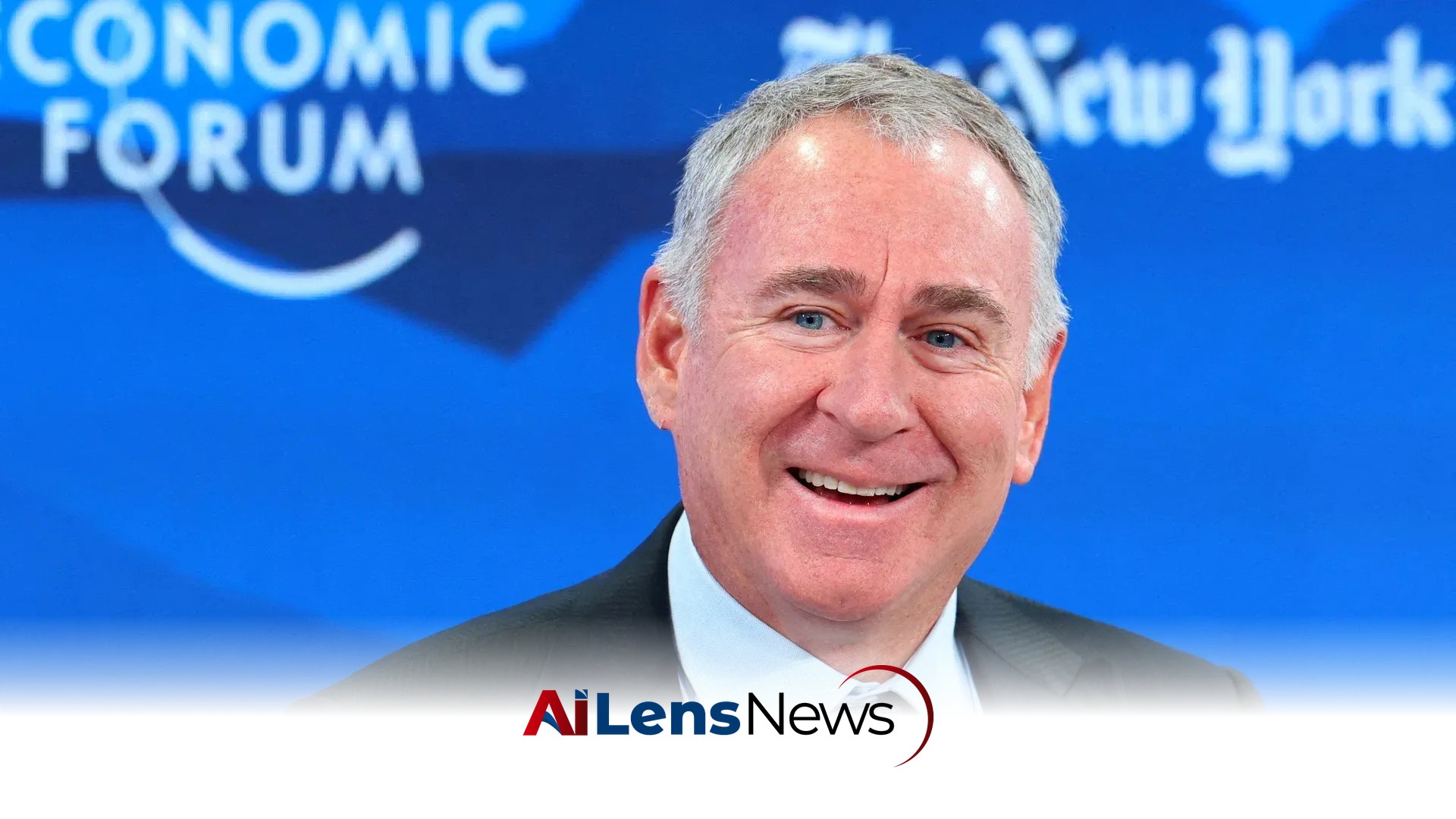



Billionaire investor Ken Griffin's Citadel intervenes to stabilize Situational Awareness AI, showcasing his knack for seizing market opportunities during crises.
Singapore, Singapore Aug 1, 2026 ALN: [NEW YORK] When rival hedge funds face catastrophic losses, billionaire investor Ken Griffin has a habit of identifying opportunities and showing up with a cheque book. Citadel’s founder this week reprised his role as one of Wall Street’s rescue buyers, stepping in to salvage California hedge fund Situational Awareness as it buckled under souring bets on artificial intelligence stocks.
Amid market rumblings that at least one firm was in trouble, Griffin, 57, assembled his top lieutenants to investigate, according to five people with knowledge of the matter. By Wednesday (Jul 29) morning, Citadel executives had reached out to Situational Awareness, and Griffin spoke directly with Leopold Aschenbrenner, the fund’s young founder and a former OpenAI researcher.
Together with Citadel co-chief investment officer Pablo Salame; chief operating officer Gerald Beeson; Perry Vais, its head of equity quantitative research; and chief legal officer Shawn Fagan, Griffin pulled an all-nighter to analyse the trading book positions of Situational Awareness and how liquid the bets were, the sources said.
After a sell-off in AI stocks, the Situational Awareness portfolio lost 67 per cent of its value in July, and the fund was forced to unwind most of its US$16 billion public equities book. By Thursday, Citadel had bought a chunk of its book.
“We let you down,” Aschenbrenner wrote to his investors in a letter seen by Reuters.
Word spread quickly on Wall Street that Citadel, one of the world’s largest hedge funds which prides itself on disciplined risk-taking and seizing market opportunities, had stepped in. “There are only a few firms that could take down this much risk,” said one investor familiar with the deal who was not authorised to speak publicly.
Reuters could not ascertain how much money Citadel had made on the deal, although many AI stocks in the portfolio have risen since.
For Griffin, who began trading from his Harvard University dormitory some four decades ago and now oversees US$71 billion in assets, it is a playbook that stretches back decades. “During market stress, the collective judgment of our business leaders, risk managers and portfolio managers enables us to capitalise on market opportunities when others, who depend on simplistic stop-loss approaches, cannot,” Griffin wrote in a 2023 letter to investors seen by Reuters.
When energy company Enron filed for what was then the largest bankruptcy in US history in 2001, Griffin chartered a jet that same day, dispatching top Citadel executives to interview nearly all of the energy traders and analysts who had worked there, the Financial Times reported last month and one of the sources confirmed. The recruits would go on to shape Citadel’s commodities franchise for years. It was an approach Griffin would return to time and again as markets lurched from one crisis to the next.
In 2007, US$3 billion hedge fund Sowood Capital transferred a portion of its portfolio to Citadel after Sowood became the first high-profile fund casualty of the global financial crisis sparked by subprime lending that led to the collapse of firms including US investment bank Lehman Brothers. “Citadel offered the only immediate and comprehensive solution,” Sowood founder Jeffrey Larson wrote to clients, Reuters reported at the time. The Sowood move followed on the heels of Citadel rescuing the energy portfolio of failed hedge fund Amaranth Advisors, which went out of business after losing US$6.4 billion from bad bets on natural gas trading.
And in 2021, when Main Street investors uniting on social media platform Reddit took the opposite side of prominent hedge fund Melvin Capital’s bet against ailing video game retailer GameStop, Citadel stepped in again. Together with Steven Cohen’s hedge fund Point72 Asset Management, where Melvin’s founder Gabe Plotkin had previously worked, Citadel injected US$2.75 billion into the troubled firm.
Griffin was born in Daytona Beach, Florida, in 1968. After placing his first convertible bond trades as a college student, he founded Miami-based Citadel in 1990 in Chicago and built it into one of the world’s most profitable hedge funds. Forbes estimates Griffin’s personal fortune at roughly US$52 billion. In 2002, Griffin expanded beyond hedge funds by co-founding Citadel Securities, a market maker that has become a cornerstone of global trading.
Griffin has donated more than US$2.5 billion to causes ranging from medical research to educational institutions, and made headlines for giving more than half a billion dollars to his alma mater, Harvard. His philanthropic efforts reflect a commitment to advancing education and healthcare, which he views as vital for societal progress.
Griffin is known as a prominent Republican donor who has weighed in on thorny topics such as US President Donald Trump’s tariffs, calling them a “huge policy mistake.” His political contributions and public statements often reflect a belief in free-market principles and a desire for regulatory frameworks that support business innovation and growth.
On the Goldman Sachs Great Investors Podcast in June, Griffin said: “You’ll never manage a portfolio for every possible tail event but you should stay very focused on what is the worst-case scenario. Can I tolerate that loss? And monitor and maintain your exposures such that that loss is a tolerable loss.” This philosophy underpins Citadel's investment strategy, emphasizing rigorous risk assessment and management as key components of successful trading.
The recent intervention in Situational Awareness highlights the ongoing volatility in the artificial intelligence sector, which has seen rapid growth and subsequent corrections as investor sentiment shifts. AI stocks have been particularly susceptible to market fluctuations, driven by both hype and the reality of business performance. The involvement of a major player like Citadel may help stabilize the situation, but it also raises questions about the broader implications for market dynamics and the role of large hedge funds in influencing stock prices.
The rescue of Situational Awareness also underscores the challenges faced by newer hedge funds, particularly those focused on emerging technologies. As they navigate the complexities of volatile markets, these firms must contend with the need for robust risk management practices and the ability to adapt quickly to changing market conditions. Griffin's actions may serve as a cautionary tale for investors about the perils of overexposure to high-risk sectors.
In conclusion, Ken Griffin's involvement in the rescue of Situational Awareness is emblematic of his long-standing strategy of capitalizing on distressed assets during periods of market turmoil. As the landscape of financial markets continues to evolve, the ability of hedge funds like Citadel to navigate challenges and seize opportunities will remain a focal point for investors and analysts alike. The implications of such interventions extend beyond individual firms, affecting market sentiment and shaping the future of investment strategies in an increasingly complex financial environment.
To learn more about the latest developments in Financial Literacy, stay updated with our exclusive reports and analyses on AILensNews.

