

More
Checking your session
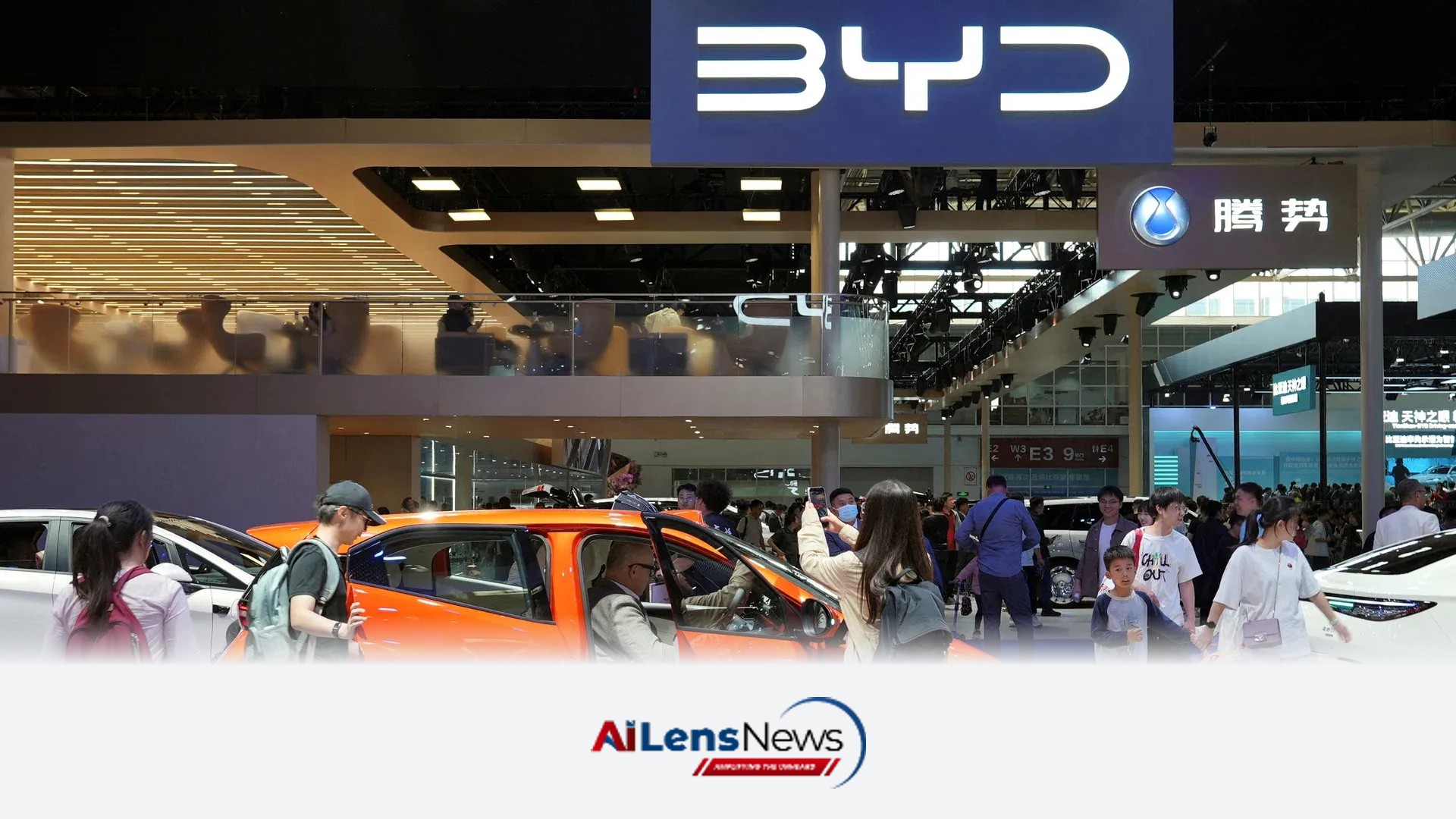



BYD's overseas revenue surpasses domestic sales for the first time, signaling a shift as Chinese carmakers face a tough market at home.
Singapore, Singapore Aug 31, 2026 ALN: BYD, a prominent player in the electric vehicle (EV) sector, has recently reported a significant shift in its revenue dynamics, marking a pivotal moment in the landscape of the automotive industry in China and beyond. For the first time, BYD's overseas revenue has surpassed its domestic earnings, a development that not only signifies the end of a profit slump for the company but also highlights the broader challenges facing Chinese car manufacturers in their home market.
In the first half of the fiscal year, BYD's international sales surged by 34 percent, totaling 181.3 billion yuan (approximately US$27 billion). This figure accounted for a remarkable 53 percent of the company's total revenue. In stark contrast, sales within Greater China experienced a decline of 31 percent. These figures were disclosed in an interim report released on August 28, emphasizing the shifting tides in consumer preferences and market dynamics.
BYD's recent performance underscores the increasingly fierce competition within the Chinese automotive market, which, despite being the largest in the world, has become increasingly challenging for domestic players. The sales figures reveal that even a company of BYD's stature, often regarded as a national champion in the EV sector, cannot rely solely on the domestic market for profitability. As consumer preferences evolve and competition intensifies, many Chinese carmakers are recognizing the necessity of expanding their operations internationally.
In its interim report, BYD noted that "China's automotive industry entered a stage of profound adjustment and divergence characterized by 'sluggish domestic demand and robust export growth.'" This statement encapsulates the current state of the automotive landscape in China, where domestic demand has been waning, prompting companies to seek opportunities abroad. The shift towards international markets is not merely a strategic choice; it has become a vital lifeline for many manufacturers looking to maintain profitability amid declining sales at home.
Foreign carmakers, particularly those like Volkswagen and Mercedes-Benz Group, which have historically relied on the Chinese market for substantial growth, are also facing significant challenges. Over the past two decades, these companies have seen their sales in China rise dramatically, but recent trends indicate a shift in consumer sentiment. Chinese consumers, who once viewed foreign brands as symbols of status and quality, are increasingly perceiving these vehicles as overpriced and outdated. This shift in perception has had tangible financial repercussions; for instance, General Motors, which previously enjoyed an annual profit of US$2 billion in China, has reported losses in the market over the past two years.
The implications of these trends are significant. As domestic demand falters, Chinese carmakers are not just looking to maintain their market share; they are actively pursuing opportunities in international markets where they can command higher prices for their vehicles. This shift could lead to increased competition in global automotive markets, particularly in regions where Chinese manufacturers have begun to establish a foothold.
Analysts are optimistic about BYD's prospects moving forward, predicting that the company's earnings rebound will accelerate through the end of 2026, primarily driven by its robust export growth. This optimistic outlook reflects a broader trend within the Chinese automotive industry, where manufacturers are increasingly focusing on innovation and quality to compete on the global stage. As Chinese carmakers improve their technological capabilities and adapt to international standards, they may find themselves better positioned to capture market share in various regions.
Furthermore, the geopolitical landscape presents both challenges and opportunities for Chinese automotive manufacturers. While ongoing tensions between China and Western countries could pose risks, they also create openings for Chinese brands to expand into emerging markets where competition may be less fierce. The ability to navigate these geopolitical dynamics will be crucial for the long-term success of Chinese carmakers as they seek to solidify their presence in the global automotive market.
In conclusion, BYD's recent export surge is a clear indicator of the shifting realities facing Chinese carmakers. As domestic demand weakens, the need for international expansion becomes increasingly critical. The automotive industry in China is at a crossroads, and the strategies adopted by companies like BYD will likely shape the future of the market. The ongoing evolution of consumer preferences, combined with the challenges posed by foreign competitors, will require adaptability and innovation from Chinese manufacturers as they strive to thrive in both domestic and international markets.
To learn more about the latest developments in Financial Literacy, stay updated with our exclusive reports and analyses on AILensNews.

Dissenting lenders claim that five entities linked to Subhash Chandra controlled…

Plans have been submitted for an 80,000-square-metre AI data centre in Greenock,…

Shein's upcoming IPO is set to value the company at just over a quarter of its p…

Indian banks are cutting down on costly bulk deposits following a significant ri…
Union Minister Hardeep Singh Puri announces ONGC's first hydrocarbon discovery i…