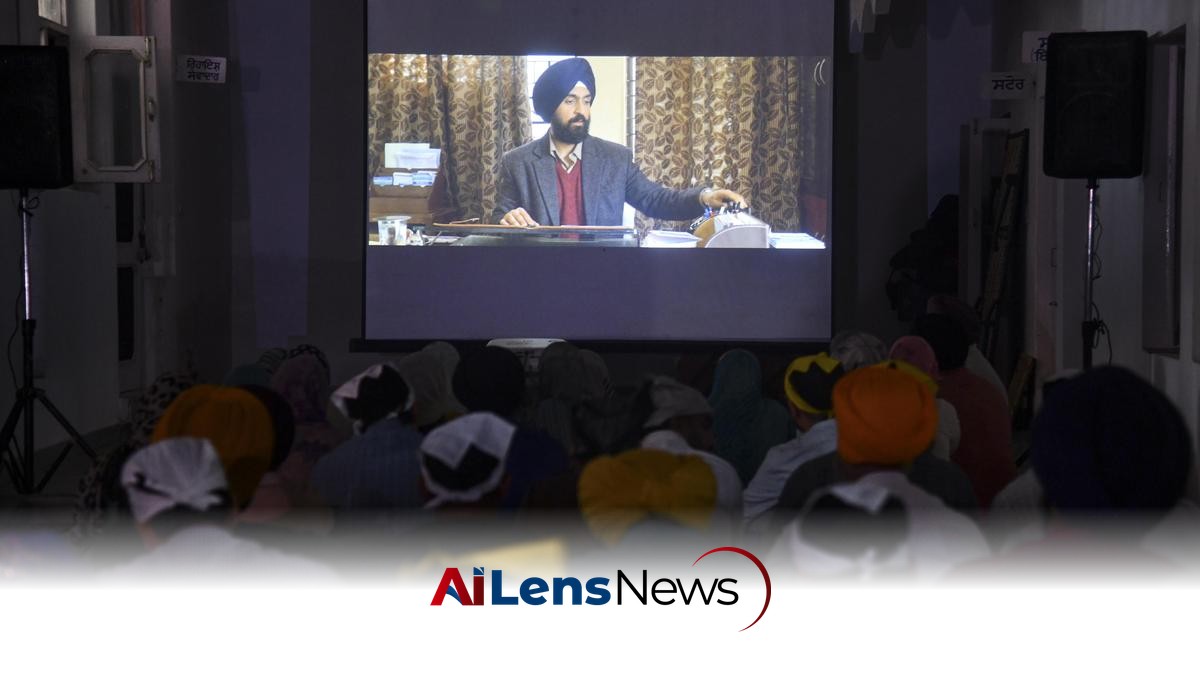


The Shiromani Akali Dal (SAD) announces plans to screen the film ‘Satluj’ across Punjab, focusing on activist Jaswant Singh Khalra's life during the militancy era.
New Delhi, India Jul 9, 2026 ALN: In a significant political move, the Shiromani Akali Dal (SAD) has announced plans to screen the film Satluj across Punjab. This decision comes just days after the film was removed from an Over-The-Top (OTT) platform, raising questions about censorship and the portrayal of sensitive historical narratives in Indian cinema. The announcement by SAD has ignited a fresh wave of political debate, particularly in light of the accusations made by the Aam Aadmi Party (AAP), which claims that SAD has consistently allied itself with those responsible for injustices against the people of Punjab and the Sikh community.
The film Satluj, which was previously titled “Punjab ‘95,” delves into the life of activist Jaswant Singh Khalra, who is known for his relentless advocacy for justice during a particularly dark chapter in Punjab's history—the period of militancy that spanned the mid-1980s to the early 1990s. This era was marked by widespread violence, human rights violations, and a significant loss of life, making it a sensitive subject for many in the region. The film was released uncut on ZEE5 under its new title on July 3, which has now become a focal point of contention among political parties in Punjab.
SAD president Sukhbir Singh Badal has taken a strong stance on the issue, directing every worker, office bearer, and leader within the party to screen the film in every village, town, and city across Punjab. Badal's emphasis on educating the youth and future generations about the tragedies and repression faced during the Congress governments of that era highlights the party's commitment to what it perceives as historical truth. He has articulated that the film encapsulates the profound pain and suffering experienced by the people of Punjab during this tumultuous time, particularly under the governance of the Congress party. Badal's assertion that SAD will not remain a mute witness to the injustices of the past underscores the party's strategy to position itself as a defender of Punjabi and Sikh rights.
On the other hand, the Aam Aadmi Party has responded with skepticism and criticism. Kuldeep Singh Dhaliwal, the party's Punjab Chief spokesperson, has pointed to a statement made by Paramjit Kaur Khalra, the wife of the late Jaswant Khalra, who allegedly revealed that Sukhbir Badal had previously written to the Central government requesting a ban on the film Satluj. Dhaliwal's characterization of this alleged action as "shameful" suggests that he believes it reveals the Badal family's underlying motivations, which he claims are contrary to the interests of the Sikh community and the people of Punjab. This accusation not only intensifies the rivalry between SAD and AAP but also raises questions about the authenticity of the narratives being promoted by both parties.
Furthermore, Dhaliwal has not shied away from criticizing the Congress party, accusing it of perpetrating atrocities during the militancy era. He has also claimed that the current BJP government is obstructing the dissemination of historical truths related to this period. His assertion that the Badal family is complicit in this suppression of truth paints a picture of a political landscape where historical narratives are fiercely contested and manipulated for political gain. Dhaliwal's comments, "This clearly shows that all three have worked together whenever it came to hiding the truth about Punjab," reflect a broader sentiment among AAP supporters that the historical injustices faced by the Sikh community are being overshadowed by political maneuvering.
The controversy surrounding the film Satluj has sparked a significant debate about historical narratives in Punjab, a state that has been deeply affected by the scars of militancy and violence. The screening of the film by SAD is not merely an act of cultural expression; it is a calculated political strategy that aims to resonate with the sentiments of the Punjabi populace, particularly those who have been affected by the events of the past. The film's portrayal of Jaswant Singh Khalra, who is remembered for his courageous efforts to expose human rights violations, serves as a poignant reminder of the struggles faced by many during this period.
Moreover, the political implications of SAD's decision to screen Satluj are likely to reverberate throughout the region. By positioning itself as a champion of historical memory, SAD seeks to galvanize support among the electorate, particularly in the context of upcoming elections where issues of identity, justice, and historical accountability are paramount. The party's actions can be interpreted as a bid to reclaim its narrative and assert its relevance in a rapidly changing political landscape.
As the film screenings commence, they are expected to draw significant attention and could potentially become a rallying point for discussions on justice, memory, and reconciliation in Punjab. The reactions from various political factions, civil society groups, and the general public will likely shape the discourse around not only the film but also the broader historical context it represents. This situation underscores the complexities surrounding the representation of history in media and the ways in which it intersects with contemporary politics in Punjab.
In conclusion, the announcement by SAD to screen Satluj across Punjab is emblematic of the ongoing struggle over historical narratives in the region. As political parties navigate the sensitive terrain of memory and justice, the implications of such decisions will continue to unfold, shaping the political landscape of Punjab in the years to come. The film serves as a catalyst for reflection on the past, a reminder of the struggles endured, and a call to action for those seeking to ensure that the voices of the marginalized are heard and acknowledged in the ongoing dialogue about Punjab's history.
Historical narratives in Punjab are not only a matter of academic interest; they are deeply intertwined with the identities of the people who reside there. The period of militancy, often characterized by violent confrontations between state forces and militant groups, has left lasting scars on the collective memory of the Punjabi community. The representation of this history in film and media is particularly contentious, as it often reflects the political biases and agendas of those producing the narratives. The film Satluj is no exception, as it attempts to navigate the complex interplay of memory, justice, and representation.
In recent years, there has been a resurgence of interest in the stories of those who suffered during this period, with various cultural initiatives aiming to bring these narratives to the forefront. Films, documentaries, and literature addressing the human rights violations that occurred during the militancy era are being produced, reflecting a growing demand for acknowledgment and accountability. However, these initiatives often face pushback from political entities that may feel threatened by the narratives being presented, leading to accusations of censorship or attempts to rewrite history.
As SAD embarks on its plan to screen Satluj, it is essential to consider the broader implications of this action. The film not only serves as a means of political mobilization but also as a potential tool for healing and reconciliation. By acknowledging the past, SAD may foster a sense of unity among those who have been affected by the violence, regardless of their political affiliations. However, this process is fraught with challenges, as differing interpretations of history can lead to further divisions within the community.
Moreover, the role of media in shaping public perception and discourse cannot be understated. The screening of Satluj may spark conversations that extend beyond the film itself, prompting discussions about accountability, justice, and the need for a comprehensive understanding of the past. Such dialogues are crucial for the healing process, as they allow individuals and communities to confront their shared history and work towards a more inclusive narrative that recognizes the experiences of all those affected.
In the context of Punjab's political landscape, the screening of Satluj could also influence electoral dynamics. As political parties vie for the support of the electorate, the ability to connect with the sentiments of the people will be paramount. SAD's emphasis on historical memory may resonate with voters who seek acknowledgment of the injustices they or their families have faced. Conversely, the criticism from AAP and other parties may galvanize their supporters to challenge SAD's narrative and seek alternative interpretations of the events that unfolded during the militancy era.
Ultimately, the screening of Satluj serves as a microcosm of the broader struggles for justice and recognition in Punjab. As the film is screened across various venues, its impact will likely extend beyond the immediate political context, influencing cultural discussions and shaping the way history is remembered and taught in the region. The ongoing contestation over historical narratives underscores the importance of engaging with these stories in a manner that is sensitive to the complexities of the past while also fostering a spirit of reconciliation and healing.
In summary, the decision by SAD to screen Satluj across Punjab is a significant political move that reflects the ongoing contestation of historical narratives in the region. The film's portrayal of Jaswant Singh Khalra and the events of the militancy era serves as a reminder of the struggles faced by many, while also opening up avenues for discussion and reflection on the past. As political parties navigate this sensitive terrain, the implications of their actions will continue to shape the political and cultural landscape of Punjab for years to come.
As the situation develops, it will be essential for all stakeholders—political parties, civil society, and the general public—to engage thoughtfully with these issues. The representation of history in media, particularly in a region as complex as Punjab, requires a nuanced approach that acknowledges the diverse experiences and perspectives of those involved. The conversations sparked by the screening of Satluj may ultimately contribute to a more comprehensive understanding of the past and pave the way for a more just and equitable future for all Punjabis.
To learn more about the latest developments in Corporate & Industry Insights, stay updated with our exclusive reports and analyses on AiLensNews.

