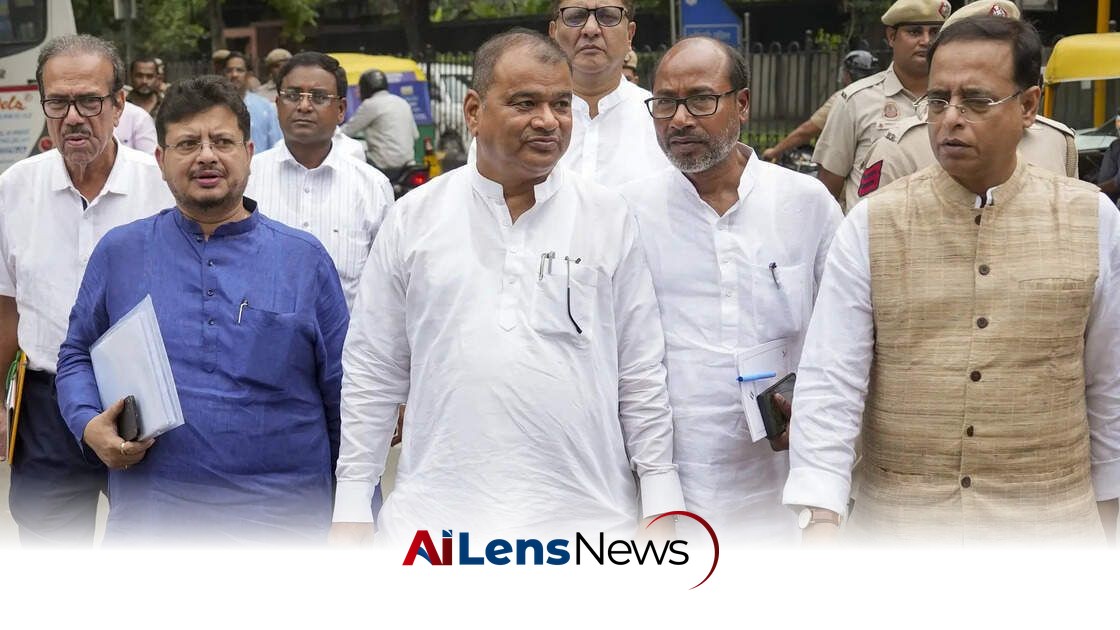


The Ritabrata Banerjee-led faction of the Trinamool Congress has taken possession of the party's headquarters in Kolkata, intensifying the internal power struggle.
New Delhi, India Jul 3, 2026 ALN: Kolkata: The struggle for control of the Trinamool Congress (TMC) has entered a new phase as the rebel faction led by Leader of the Opposition Ritabrata Banerjee has taken possession of the party's organisational headquarters in Kolkata. This move comes a day after the faction staked its claim to the party's name and symbol before the Election Commission.
The Metropolitan office has served as the party's operational headquarters since 2022, when the TMC shifted there after its original office on the EM Bypass was taken up for reconstruction. By moving into the premises, the dissidents sought to reinforce their claim to organisational legitimacy amid an escalating battle with the Mamata Banerjee-led faction.
Accompanied by senior leaders, including Firhad Hakim, Javed Khan, Sandipan Saha, and Akhruzzaman, Ritabrata visited the office and held a meeting there, asserting that his camp represented the "real" Trinamool Congress. Leaders of the faction stated that they had completed the necessary agreement with the owners of the premises and would henceforth function from the office.
"We are the Trinamool Congress and this office belongs to the Trinamool Congress. There is an emotional connection between the party and this office," Akhruzzaman told reporters.
This development comes amid an intensifying tussle between the Ritabrata-led faction and the camp loyal to former Chief Minister Mamata Banerjee, with both sides claiming to be the legitimate Trinamool Congress following the party's defeat in the recent assembly elections.
While the confrontation has so far centred on rival organisational claims, resolutions, and legal arguments, Friday's move carried considerable political symbolism. The dissidents are seeking to establish their presence at the office from where the party has been operating since 2022.
The office in the Metropolitan area was taken on rent after the party shifted out of its original EM Bypass headquarters, which is undergoing reconstruction. The latest move follows Thursday's meeting between a delegation led by Ritabrata Banerjee and the full bench of the Election Commission in New Delhi.
The delegation met Chief Election Commissioner Gyanesh Kumar and the two Election Commissioners, pressing its claim over the party's organisational structure and leadership. This meeting drew sharp criticism from the Mamata Banerjee camp, which maintained that leaders expelled from the party had no authority to represent it before the poll panel.
However, the Election Commission subsequently wrote to both factions, asking them to submit their claims and counter-claims regarding organisational elections, authorised signatories, and control of the party by 5:30 PM on July 6. The poll panel's intervention has formally brought the dispute into the institutional domain, with both camps now preparing detailed submissions to bolster their respective claims.
The organisational crisis erupted after a majority of the party's MLAs backed Ritabrata Banerjee's challenge to Mamata Banerjee's leadership and elected senior legislator Arup Roy as chairperson at a special session convened by the dissident camp last month. The Mamata Banerjee faction has rejected the proceedings as unconstitutional and has continued to insist that it remains the only legitimate leadership of the party.
Against this backdrop, the decision of the rebel camp to operate from the Metropolitan office is being seen as an attempt to reinforce its claim of organisational continuity while its battle with the rival faction moves simultaneously through political, legal, and electoral channels.
The TMC, established in 1998, has been a dominant force in West Bengal politics, especially under the leadership of Mamata Banerjee. The party's rise to power was marked by its opposition to the Left Front government, which had ruled the state for over three decades. However, the recent assembly elections have raised questions about the party's unity and direction. The internal strife reflects a broader trend within political parties in India, where leadership challenges and factionalism can lead to significant rifts.
The implications of this power struggle extend beyond the TMC itself. As one of the major regional parties in India, the outcome of this dispute could influence political dynamics in West Bengal and potentially impact alliances and electoral strategies in upcoming elections. Political analysts suggest that the TMC's internal divisions might provide an opportunity for opposition parties to gain ground, particularly if they can capitalize on the discontent among the party's base.
Furthermore, the role of the Election Commission in adjudicating this dispute highlights the increasing importance of institutional mechanisms in resolving intra-party conflicts. The Commission's involvement may set a precedent for how similar disputes are handled in the future, reinforcing the need for political parties to maintain internal democracy and adhere to established processes.
As the situation develops, both factions are likely to ramp up their efforts to consolidate support among party members and the electorate. The Ritabrata faction may attempt to position itself as the reformist wing of the TMC, appealing to younger voters and those disillusioned by the party's recent electoral setbacks. Meanwhile, Mamata Banerjee's camp will likely focus on reinforcing its historical legacy and achievements while attempting to discredit the claims of the dissidents.
The TMC's current crisis serves as a reminder of the challenges faced by political parties in maintaining cohesion and unity in the face of electoral pressures and leadership disputes. As the political landscape in West Bengal continues to evolve, the resolutions of these conflicts will be closely watched by both supporters and opponents of the TMC, as well as by political observers across the country.
In conclusion, the occupation of the TMC headquarters by the Ritabrata faction signifies a critical juncture for the party, with significant implications for its future trajectory. The ongoing power struggle will not only shape the internal dynamics of the TMC but also potentially influence the broader political landscape in West Bengal and beyond.
To learn more about the latest developments in Corporate & Industry Insights, stay updated with our exclusive reports and analyses on AiLensNews.

