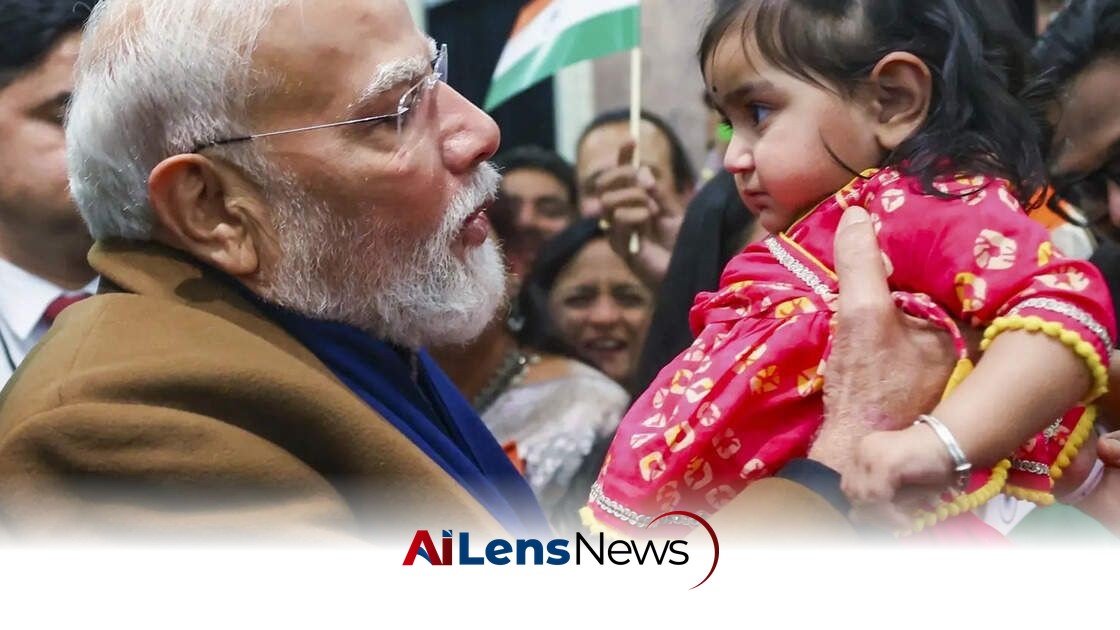


Prime Minister Narendra Modi arrives in Auckland for the first Indian prime ministerial visit to New Zealand in 40 years, focusing on trade and community ties.
New Delhi, India Jul 11, 2026 ALN: Prime Minister Narendra Modi arrived in Auckland on Friday, marking a historic visit as the first Indian prime minister to New Zealand in four decades. This visit aims to strengthen trade ties and deepen connections between the two nations, reflecting a growing recognition of the importance of bilateral relations in an increasingly interconnected global landscape.
Upon arrival, Modi was welcomed by New Zealand Prime Minister Christopher Luxon at Auckland Airport. Expressing gratitude for the warm reception, Modi noted the significance of this visit in a post on X, stating, "This visit is historic, being the first Prime Ministerial visit to New Zealand in four decades." This statement underscores the rarity and importance of such high-level diplomatic exchanges, particularly in the context of India’s expanding global footprint and New Zealand’s strategic positioning in the Asia-Pacific region.
Modi and Luxon are scheduled to hold discussions on Saturday, focusing on enhancing trade and commercial engagement. The trade dialogue is set against a backdrop of increasing cooperation between the two countries, which have seen a steady rise in trade volumes over the years. In the fiscal year preceding Modi's visit, bilateral trade was reported to be around $2.3 billion, covering a wide range of sectors including agriculture, technology, and education.
Modi is also expected to address the Indian community in New Zealand, which comprises approximately 300,000 individuals of Indian origin, including around 35,000 of Fijian-Indian descent. This demographic is significant not only for its contributions but also for its cultural impact, as it enriches New Zealand’s multicultural landscape. Hindi ranks as the fifth most-spoken language in New Zealand, following English, Māori, Samoan, and Mandarin, highlighting the cultural ties between the two countries.
The Indian community's presence in New Zealand can be traced back several decades, with waves of migration occurring due to various factors, including educational opportunities and prospects. This community has established itself in various sectors, including healthcare, technology, and entrepreneurship, further solidifying the ties between the two nations.
Prior to Modi's arrival, Prime Minister Luxon emphasized the advantages of the India-New Zealand Free Trade Agreement (FTA). He stated that 57% of New Zealand's exports to India will become tariff-free from the moment the agreement takes effect. Luxon expressed optimism about the trade agreement, stating, "New Zealand businesses are set to boom with our India Trade Deal. Fifty-seven percent of everything we export to India will be tariff-free from day one." This statement reflects a broader strategy by New Zealand to diversify its trade relationships, particularly in light of changing global trade dynamics.
The FTA is anticipated to significantly enhance trade volumes, particularly in sectors such as dairy, meat, and wine, which are key exports for New Zealand. Conversely, India stands to benefit from increased access to New Zealand's agricultural products and advanced technology sectors, which are crucial for India’s own development goals. The agreement is also seen as a stepping stone towards deeper integration in the Asia-Pacific region, which is becoming increasingly vital as countries navigate the complexities of global trade.
This visit not only aims to bolster ties but also seeks to deepen people-to-people connections. The Indian diaspora in New Zealand plays a vital role in fostering these connections, and Modi's address to the community is anticipated to strengthen these bonds further. The engagement with the Indian community is expected to focus on shared values, aspirations, and the contributions of Indians to New Zealand’s society.
People-to-people connections are crucial in building mutual understanding and respect between nations. Cultural exchanges, educational collaborations, and tourism are all areas that can benefit from a strengthened relationship. The Indian community has often acted as a bridge between the two countries, promoting cultural festivals, culinary exchanges, and educational initiatives that showcase the richness of Indian heritage.
Moreover, New Zealand's education sector has been a significant draw for Indian students, with many seeking quality higher education opportunities. This has led to a growing number of educational partnerships between Indian and New Zealand institutions, fostering academic collaboration and innovation. The presence of Indian students in New Zealand not only contributes to the economy but also enhances cultural diversity within educational institutions, providing a platform for cross-cultural exchange and understanding.
In addition to education, tourism is another sector poised for growth as travel restrictions ease and international borders reopen. The Indian diaspora can play a pivotal role in promoting New Zealand as a travel destination, as they often serve as informal ambassadors, sharing their experiences and encouraging family and friends to explore New Zealand's unique landscapes and cultural heritage. Conversely, New Zealand's tourism sector can capitalize on the increasing interest among Indian travelers, who are drawn to the country's natural beauty, adventure activities, and rich indigenous culture.
As PM Modi embarks on this significant journey, the focus remains on enhancing trade relations and cultural connections between India and New Zealand. This visit is expected to pave the way for a more robust partnership, benefiting both nations ally and socially. The implications of this visit extend beyond immediate trade agreements; they signal a commitment to a long-term strategic alliance that could influence regional stability and growth.
In conclusion, Modi's visit is not just a diplomatic formality but a crucial step towards a partnership that recognizes the interdependence of nations in a globalized world. As both countries navigate the complexities of international relations, the outcomes of this visit could have lasting effects on their bilateral ties, shaping future collaborations in trade, culture, and beyond. The strengthening of these ties is not merely transactional but represents a shared vision for a collaborative future that prioritizes mutual growth and understanding in an ever-evolving global context.
To learn more about the latest developments in Corporate & Industry Insights, stay updated with our exclusive reports and analyses on AiLensNews.

