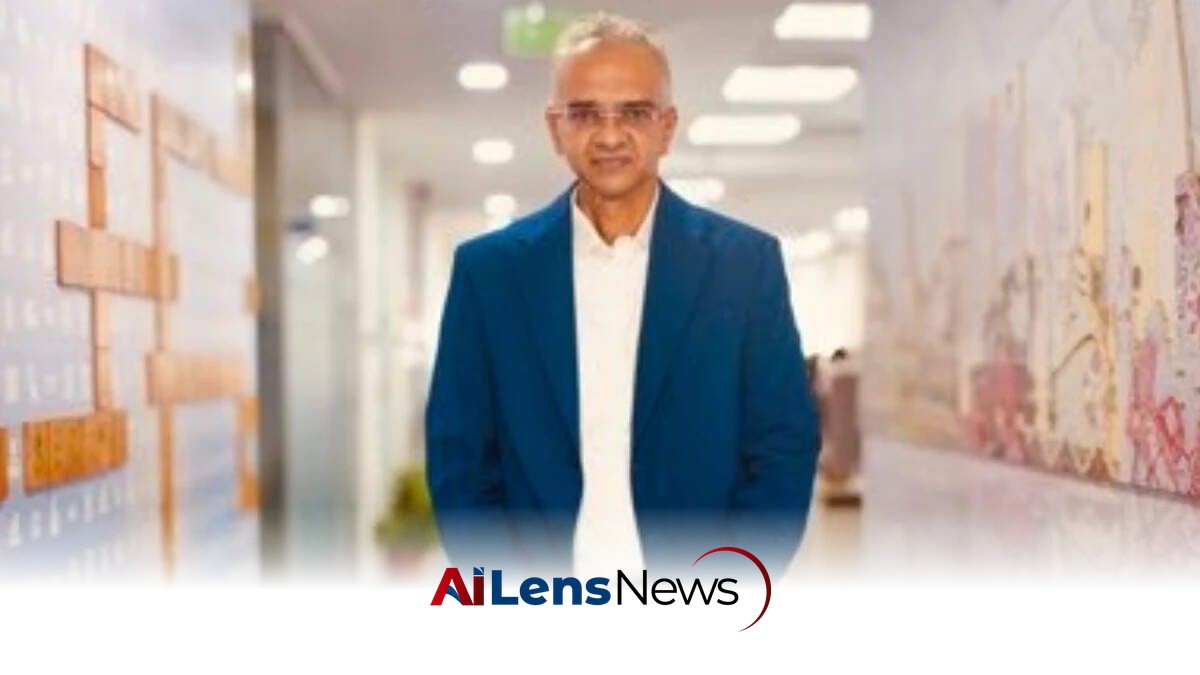


Dilip Asbe's induction into Swift's board marks a pivotal moment for India's payment landscape, enhancing its influence in global financial standards.
New Delhi, India Jul 6, 2026 ALN: Mumbai: National Payments Corporation of India (NPCI) managing director and CEO Dilip Asbe has been inducted into the global supervisory board of the Society for Worldwide Interbank Financial Telecommunication (Swift), the messaging network that underpins the majority of the world's cross-border financial transactions. This appointment marks a significant milestone in India's global payments ambitions, having received shareholder approval at Swift's recent annual general meeting. It is now subject to regulatory approval expected in October.
The induction gives India a direct seat at the table in shaping global payments policy and standards, recognizing the growing international stature of India's digital payments ecosystem, anchored by the Unified Payments Interface (UPI). UPI processes more than 20 billion transactions monthly and is one of the most sophisticated real-time payment platforms available today. This vast volume of transactions not only highlights the robustness of UPI but also underscores the increasing reliance on digital payment systems worldwide, especially in the wake of the COVID-19 pandemic, which accelerated the shift towards cashless transactions.
Asbe's appointment is seen as a significant recognition of the maturity and scale of India's digital payments ecosystem. Having an Indian representative on Swift's supervisory board ensures that India's experience in building large-scale, real-time payment infrastructure contributes to discussions around the future of global cross-border payments and financial messaging. This is particularly important as the global financial landscape continues to evolve, with countries increasingly looking to enhance their payment systems to facilitate international trade and investment.
Moreover, Asbe's induction comes at a crucial time for Swift, which is undergoing a structural transformation. The organization is transitioning from a single-tier board of directors to a new two-tier governance model comprising a supervisory board and a management board. This new governance structure aims to improve oversight and enhance the decision-making process within Swift. The supervisory board will consist of 12 members, with the possibility of expanding to 15 in exceptional circumstances. Eight seats will be held by shareholder-affiliated directors, while the remaining four will be allocated to independent directors to comply with the legal requirement for one-third independence. This approach reflects a growing emphasis on governance and accountability, with geographic balancing built into the composition to ensure no single region dominates, a principle that Asbe's appointment reflects.
Swift is overseen by the G-10 central banks, which include those of the US, UK, France, Germany, and Japan, along with the European Central Bank. Its lead overseer is the National Bank of Belgium. The involvement of central banks in Swift's governance highlights the organization's critical role in the global financial system and the importance of maintaining high standards in financial messaging and transaction processing.
Asbe has led NPCI since January 2018, having previously served as its chief operating officer. He has been central to the design, development, and management of India's most transformative payment platforms, including Immediate Payment Service (IMPS), Aadhaar-enabled Payment System (AePS), RuPay, FASTag, and UPI. Under his leadership, NPCI has created four subsidiaries: NPCI International Payments to globalize UPI and RuPay, NPCI Bharat BillPay for bill payments, NPCI BHIM Services for BHIM UPI, and NPCI Tech Solutions to build next-generation payment solutions, including Central Bank Digital Currency infrastructure. This diversification of initiatives under NPCI's umbrella reflects a strategic approach to enhancing India's payment systems and expanding their reach both domestically and internationally.
With UPI now live in multiple countries and NPCI actively exporting India's payments stack globally, Asbe's presence on the Swift board signals that India is no longer merely a fast follower in global payments. It is becoming an increasingly influential rule-setter, with the institutional credibility to shape the standards and architecture of the next generation of cross-border financial infrastructure. This shift is particularly significant as many countries are looking to modernize their payment systems and enhance their capacities for cross-border transactions, making India's experience and innovations highly relevant.
The implications of Asbe's appointment extend beyond just representation. It positions India as a key player in the global financial ecosystem, particularly at a time when there is a growing demand for efficient, secure, and transparent cross-border payment solutions. As countries seek to improve their payment infrastructures, India's advancements in digital payments, particularly through UPI, can serve as a model for other nations looking to enhance their financial systems.
Other members of the supervisory board include notable figures such as Manish Kohli, head of global payments solutions at HSBC; Arthur Ambrose, global head of services operations at Citi; Patrick Colle, chairman of financial institutions coverage at BNP Paribas; and Mark Monaco, head of global payments solutions at Bank of America. The diverse backgrounds and expertise of these board members will contribute to a comprehensive approach to addressing the challenges and opportunities facing the global payments landscape.
In conclusion, Dilip Asbe's induction into Swift's global supervisory board represents a pivotal moment for India in the realm of global payments. It not only affirms India's growing influence in shaping international payment standards but also underscores the importance of collaboration and innovation in the evolving financial landscape. As the world continues to embrace digital transformation, India's advancements in payment technologies will likely play a crucial role in defining the future of cross-border transactions and financial messaging.
To learn more about the latest developments in Corporate & Industry Insights, stay updated with our exclusive reports and analyses on AiLensNews.

