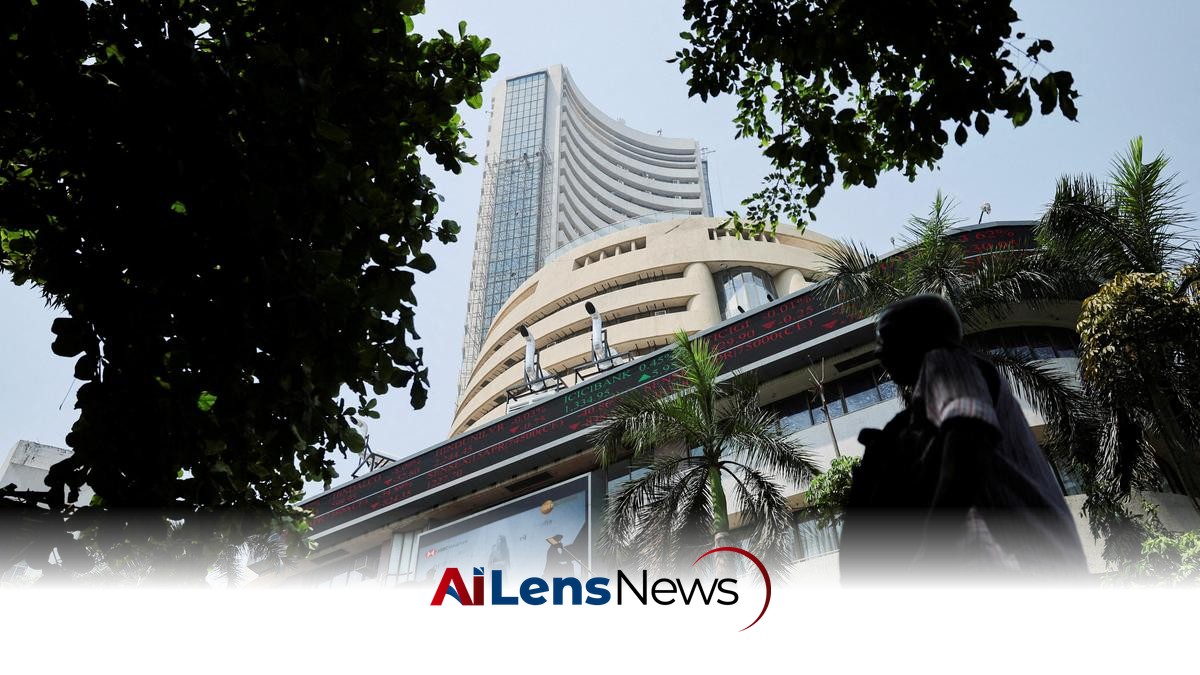


Markets rally as IT stocks drive Sensex up nearly 700 points, buoyed by positive earnings and global trends.
New Delhi, India Jul 10, 2026 ALN: Stock market benchmark indices, the Sensex and Nifty, experienced a significant surge in early trade on Friday, July 10, 2026. This upward movement was primarily fueled by a rally in Information Technology (IT) firms, particularly following the announcement from Tata Consultancy Services (TCS), which reported a notable increase in its June-quarter net profit. TCS's positive outlook regarding an improvement in demand for the ongoing quarter further bolstered investor confidence.
The 30-share Bombay Stock Exchange (BSE) Sensex jumped by 694.83 points, reaching 77,423.82, while the 50-share National Stock Exchange (NSE) Nifty surged 195.95 points to hit 24,154.85. These figures reflect a robust market sentiment, particularly within the IT sector, which has been a critical driver of economic growth in India. The IT sector has consistently contributed significantly to India's GDP and has been instrumental in generating employment and enhancing the country's export capabilities.
Among the major winners in the Sensex pack were HCL Technologies, Infosys, Tata Consultancy Services, Tech Mahindra, UltraTech Cement, and Asian Paints. The strong performance of these companies underscores the resilience of the IT sector, which has been pivotal in navigating the challenges posed by global economic uncertainties. The IT sector's ability to adapt to changing market conditions, including shifts in consumer preferences and technological advancements, has positioned it as a leader in the global market.
TCS, India's largest IT services company, saw its stock trade nearly 2% higher after announcing a 4.61% increase in its June-quarter net profit, amounting to ₹13,349 crore. The company's optimistic guidance regarding a rebound in demand, which had been adversely affected by geopolitical tensions in West Asia, contributed significantly to the positive market momentum. This growth can be attributed to TCS's strategic investments in digital transformation and cloud services, which have become increasingly critical for es worldwide.
Despite the overall positive trends, not all stocks in the market performed favorably. Bharti Airtel and Sun Pharma emerged as the laggards, reflecting the mixed performance across different sectors. The divergence in stock performance highlights the sector-specific dynamics that can influence investor sentiment and market movements. For instance, while the IT sector may be thriving, telecommunications and pharmaceuticals face their own unique challenges, such as regulatory pressures and competitive landscapes that can hinder growth.
The surge in the Indian stock market was also supported by positive trends in global markets. In Asia, South Korea's Kospi index experienced a remarkable jump of over 4%, while Japan's Nikkei 225 index traded 1.91% higher. Additionally, Shanghai's SSE Composite index was up 0.76%, and Hong Kong's Hang Seng index climbed 1.73%. These gains in Asian markets indicate a broader regional optimism, which often influences domestic market movements. The interconnectedness of global markets means that trends in one region can significantly impact investor behavior in others, including the Indian stock market.
On the previous day, July 9, 2026, U.S. markets had also ended higher, contributing to the positive sentiment observed in global equities. This correlation between U.S. markets and Indian indices underscores the global nature of investment, where investors are increasingly looking beyond borders for opportunities. The performance of U.S. markets often sets the tone for global trading, and positive earnings reports or economic data from the U.S. can lead to increased investor confidence in emerging markets like India.
V.K. Vijayakumar, Chief Investment Strategist at Geojit Investments Limited, commented on the prevailing market conditions, noting that while tensions in West Asia continue without any clear resolution, markets have largely chosen to ignore these negative developments. This observation suggests a level of investor confidence that may be driven by underlying economic fundamentals rather than geopolitical uncertainties. The ability of markets to overlook significant geopolitical risks may reflect a broader trend of resilience among investors, but it also underscores the need for vigilance as situations can evolve rapidly.
Vijayakumar further emphasized the importance of maintaining caution, advising investors to closely monitor ongoing developments in the geopolitical landscape. The current geopolitical climate, characterized by tensions and uncertainties, can have far-reaching implications for global trade and investment flows. Investors are reminded that while the current market rally is encouraging, external factors such as geopolitical tensions, inflationary pressures, and changes in monetary policy can significantly impact market performance.
In terms of commodity markets, Brent crude, the global oil benchmark, was quoted 0.33% higher at $76.55 per barrel. Fluctuations in oil prices can have profound implications for various sectors, particularly those related to energy and transportation. Rising oil prices can lead to increased costs for es, which may eventually be passed on to consumers, affecting overall economic growth. The relationship between oil prices and inflation is particularly critical, as higher energy costs can contribute to broader inflationary pressures that may prompt central banks to adjust monetary policy.
Foreign Institutional Investors (FIIs) played a role in the market dynamics, having offloaded equities worth ₹532.86 crore on Thursday, July 9, according to exchange data. The actions of FIIs can significantly influence market movements, as their investment decisions often reflect broader trends in global capital flows and investor sentiment. The participation of FIIs in the Indian market is closely monitored, as their inflows or outflows can signal changes in investor confidence and economic outlook.
On the same day, the Sensex had climbed 238.22 points, or 0.31%, to settle at 76,741.82, while the Nifty increased by 80.75 points, or 0.34%, ending at 23,962.80. These incremental gains set the stage for the more substantial surge observed in early trade on Friday, highlighting the volatility and dynamism of the stock market. The stock market is often characterized by rapid fluctuations, influenced by a variety of factors including earnings reports, economic data releases, and geopolitical events.
The current market rally, particularly in the IT sector, may have various implications for investors and the broader economy. A strong performance in IT firms often signifies robust demand for technology services, which can be viewed as a positive indicator of economic health. Additionally, the IT sector's resilience can attract further investments, fostering innovation and growth in related industries. This growth can create a positive feedback loop, where increased investment leads to further advancements in technology and services, ultimately benefiting the economy as a whole.
Moreover, the surge in stock prices could influence consumer and confidence, potentially leading to increased spending and investment in other sectors. As stock markets rise, individuals and es may feel more secure in their financial positions, prompting them to spend more freely. However, investors must remain cautious, as external factors such as geopolitical tensions, inflationary pressures, and changes in monetary policy can significantly impact market performance. The balance between optimism and caution is crucial for navigating the complexities of the current economic landscape.
In conclusion, the early trade surge in the Indian stock market, driven by strong performances in IT stocks and positive global trends, reflects a complex interplay of factors influencing investor sentiment. While the current optimism is encouraging, the need for caution remains paramount as investors navigate an environment characterized by both opportunities and uncertainties. As the market continues to evolve, stakeholders will need to stay informed about economic indicators, global trends, and sector-specific developments to make informed investment decisions.
To learn more about the latest developments in Markets, stay updated with our exclusive reports and analyses on AiLensNews.

