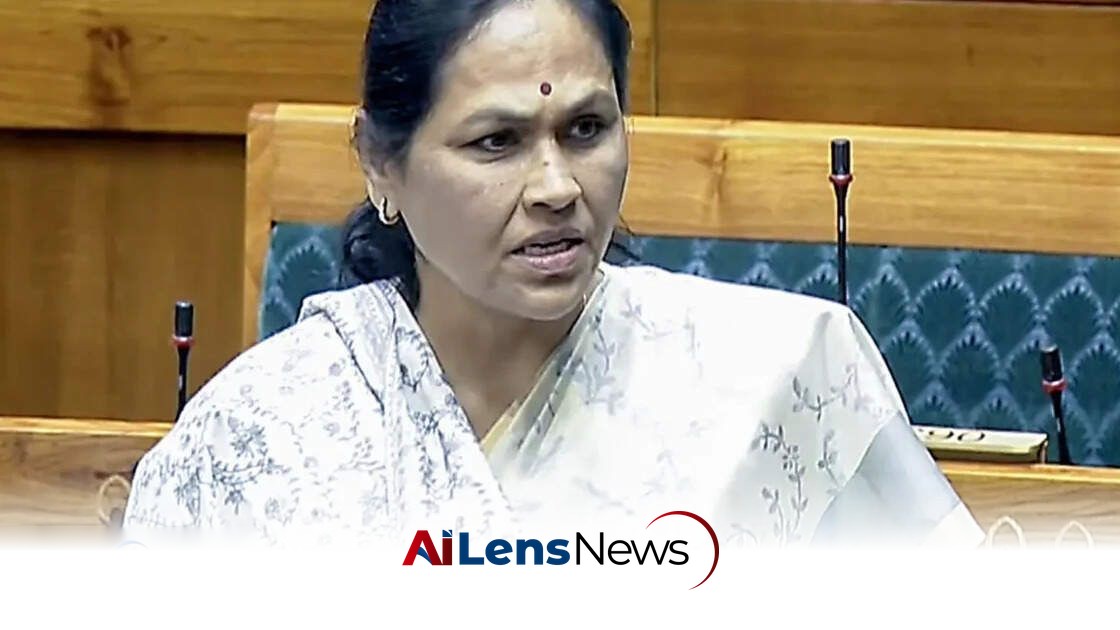


Union Minister Shobha Karandlaje has accused the Karnataka government of misusing permanent residence certificates to regularize illegal Bangladeshi immigrants, urging intervention from Home Minister Amit Shah.
New Delhi, India Jul 10, 2026 ALN: Union Minister of State for Labour & MSME Shobha Karandlaje has raised serious concerns regarding the Karnataka government's issuance of permanent residence certificates (PRC). On Friday, she accused the state of using these certificates to regularize illegal Bangladeshi immigrants and called for intervention from Home Minister Amit Shah to halt their issuance.
Karandlaje, who represents Bengaluru North, alleged that illegal Bangladeshi immigrants are migrating from Bihar and West Bengal to Bengaluru and other regions of Karnataka. She claimed that the Congress-led government is encouraging booth-level officers (BLOs) to conduct mass enumeration under the special intensive revision (SIR) of electoral rolls while simultaneously pursuing the PRC process. This assertion raises significant concerns about the integrity of the electoral system and the potential impact on national security.
"Instead of strengthening voter verification, the government is pursuing appeasement politics at the cost of national security and the integrity of the electoral system," Karandlaje stated during a press conference. She emphasized that this approach undermines the constitutional principle of "One Nation, One Citizenship." This principle is pivotal in maintaining a unified national identity and ensuring that all citizens are treated equally under the law, regardless of their regional or ethnic backgrounds.
In a letter addressed to Amit Shah, Karandlaje urged the Union Home Ministry to examine the constitutional validity of the PRC notification and to direct the Karnataka government to suspend its implementation. The issuance of PRCs has been a contentious issue, as it touches upon the delicate balance between immigration control, state rights, and the rights of individuals within the country. She also requested a detailed report from the state regarding the statutory authority under which the notification was issued, indicating a need for transparency and accountability in governance.
Karandlaje further argued that by creating a separate category of "permanent residents," the state government is conferring a legal status that lacks constitutional sanction. This contention raises important questions about the legal framework governing residency and citizenship in India. The Constitution of India provides specific provisions regarding citizenship, and any deviation from these provisions could lead to legal challenges and potential ramifications for the state's governance.
She expressed concern that individuals who have entered India illegally or are residing unlawfully in Karnataka could obtain a PRC by presenting local documents. Once issued, these certificates could enable access to government benefits and other entitlements, potentially undermining the Centre's efforts to identify and deport illegal immigrants. The implications of this situation are significant, as it could lead to an increase in illegal immigration and create challenges for law enforcement and immigration authorities tasked with maintaining national security.
In her letter, she urged the Centre to take necessary actions to safeguard the constitutional framework, national security, and the principle of equality guaranteed under the Constitution of India. This call to action reflects the broader concerns among political leaders regarding the potential consequences of lax immigration policies, especially in a country that has been grappling with issues related to illegal immigration for decades.
Karandlaje's allegations raise significant questions about the implications of the PRC process on national security and electoral integrity, highlighting the ongoing debate around immigration policies in India. The issue of illegal immigration has been a polarizing topic in Indian politics, with various parties holding divergent views on how to address the challenges posed by unauthorized migrants.
The Karnataka government's decision to issue PRCs has sparked a backlash from various political factions and civil society groups, who argue that such measures could lead to the marginalization of indigenous populations and exacerbate existing social tensions. Critics of the PRC initiative contend that it could pave the way for demographic changes that threaten the cultural and social fabric of the state.
Moreover, the timing of the PRC issuance is also critical, as it coincides with electoral processes that could influence the political landscape in Karnataka. The Congress-led government may argue that the PRC initiative is aimed at integrating marginalized communities into the socio-mainstream, thereby fostering inclusivity. However, opponents contend that this approach could be perceived as an attempt to bolster electoral support from specific demographic groups at the expense of national security.
As the debate unfolds, it is essential to consider the legal, social, and political implications of the PRC issuance. The government must navigate the complexities of immigration law while addressing the concerns of its citizens regarding security and resource allocation. It is crucial for policymakers to engage in dialogue with stakeholders, including local communities, legal experts, and civil rights organizations, to foster a comprehensive understanding of the issues at hand.
In conclusion, the controversy surrounding the issuance of permanent residence certificates in Karnataka underscores the intricate interplay between immigration policy, national security, and electoral integrity. As Shobha Karandlaje calls for intervention from the Union Home Ministry, the situation presents an opportunity for a broader discussion on how India can effectively manage immigration while upholding its constitutional values and ensuring the well-being of all its citizens. The outcome of this debate will have lasting implications for the future of immigration policy in India and its impact on the nation's democratic processes.
To understand the backdrop of these developments, it is important to note that immigration has long been a contentious issue in India, with various states grappling with the influx of migrants from neighboring countries, particularly Bangladesh. The historical context of migration in the region is complex, influenced by factors such as partition, opportunities, and communal conflicts. The presence of illegal immigrants has led to heightened tensions in many states, with local populations often feeling threatened by perceived competition for jobs, resources, and cultural identity.
Furthermore, the legal framework surrounding citizenship and residency in India is governed by the Citizenship Act of 1955 and subsequent amendments. The Act outlines the criteria for acquiring Indian citizenship, which includes provisions for naturalization, registration, and citizenship by descent. However, the introduction of PRCs by the Karnataka government raises questions about how these certificates align with existing laws and the potential for creating a parallel system of residency that could undermine the established legal processes.
In light of these developments, it is crucial for the government to approach the issue of immigration with a balanced perspective that considers both the rights of individuals seeking refuge and the concerns of citizens regarding security and resource allocation. A comprehensive immigration policy must be developed that addresses the root causes of migration while ensuring that the rights of all individuals are respected and upheld within the framework of the Constitution.
As the situation continues to evolve, the implications of the Karnataka government's PRC initiative will likely reverberate beyond the state's borders, influencing national discussions on immigration policy and citizenship rights. The ongoing dialogue will require careful navigation of the political landscape, as various stakeholders seek to assert their perspectives and influence the direction of policy-making in this critical area. Ultimately, the challenge lies in finding a solution that balances the needs of a diverse population while safeguarding the principles of democracy and the rule of law in India.
To learn more about the latest developments in Corporate & Industry Insights, stay updated with our exclusive reports and analyses on AiLensNews.

