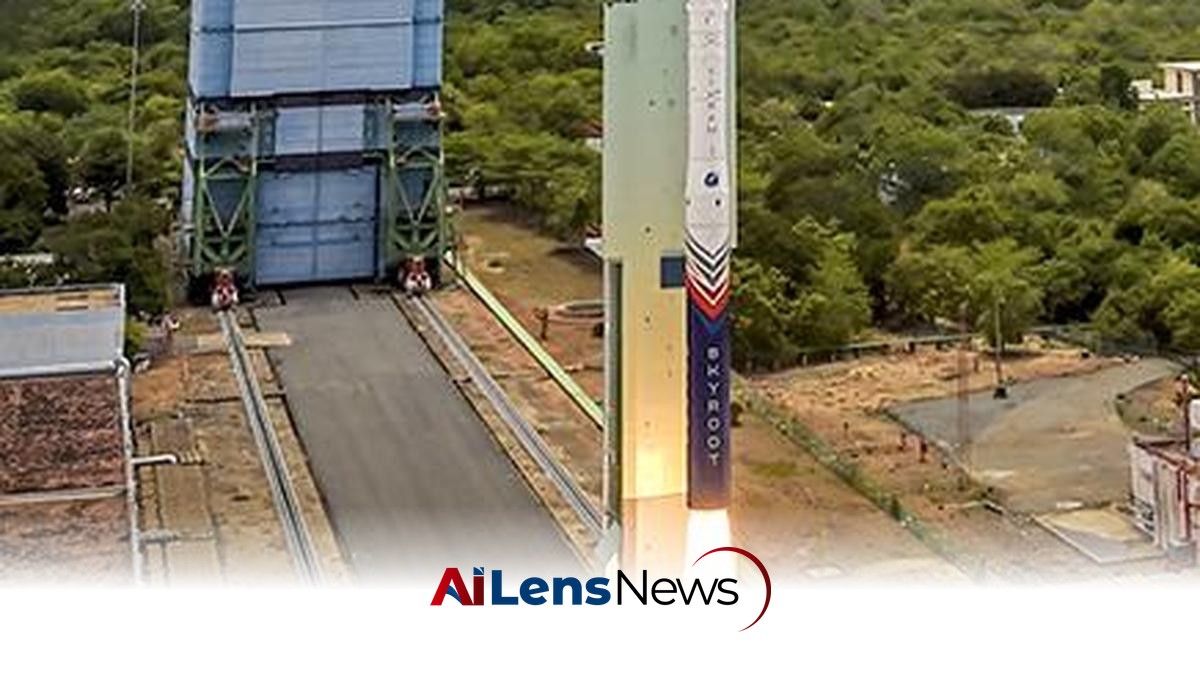


Skyroot Aerospace's Vikram-1 launch marks a significant milestone in India's private space sector, but the company faces challenges in a competitive market.
New Delhi, India Jul 20, 2026 ALN: India achieved its first private orbital rocket launch at 12:05 p.m. on July 18, with Skyroot Aerospace's Vikram-1 successfully reaching low-earth orbit. This mission, dubbed ‘Aagaman’ (Hindi for ‘arrival’), signifies a pivotal moment in India's space endeavors, traditionally dominated by the Indian Space Research Organisation (ISRO). The successful launch not only marks a significant achievement for Skyroot Aerospace but also reflects the broader transformation of India’s space landscape, which is increasingly open to private participation.
The launch of Vikram-1 is part of a larger trend initiated by the Indian government since 2020, which has actively sought to encourage private sector involvement in space exploration. By allowing private companies to develop launch vehicles and utilize ISRO's extensive infrastructure, the government aims to create a more dynamic and competitive space sector. This shift towards privatization is significant, as historically, ISRO has been the sole entity responsible for India's space missions, leading to a somewhat monopolized environment. The move to include private players is seen as a way to foster innovation, reduce costs, and increase the frequency of launches.
Globally, only a handful of private firms, such as SpaceX and Rocket Lab, have successfully created orbital launch vehicles, while others like ABL Space Systems continue to seek success. The success of these companies has set a precedent and created a competitive landscape that Skyroot must navigate. The challenges are manifold, as the global small-satellite launch market is evolving, presenting significant hurdles, including fluctuating domestic demand and market uncertainties that can impact the viability of new entrants.
A successful inaugural flight is a notable achievement, especially given that many rockets, including the renowned Falcon 9, have failed their first attempts. The successful deployment of Vikram-1 into orbit not only validates Skyroot’s engineering capabilities but also positions the company as a serious contender in the burgeoning private space sector. However, for Skyroot, this single launch is just the beginning. The company must now focus on establishing a reliable launch cadence and securing a customer base in a competitive market.
Founded in 2018 by former ISRO engineers Pawan Kumar Chandana and Naga Bharath Daka, Skyroot Aerospace marked its first milestone in 2022 with the successful suborbital flight of Vikram-S, the first privately developed Indian rocket. This early success laid the groundwork for the development of Vikram-1 and demonstrated the team's technical expertise and commitment to advancing India's capabilities in space technology.
Vikram-1 is a four-stage rocket, with the first three stages powered by solid fuel and the fourth by liquid fuel. This design choice allows for a balance between simplicity and efficiency, crucial for a company looking to optimize its launch operations. Skyroot aims to streamline its manufacturing process to produce one Vikram-1 rocket per month, a goal that, if achieved, would place them in a favorable position within the market.
Mission Aagaman served as a developmental flight for Vikram-1, allowing the company to test various parameters that can only be assessed during flight. Key aspects validated included stage separation, propulsion, guidance and navigation, structural performance, avionics, fairing deployment, upper-stage separation, and orbital insertion. Each of these components plays a critical role in ensuring that future missions can be executed safely and successfully.
Achieving the intended orbit was the mission's most challenging aspect, requiring the launch vehicle to accelerate rapidly while maintaining guidance and propulsion. While Vikram-1 successfully carried some payloads, the primary focus was on the rocket's performance. It has a payload capacity of 290 kg for a 500-km sun-synchronous orbit and 480 kg for a low-inclination orbit. Skyroot plans two more developmental flights before the rocket is deemed market-ready, indicating a cautious but thorough approach to ensuring reliability and performance.
The company’s roadmap includes Vikram-2, designed to carry up to 1,000 kg to low-earth orbit, with its first flight targeted for 2027. This ambitious plan demonstrates Skyroot's commitment to scaling its operations and expanding its capabilities within the market. Additionally, a fully reusable launch vehicle is in the works, featuring both booster and upper stage engineered for recovery and reuse. This development is critical as the industry moves towards sustainability and cost-effectiveness in launch operations.
However, building rockets is only part of the equation; establishing a sustainable model is crucial. The small-satellite launch market is increasingly competitive, and success requires not only growth but also industrial maturity and access to demand. The landscape is littered with companies that have failed to secure a foothold, highlighting the need for strategic planning and execution.
Forecasts from 2016 to 2021 anticipated a surge in demand for launching satellites weighing between 100-500 kg. While demand has increased, profitability has varied among entrants. The revenues from launch vehicles have grown more slowly than those in satellite manufacturing, leading to consolidation pressures within the industry. The anticipated demand was expected to be spread across various enterprises, but geopolitical shifts have concentrated it within satellite constellations, complicating the market dynamics.
Many small-satellite manufacturers currently opt for rideshare launches on larger rockets, particularly SpaceX's Falcon 9, which has significantly reduced launch fees. The rideshare model allows multiple payloads to share the cost of a single launch, making it an attractive option for smaller companies. Although a dedicated small-satellite launch vehicle like Vikram-1 offers flexibility and specific orbit options, satellite makers often face higher costs compared to rideshare options, which can limit the appeal of Skyroot's offering.
ISRO's Polar Satellite Launch Vehicle (PSLV) is a notable competitor, although recent failures have raised concerns about its reliability. The PSLV has been a workhorse for India, successfully launching numerous satellites over the years, but any lapses in reliability can impact its reputation and open opportunities for new entrants like Skyroot. Conversely, Vikram-1 may benefit from India's lower manufacturing and labor costs, access to ISRO's infrastructure, and a growing focus on manufacturing, including satellites, which could enhance its competitive edge.
Startups across Europe, the U.S., China, Japan, and Australia are also developing small-satellite launchers, with many struggling to secure contracts in a limited market. This international competition adds another layer of complexity for Skyroot, as it must differentiate itself and demonstrate its value proposition to potential customers. Vikram-1 will also compete with ISRO's new Small Satellite Launch Vehicle, further intensifying the competitive landscape.
Moreover, launch services are typically low-margin and capital-intensive compared to satellite manufacturing and related services. The financial pressures are compounded by compliance costs for debris mitigation and other regulatory requirements, which can add to the financial burden on new entrants. Skyroot may diversify its offerings once it establishes itself in the sector, but the domestic market remains relatively limited, necessitating a focus on international clients to ensure sustainability.
Skyroot's factory, capable of producing 12 Vikram-1 rockets annually, will only be an asset if there is sufficient demand for that volume of launches. Currently, even ISRO does not launch 12 small satellites each year, indicating that Skyroot must secure international customers to thrive. The ability to attract clients from abroad will be crucial in overcoming the challenges posed by the domestic market's limitations.
Despite projections suggesting that small satellites could account for a third of all launches by 2035, they are expected to represent less than one-tenth of the total launch mass. This reality underscores the challenges ahead for Skyroot. The company must navigate a landscape where demand is growing but profitability remains elusive for many players.
Nonetheless, the achievement of Mission Aagaman is significant. Designing, building, testing, and flying an orbital launch vehicle on the first attempt is a rare accomplishment globally and a milestone for India's private space sector. The companies that endure in this industry have consistently reached orbit through reliable processes at prices that customers find acceptable. Skyroot's success in this inaugural mission sets a promising precedent, but the road ahead will require strategic vision, adaptability, and a commitment to innovation.
With the success of Mission Aagaman, Skyroot now has the opportunity to build a sustainable model in the competitive landscape of space launches. The company must leverage its early success to attract investment, secure contracts, and establish a reputation for reliability and performance. As the global space industry continues to evolve, Skyroot's ability to adapt and innovate will be critical to its long-term success and significance in the rapidly changing arena of space exploration.
To learn more about the latest developments in Corporate & Industry Insights, stay updated with our exclusive reports and analyses on AiLensNews.

