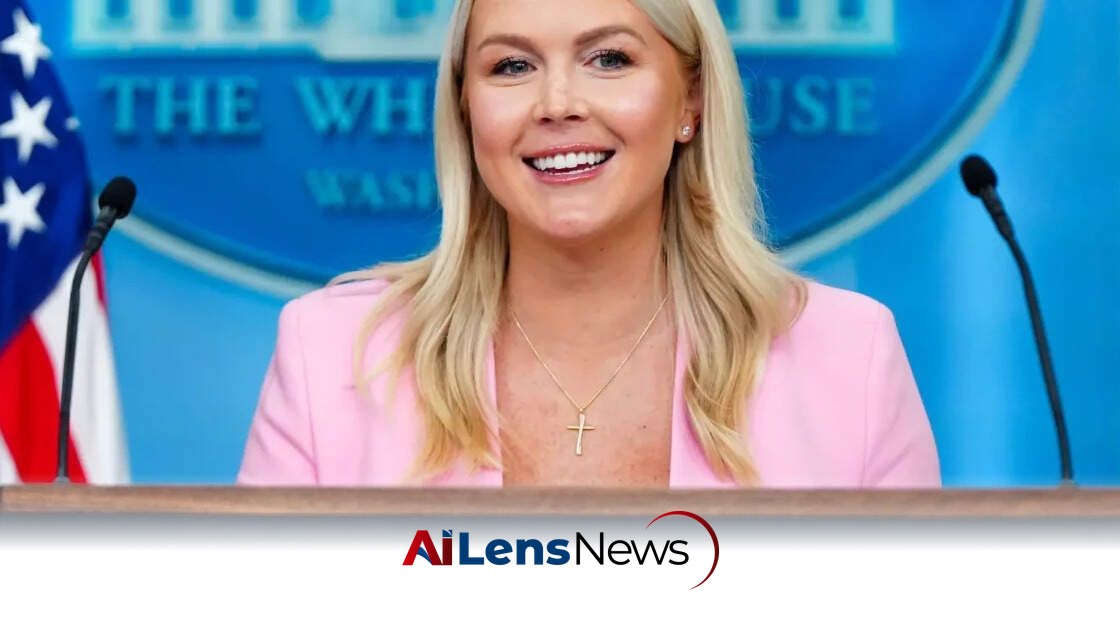


White House Press Secretary Karoline Leavitt will leave her position at the end of August to focus on her family, while continuing to advise the President.
New Delhi, India Aug 13, 2026 ALN: In a significant announcement, US President Donald Trump revealed that White House Press Secretary Karoline Leavitt will be stepping down from her role at the end of August. Leavitt has expressed a desire to dedicate more time to her young children and family. This decision comes at a time when balancing professional responsibilities with personal life has become a focal point for many working parents, particularly in high-pressure roles such as that of a press secretary.
Karoline Leavitt's tenure as press secretary has been marked by notable events and challenges, reflecting the dynamic nature of communication within the White House. Since her appointment, she has navigated a complex media landscape, characterized by a polarized political environment and rapid news cycles. Her role has often required not only the ability to communicate the administration's policies but also to manage the narrative surrounding them.
Trump acknowledged Leavitt's decision with understanding and respect, emphasizing her contributions during her tenure. He stated that she will continue to serve as one of his top outside advisers and remain a vital voice within the Republican Party. This transition indicates that while Leavitt may be stepping back from a public-facing role, her influence within the party and the administration will continue to be significant.
“Karoline has been a real leader in the White House, and has done a phenomenal job fighting for Justice, Liberty, and Freedom, since 2018, including our Historic Re-Election Campaign of 2024,” Trump noted in a post on Truth Social, highlighting her influence and efforts. Her focus on these themes aligns with the broader messaging strategy of the Trump administration, which has consistently emphasized issues of personal freedom and justice as central tenets of its platform.
Trump further praised Leavitt, calling her “one of the best White House Press Secretaries in the History of the Office.” This statement underscores the competitive nature of the role, which has seen various individuals come and go, each bringing their unique styles and strategies to the position. The press secretary serves as the primary spokesperson for the administration, often facing tough questions from journalists and needing to defend or clarify the President's statements and policies.
“Karoline will now be one of my top outside advisors, and an influential voice within the Republican Party, as we work to defy History, and conclusively win the Midterm Elections,” he added, reiterating her importance to the party's future. This statement reflects the Republican Party's ongoing efforts to solidify its base and expand its reach ahead of the midterm elections, which are critical for maintaining control of Congress.
Leavitt's departure marks a notable transition within the White House, as she has been a prominent figure in the administration since 2018. Her commitment to family and her ongoing role in advising the President reflect a balance between personal priorities and professional responsibilities. This balance resonates with many Americans who face similar challenges, particularly in high-stakes environments where work-life balance can often feel unattainable.
As the Republican Party gears up for the upcoming midterm elections, Leavitt's insights and experience will undoubtedly play a crucial role in shaping campaign strategies and messaging. Her understanding of the party’s core values and her experience in communication will be invaluable as candidates prepare to engage with voters and respond to the evolving political landscape.
The role of the press secretary has evolved over the years, particularly with the rise of social media and the 24-hour news cycle. In this context, Leavitt's ability to adapt to new forms of communication and engage with a diverse audience has been a significant asset. Her departure may prompt the administration to seek someone who can continue to navigate these challenges effectively, ensuring that the messaging remains consistent and resonant with the party's base.
Leavitt's tenure has not only highlighted her skills in managing media relations but has also illustrated the pressures faced by press secretaries in contemporary politics. The role requires not just a mastery of facts and figures but also a keen understanding of public sentiment and the ability to pivot quickly in response to breaking news. This adaptability is crucial in an age where information spreads rapidly, and public opinion can shift overnight.
Moreover, the political landscape in the United States has become increasingly polarized, with the media often serving as a battleground for competing narratives. Leavitt's experience in this environment has equipped her with the tools necessary to navigate these complexities, making her a valuable asset to the Trump administration. Her departure raises questions about who will fill this pivotal role and how the new appointee will tackle the challenges of communication in a divided nation.
In addition to her media responsibilities, Leavitt has been involved in shaping the administration's messaging on key issues such as immigration, healthcare, and policy. Her insights have helped frame the narrative around these topics, ensuring that the administration's position resonates with its supporters while also addressing the concerns of a broader electorate. This strategic communication has been vital in maintaining the party's relevance in a rapidly changing political climate.
As the Republican Party prepares for the midterm elections, the stakes are high. With control of Congress hanging in the balance, the party must effectively communicate its vision and policies to the American public. Leavitt's departure could signal a shift in strategy as the party seeks to energize its base and appeal to undecided voters. The choice of a new press secretary will be critical in this regard, as the individual will need to embody the party's values and effectively articulate its message in a way that resonates with a diverse electorate.
In conclusion, while Leavitt's exit from the press secretary role is a significant change, her continued involvement in the political landscape ensures that her influence will persist as the party navigates the challenges ahead. The implications of her departure will likely be felt not only within the White House but also throughout the Republican Party as it prepares for crucial electoral battles in the coming months. As the political climate continues to shift, the strategies employed by the party will be critical in determining its success and maintaining its relevance in American politics.
Ultimately, Karoline Leavitt's decision to step back from her public role reflects broader societal conversations about work-life balance, particularly for women in leadership positions. As more individuals prioritize family alongside career ambitions, her choice may inspire others to consider how they can navigate similar challenges in their own lives. The dialogue surrounding work-life balance is increasingly important in today's workforce, and Leavitt's situation serves as a reminder of the personal sacrifices often made in the pursuit of professional success.
To learn more about the latest developments in Corporate & Industry Insights, stay updated with our exclusive reports and analyses on AiLensNews.

