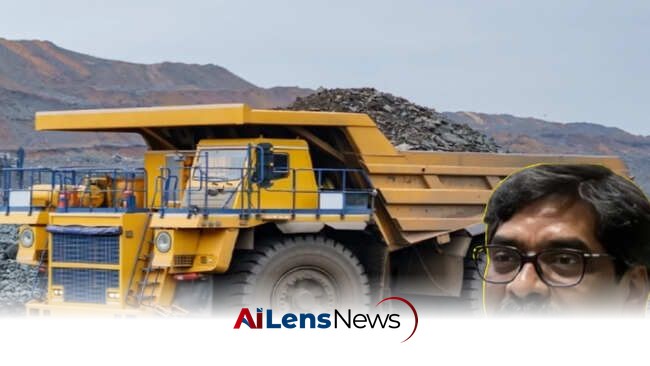


Chief Minister Hemant Soren of Jharkhand has urged President Murmu and PM Modi to reconsider the recently passed Mines Bill, citing significant financial implications for the state.
Ranchi, India Aug 13, 2026 ALN: Jharkhand Chief Minister Hemant Soren has raised serious objections to The Mines and Minerals (Development and Regulation) Amendment Bill, 2026, which was passed by Parliament during the Monsoon Session. His party, the Jharkhand Mukti Morcha (JMM), opposed the Bill in both Houses alongside several other Opposition parties. The passage of this Bill is seen as a significant development in the ongoing debate over the rights of state governments versus the authority of the central government in regulating natural resources.
The Mines and Minerals (Development and Regulation) Amendment Bill, 2026, is designed to amend existing legislation governing the mining sector in India. This Bill comes at a time when the mining industry is under scrutiny for its environmental impacts and the need for sustainable practices. The legislation aims to streamline the process of granting mining leases, enhance transparency, and potentially increase revenue for the central government through various provisions. However, it has sparked concerns among state leaders like Soren, who fear that it undermines their authority and financial interests.
Following the Bill's passage, Soren has written to President Droupadi Murmu and Prime Minister Narendra Modi, urging them to reconsider specific amendments and provisions. His correspondence reflects a growing unease among several state leaders regarding the centralization of power over natural resources. Additionally, he has reached out to the Leader of Opposition in Lok Sabha, Rahul Gandhi, seeking support in his efforts to preserve the state's right to tax mines and minerals. This move highlights the political alliance among opposition parties in the face of legislative changes that they perceive as detrimental to state autonomy.
In his letter, Soren emphasized that a nine-judge Constitution Bench of the Supreme Court upheld the legislative competence of states to tax mineral-bearing lands within their jurisdictions. This ruling is pivotal, as it reinforces the constitutional rights of states to govern their natural resources. Despite this legal backing, the new Bill introduces stipulations that could diminish the autonomy of state governments by placing conditions on how they can levy taxes or cess on minerals. The amendment allows states to impose such taxes, but it requires adherence to guidelines set forth by the central government, raising concerns about potential overreach and bureaucratic control.
Soren highlighted that the Bill will have a significant financial impact on Jharkhand, as mining revenue constitutes 84.9% of the state's own non-tax revenue. Jharkhand is rich in mineral resources, including coal, iron ore, and other valuable minerals, which are crucial for both the state's economy and the broader industrial landscape of India. The government had anticipated raising approximately ₹11,000 crore annually through cess on mine-bearing land, a revenue stream that is critical for funding public services, infrastructure development, and welfare programs.
The implications of the Bill extend beyond financial concerns; they touch upon the socio-fabric of Jharkhand. The state's reliance on mining revenue means that any alteration in the taxation framework could have cascading effects on employment, local businesses, and the livelihoods of those dependent on the mining sector. Soren's warning that if the central government does not reconsider the Bill, it could lead to widespread agitation across every block and district in Jharkhand, reflects the potential for civil unrest. Such unrest could manifest in protests, strikes, or other forms of dissent aimed at restoring what many in the state perceive as their rightful control over local resources.
This situation is compounded by the historical context of resource management in India, where the balance of power between state and central authorities has often been contentious. The central government has, at various , sought to assert greater control over natural resources in the name of national interest and development. However, this has frequently led to pushback from state governments, particularly those rich in minerals, who argue that they are best positioned to manage their resources effectively and sustainably.
Moreover, the issue of mining rights is intertwined with broader themes of justice and environmental sustainability. Many communities in Jharkhand are directly affected by mining activities, facing challenges such as displacement, environmental degradation, and inadequate compensation. As such, any changes to mining legislation must consider not only the financial implications for state governments but also the rights and welfare of local populations. The concerns over environmental degradation are particularly salient in a country like India, where rapid industrialization has often come at the cost of ecological balance.
The debate surrounding The Mines and Minerals (Development and Regulation) Amendment Bill, 2026, is emblematic of the ongoing struggle between state and central authorities over resource management in India. Soren's appeal to Modi and Murmu signifies a critical moment in this discourse, as it underscores the need for a collaborative approach that respects both state rights and national interests. The outcome of this legislative battle could set a precedent for future interactions between state and central governments concerning resource allocation and fiscal autonomy.
As the situation unfolds, it will be essential to monitor the responses from the central government and the potential mobilization of civil society in Jharkhand. The implications of this Bill extend beyond the immediate financial concerns and touch upon the fundamental principles of governance, resource management, and the rights of states within the Indian Union. The coming weeks may prove pivotal in shaping the future landscape of mining legislation and state rights in India.
Additionally, the political ramifications of this Bill could influence future elections and party alignments in Jharkhand and other mineral-rich states. The JMM, under Soren's leadership, may leverage this issue to rally support from constituents who feel threatened by the perceived encroachment of central authority. This could lead to a reconfiguration of political alliances, as parties that traditionally support centralization may find themselves at odds with regional interests.
Furthermore, the Bill's passage could also impact foreign investments in the Indian mining sector. Investors often seek stability and predictability in the regulatory environment, and any signs of conflict between state and central authorities could deter investment. This is particularly significant given India's ambitions to enhance its mining sector and attract foreign capital to meet its growing industrial needs. A clear and cooperative framework for resource management is essential to ensure that the interests of both the state and the central government are balanced.
In conclusion, the ongoing debate surrounding The Mines and Minerals (Development and Regulation) Amendment Bill, 2026, represents a critical juncture in India's approach to resource governance. As Chief Minister Hemant Soren continues to advocate for Jharkhand's rights, the interplay between state and central authority will be closely watched, not only for its immediate effects on mining legislation but also for its broader implications on federalism and resource management in India.
To learn more about the latest developments in Economy & Policy, stay updated with our exclusive reports and analyses on AiLensNews.

