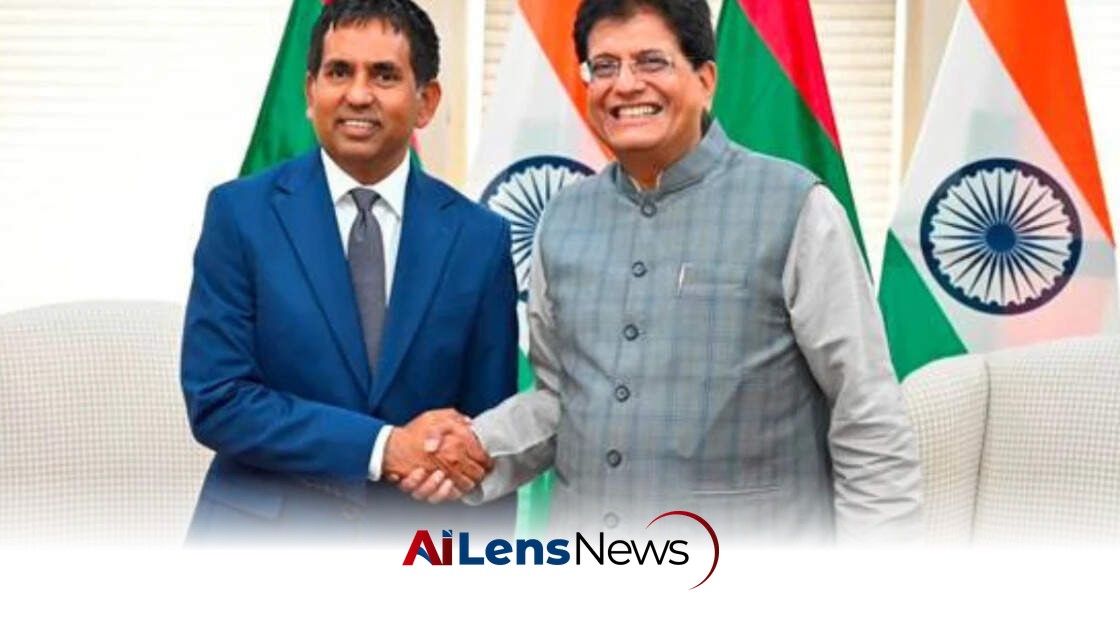


India and the Maldives have successfully completed their first round of negotiations for a Free Trade Agreement, making significant progress across eight technical sessions.
New Delhi, India Jul 14, 2026 ALN: India and the Maldives have recently concluded the first round of negotiations for a proposed Free Trade Agreement (FTA), marking a significant step in strengthening bilateral relations between the two nations. The negotiations, which took place virtually between June 29 and July 7, involved a series of eight technical sessions where both countries made substantial progress on various policy areas.
The discussions encompassed eight key policy areas, demonstrating a commitment from both sides to reach a broad convergence on multiple issues. The successful conclusion of this first round of talks is a positive indicator of the potential for enhanced cooperation and trade between India and the Maldives.
On July 8, following the conclusion of the negotiations, Indian Commerce and Industry Minister Piyush Goyal held a review meeting with Maldives' Minister of Development, Transport and Trade Mohamed Saeed. During this meeting, both ministers reaffirmed their commitment to expedite the conclusion of not only the FTA but also the Bilateral Investment Treaty (BIT). This commitment comes as the two countries celebrate 60 years of diplomatic relations, underscoring the importance of their partnership.
India is currently the Maldives' second-largest trading partner, a position that underscores the interdependence between the two nations. In the fiscal year 2025-26, bilateral trade between India and the Maldives saw a notable increase of 13.54%, rising to $771.76 million from $679.70 million in the previous fiscal year. This growth in trade highlights the potential benefits of the proposed FTA, which aims to further enhance market access and facilitate investment opportunities.
The proposed India-Maldives FTA is designed to strengthen bilateral and trade ties by enhancing market access, facilitating investment, promoting greater cooperation, and supporting sustainable growth in both countries. By reducing tariffs and other trade barriers, the agreement aims to create a more favorable environment for businesses in both nations, ultimately benefiting consumers through increased competition and lower prices.
The decision to initiate FTA negotiations was announced earlier in June, with the Indian commerce department sharing updates via social media. The negotiations are expected to continue in a virtual format, reflecting the ongoing adaptation of diplomatic and trade discussions in the context of global challenges, including the COVID-19 pandemic.
The Maldives, an archipelago nation in the Indian Ocean, relies heavily on tourism and fisheries for its stability. As such, the FTA could provide a much-needed boost to these sectors by opening up new markets for Maldivian products and services. The Indian market, with its vast consumer base, presents significant opportunities for Maldivian exporters, particularly in sectors such as fisheries, agriculture, and tourism-related services.
For India, strengthening trade ties with the Maldives is part of a broader strategy to enhance its influence in the Indian Ocean region. The Maldives is strategically located along key maritime routes, making it an important partner for India in terms of regional security and cooperation. The FTA negotiations are expected to contribute to a more stable and prosperous Indian Ocean region, where both nations can collaborate on various fronts, including security, trade, and environmental sustainability.
Furthermore, the FTA could serve as a model for other countries in the region, showcasing the benefits of integration and cooperation. As countries in South Asia look to boost intra-regional trade, the India-Maldives FTA could pave the way for similar agreements with other neighboring countries, fostering a more interconnected and resilient region.
In addition to trade and investment, the proposed FTA may also address other critical areas, such as technology transfer, capacity building, and sustainable development. By incorporating provisions that promote environmental sustainability and social responsibility, the agreement can ensure that growth does not come at the expense of ecological balance and community welfare.
The significance of the proposed FTA extends beyond mere benefits. It represents a strategic alignment of interests between India and the Maldives, particularly in the face of regional geopolitical dynamics. As China increases its presence in the Indian Ocean, both countries may view the FTA as a means to bolster their and strategic partnership, thereby countering any potential influence from external powers.
As the negotiations progress, both India and the Maldives will need to navigate complex issues related to tariffs, trade regulations, and market access. The success of the FTA will depend on the ability of both nations to find common ground and address any concerns that may arise during the negotiation process. Stakeholders from various sectors, including businesses, civil society, and government agencies, will play a crucial role in shaping the outcome of the agreement.
In conclusion, the first round of FTA negotiations between India and the Maldives marks a significant milestone in their bilateral relations. With both countries committed to enhancing trade and investment ties, the proposed agreement has the potential to bring about substantial benefits and foster a deeper partnership. As the negotiations continue, the focus will be on reaching a comprehensive and mutually beneficial agreement that supports sustainable growth and development for both nations.
The implications of the FTA are manifold. For the Maldives, the agreement could lead to increased foreign direct investment (FDI) as Indian businesses look to capitalize on the favorable trade terms. This could result in job creation and diversification, reducing the Maldives' reliance on tourism, which has been vulnerable to global shocks, such as the COVID-19 pandemic.
On the other hand, for India, the FTA could enhance its footprint in the Indian Ocean region, fostering stronger ties not just with the Maldives but potentially with other neighboring countries as well. It could also serve as a platform for India to promote its 'Act East' policy, which seeks to strengthen and strategic relationships with countries in Southeast Asia and the Indian Ocean.
In summary, the ongoing discussions surrounding the India-Maldives FTA are poised to reshape the landscape of the region. Both nations stand to gain from a successful agreement that not only boosts trade and investment but also enhances their strategic partnership in an increasingly complex geopolitical environment.
To learn more about the latest developments in Corporate & Industry Insights, stay updated with our exclusive reports and analyses on AiLensNews.

