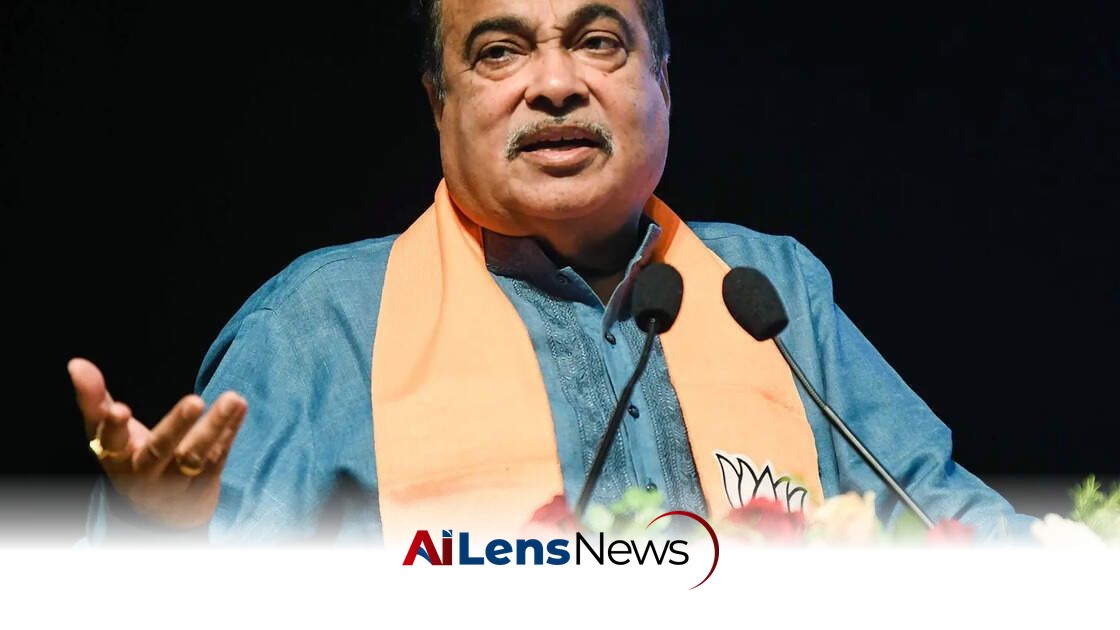


Minister Nitin Gadkari addresses concerns over the ethanol blending program, emphasizing minimal family business involvement and the initiative's environmental benefits.
New Delhi, India Jul 15, 2026 ALN: Road Transport and Highways Minister Nitin Gadkari has come forward to defend the Centre's ethanol blending program amidst rising criticism regarding its impact on vehicles and allegations of conflict of interest. He asserted that ethanol constitutes only a small share of the business run by his sons, and any reduction in fuel efficiency from E20 petrol is "minor" and primarily observed during high-speed driving.
In an interview, Gadkari firmly rejected claims that he or his family have benefited from the government's ethanol blending initiative, while also dismissing allegations that E20 fuel causes damage to vehicle engines. He stated, "E20 causes no engine damage, no major mileage loss: IIT Kanpur." This statement reflects a broader push by the Indian government to promote the use of ethanol as a cleaner alternative to conventional fossil fuels, aligning with global trends towards sustainable energy sources.
Gadkari emphasized that the sugar factory owned by his family predates the ethanol blending program and that he has no direct involvement in its commercial operations. He explained, "The sugar factory belongs to my family and it predates the whole conversation around ethanol. That business is run by my sons, the program is run by the petroleum ministry, and the price is decided by the Cabinet. So, I have no influence over it." This clarification is significant in light of ongoing discussions about potential conflicts of interest in government policy-making, particularly in sectors where personal business interests may overlap with public policy.
He further clarified that ethanol contributes only a fraction of his sons' business, stating, "Ethanol is just 10% of the business and the factories run by my sons have less than 0.5% share of the ethanol business in the country. The companies have a debt of Rs 1,600 crore. A lot of lies are being spread." This assertion aims to mitigate concerns over possible nepotism or undue influence within the government's ethanol policy framework, which has been a point of contention among critics who argue that personal interests may interfere with public good.
Labeling the criticism as "politically motivated," Gadkari claimed that a disinformation campaign is being waged against both him and the government. He noted that his support for ethanol dates back to before the current government's push for higher blending levels, mentioning that the program began during the Atal Bihari Vajpayee administration and continued under the UPA government. This historical context is essential in understanding the evolution of the ethanol blending initiative, which has been part of India's broader strategy to enhance energy security and reduce reliance on imported oil.
Gadkari has consistently advocated for cleaner fuels beyond sugarcane-based ethanol, including alternatives such as maize, rice, crop residue, and bamboo, as well as methanol, hydrogen, and electric vehicles. He stated, "I am a strong believer in alternative fuels, whether it is ethanol blended petrol, electric vehicles, methanol or hydrogen — all cleaner options that will reduce pollution, especially in a city like Delhi, where vehicles contribute up to 40% of air pollution." His comments reflect a growing consensus among environmentalists and policymakers that diversifying fuel sources is critical for combating climate change and improving urban air quality.
Addressing concerns regarding E20 petrol, which contains 20% ethanol, Gadkari insisted that there is no evidence supporting claims that the fuel damages engines. He maintained that vehicles compliant with E10 fuel are also suitable for E20. However, he acknowledged that ethanol's lower energy content could have a limited impact on fuel efficiency under certain driving conditions. This admission underscores the complexity of transitioning to alternative fuels, as consumers weigh the benefits of environmental sustainability against potential drawbacks in performance.
"E20 fuel was launched after being properly tested. As for mileage, in city traffic in Delhi or Mumbai, you will not see any major change; there may be some loss when you are driving at high speed on the Delhi-Mumbai Expressway. I have always said there is a minor mileage loss due to the low calorific value of ethanol compared to petrol," he explained. This nuanced understanding of fuel performance is important for consumers who are increasingly concerned about the efficiency and reliability of their vehicles in the context of changing fuel standards.
Gadkari cited automakers, including Maruti Suzuki, which have publicly stated that E20 fuel does not damage engines. He mentioned that his ministry had recently invited vehicle owners experiencing issues to report them, but no complaints have been received so far. This proactive approach aims to foster transparency and accountability, allowing consumers to voice their concerns while also reinforcing the government's commitment to ensuring the safety and reliability of new fuel standards.
On the topic of wider availability of lower ethanol blends, Gadkari stated that India has already achieved 20% ethanol blending, with E20 fuel available across petrol pumps. He added, "People who do not want ethanol blended fuel can go for 100% petrol, but they will have to pay more." This pricing strategy reflects the government's efforts to balance the promotion of sustainable fuels with consumer choice, ensuring that those who prefer traditional fuels are not unduly penalized.
When asked about the possibility of fuel stations offering multiple blending options, he noted that this matter falls within the petroleum ministry's jurisdiction, while highlighting that some outlets already sell E85 fuel for flex-fuel vehicles and that several manufacturers are preparing to launch such models. The introduction of flex-fuel vehicles represents a significant advancement in India's automotive market, potentially paving the way for a more versatile and sustainable fuel landscape.
In addition to addressing ethanol concerns, Gadkari defended the government's record on highway construction, stating that he has personally reviewed 950 highway projects and that there is "zero tolerance" for poor quality. He asserted that strict action has been ordered wherever deficiencies have been found, alleging that criticism of highway quality is part of a concerted campaign against the government. This assertion highlights the ongoing political dynamics surrounding infrastructure development in India, where government performance is often scrutinized in the context of broader electoral strategies.
Overall, Gadkari's defense of the ethanol blending program and his responses to criticism illustrate the complexities involved in transitioning to alternative fuels in India. As the country seeks to balance growth, energy security, and environmental sustainability, the success of initiatives like ethanol blending will depend on effective communication, consumer education, and ongoing collaboration between government, industry, and the public.
To learn more about the latest developments in Corporate & Industry Insights, stay updated with our exclusive reports and analyses on AiLensNews.

