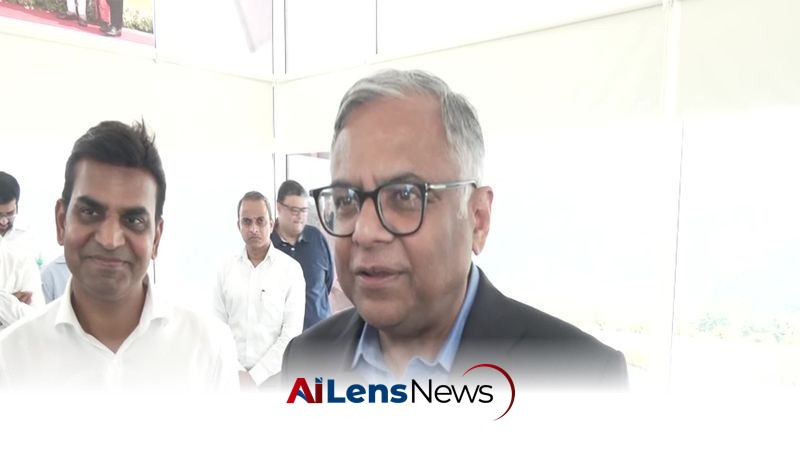


N Chandrasekaran has stepped down from his role as chairman of Tata Sons just days before the company's annual general meeting, marking a significant leadership change.
Chandigarh, India Aug 13, 2026 ALN: N Chandrasekaran has officially resigned as chairman of Tata Sons, a decision that comes just days before the company's annual general meeting (AGM) scheduled for August 18. Chandrasekaran's current term was set to run until February 2027, but he has indicated that he will not seek reappointment. This unexpected move follows reported tensions between Chandrasekaran and Noel Tata, the managing director of Tata International. Sources suggest that disagreements regarding the future direction of the company may have contributed to this leadership change.
Chandrasekaran, who took over as chairman in 2017, has been instrumental in steering Tata Sons through various challenges, including the impact of the COVID-19 pandemic on its diverse business portfolio. Under his leadership, the company has focused on digital transformation and sustainability initiatives. Chandrasekaran's tenure has seen substantial investments in technology and innovation, aligning with the global shift towards digitalization.
Prior to his role as chairman, Chandrasekaran served as the CEO and managing director of Tata Consultancy Services (TCS), a subsidiary of Tata Sons, which has been a significant contributor to the group's revenues. His background in technology and management positioned him well to lead Tata Sons during a period of technological upheaval and economic uncertainty. His leadership style has been characterized by a collaborative approach, emphasizing teamwork and inclusivity within the conglomerate that spans various sectors, including steel, automotive, consumer goods, and information technology.
During Chandrasekaran's leadership, Tata Sons undertook several strategic initiatives aimed at enhancing operational efficiency and expanding its global footprint. The group has invested heavily in renewable energy projects and has committed to reducing its carbon footprint, reflecting a broader industry trend towards sustainability. Additionally, the company has sought to leverage artificial intelligence and data analytics to improve its service offerings and operational efficiencies.
However, Chandrasekaran's tenure was not without challenges. The COVID-19 pandemic posed unprecedented difficulties, disrupting supply chains and affecting consumer demand across multiple sectors. Tata Sons had to navigate these turbulent waters while ensuring the safety of its employees and maintaining operational continuity. The pandemic also accelerated the need for digital transformation, which was a focal point during Chandrasekaran's leadership.
The reported tensions between Chandrasekaran and Noel Tata, who is part of the Tata family and has been influential in various Tata Group businesses, have raised questions about the internal dynamics within Tata Sons. Disagreements regarding the strategic direction of the company, especially in a rapidly changing global market, may have played a role in Chandrasekaran's decision to step down. Leadership transitions can often lead to shifts in corporate strategy, and the timing of this resignation suggests that significant changes may be on the horizon.
Internal dynamics within large conglomerates like Tata Sons can be complex, often influenced by family relationships, historical legacies, and differing visions for the future. The Tata Group, founded in the late 19th century, has a rich history and is known for its ethical business practices and commitment to social responsibility. Therefore, any leadership change, particularly at the top level, can have wide-ranging implications not only for the company’s strategic direction but also for its cultural identity.
The timing of Chandrasekaran's resignation raises questions about the strategic direction of Tata Sons moving forward. The AGM is expected to address key issues and outline the company's future plans, making this leadership transition particularly significant. Stakeholders, including investors, employees, and customers, will be closely monitoring how the new leadership will respond to the challenges facing the conglomerate.
Moreover, the resignation may impact ongoing projects and initiatives that were set in motion under Chandrasekaran's leadership. The new chairman will need to assess these projects and determine which align with the company's long-term vision and objectives. This could lead to a reevaluation of priorities and a potential shift in focus, depending on the incoming leader's perspective and strategic vision.
In the context of global economic uncertainties, the new leadership will also have to address the competitive landscape in which Tata Sons operates. The conglomerate has interests in various sectors, including steel, automotive, telecommunications, and consumer goods, each facing unique challenges and opportunities. The ability of the new chairman to effectively coordinate these diverse interests will be crucial in maintaining the group's competitive edge.
As Tata Sons prepares for this leadership change, stakeholders will be keenly observing how the new leadership will navigate the complexities of the business landscape. The company has a rich history and a strong reputation, and maintaining its legacy will be a priority for the incoming leadership. The Tata Group is known for its commitment to ethical business practices and corporate social responsibility, values that have been integral to its identity.
The choice of Chandrasekaran's successor will be critical in determining the future trajectory of Tata Sons. The new chairman will need to balance the interests of diverse stakeholders while driving innovation and growth. Additionally, the leadership transition may open up opportunities for fresh perspectives and new ideas that could invigorate the company's strategic direction.
In conclusion, Chandrasekaran's resignation marks a pivotal moment for Tata Sons as it approaches its AGM. The company's ability to adapt and thrive under new leadership will be crucial in the coming months. As Tata Sons navigates this transition, it will need to remain focused on its core values while addressing the challenges of an evolving global market. The coming weeks and months will be critical in shaping the future of Tata Sons and its various business ventures.
Furthermore, as Tata Sons embarks on this new chapter, the implications of Chandrasekaran's resignation may extend beyond immediate operational concerns. Analysts and industry observers will be watching closely to see how the new leadership addresses the ongoing challenges of digital transformation, sustainability, and global competitiveness. The Tata Group's ability to maintain its position as a leader in diverse sectors will depend not only on strategic decisions made by the new chairman but also on the ability to foster a culture of innovation and resilience within the organization.
Ultimately, the transition in leadership at Tata Sons serves as a reminder of the dynamic nature of corporate governance and the importance of aligning leadership with the evolving needs of the market and stakeholders. As the company prepares for its AGM and the subsequent transition, the focus will be on ensuring continuity while embracing change, a balance that will be essential for sustaining success in the years to come.
To learn more about the latest developments in Financial Literacy, stay updated with our exclusive reports and analyses on AiLensNews.

