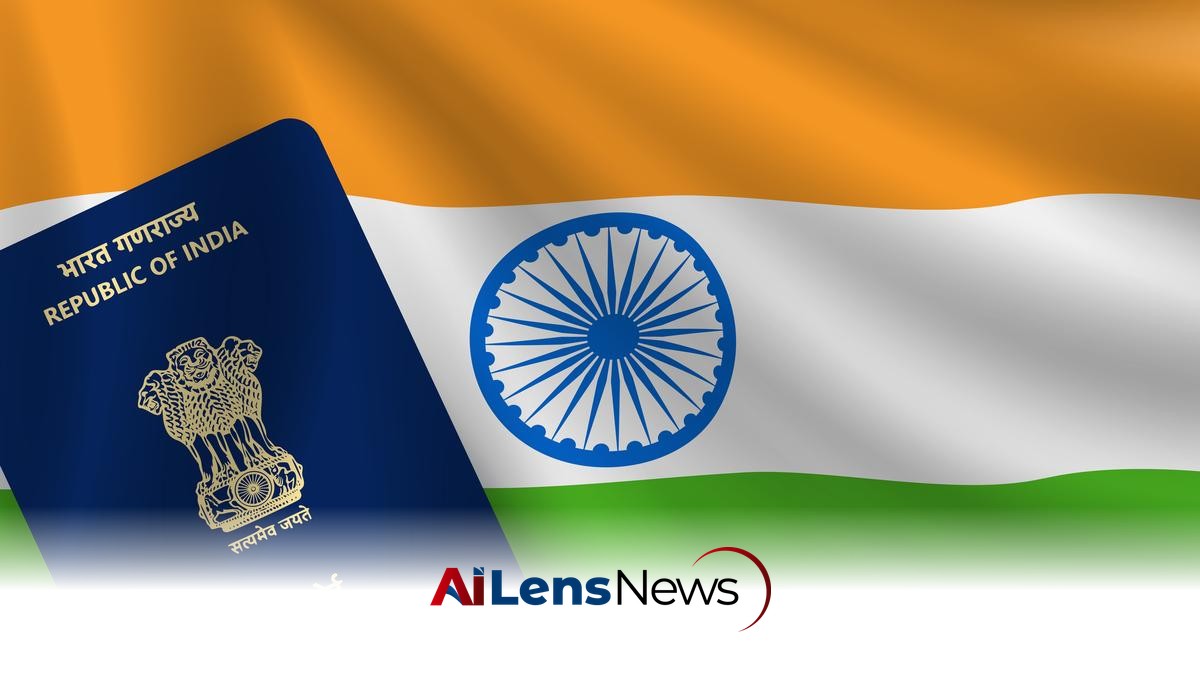


Explore the distinction between Indian passports as travel documents and their role in proving citizenship rights.
New Delhi, India Jul 4, 2026 ALN: The Indian passport is a “travel document” and not a “citizenship document”, a senior official of the Ministry of External Affairs (MEA) stated on Wednesday (June 24, 2026). This statement has raised important questions surrounding the distinction between travel documentation and proof of citizenship, a topic that carries significant implications for Indian citizens and their rights.
The primary purpose of the Indian passport is to facilitate the transit and travel of Indians through foreign ports and territories. It should not be compared to other documents that are used to establish citizenship rights, the official emphasized. This clarification highlights an ongoing debate about what constitutes valid proof of citizenship in India, particularly in the context of recent discussions about voter eligibility and the electoral process.
In response to a query regarding whether the Indian passport could be utilized to challenge an exclusion from the voter list during the Special Intensive Revision (SIR) of electoral rolls currently taking place in 16 States, the official clarified, “A passport is a travel document, not a document of citizenship. Theoretically speaking, this distinction sets a passport apart from other documents. While traveling abroad, a passport does attest to your nationality; however, it is not a document of your citizenship.”
This distinction is critical in understanding the various documents that can be used to establish citizenship in India. Traditionally, citizenship is established through documents like birth certificates, national identity cards, or certificates of citizenship. The Indian Constitution, under Article 5, provides the framework for determining citizenship at the time of the country's independence and subsequently through various laws and amendments. The Citizenship Act of 1955, along with its subsequent amendments, outlines the criteria for acquiring Indian citizenship, including birth, descent, registration, and naturalization.
In light of this legal framework, the role of the passport as a travel document rather than a citizenship document becomes even more pronounced. Passports are issued based on the verification of an individual's nationality, which is a separate legal status from citizenship. This means that while a passport can indicate that a person is an Indian national, it does not automatically confer citizenship rights or responsibilities.
Moreover, the implications of this distinction are particularly relevant in the context of the Special Intensive Revision (SIR) of electoral rolls, which aims to ensure that voter lists are accurate and up-to-date. The process of revising electoral rolls is crucial for maintaining the integrity of the democratic process, as it determines who is eligible to vote in elections. The exclusion of individuals from the voter list can have significant consequences, as it directly impacts their ability to participate in the democratic process.
In recent years, there has been growing concern over the accessibility and inclusivity of the electoral process in India. Various groups have raised alarms about disenfranchisement, particularly among marginalized communities. The clarification from the MEA regarding the passport's status as a travel document rather than proof of citizenship underscores the need for individuals to possess the appropriate documentation to establish their citizenship when engaging in processes such as voter registration.
Additionally, the distinction between travel and citizenship documents is not unique to India. Many countries have similar frameworks, where passports serve primarily as tools for international travel and do not serve as definitive proof of citizenship. In the United States, for instance, a passport can indicate nationality but does not necessarily establish citizenship status in legal proceedings. This global perspective highlights the importance of understanding the specific legal definitions and implications associated with different types of documentation.
Furthermore, the conversation surrounding citizenship documentation is often intertwined with broader socio-political issues, including immigration, naturalization, and the rights of refugees and stateless individuals. As nations grapple with the complexities of global migration, the clarity around what constitutes citizenship and the associated rights becomes increasingly important. In India, the ongoing discussions about citizenship are particularly poignant in light of historical and contemporary challenges related to identity, belonging, and national security.
As citizens navigate the intricacies of legal documentation, it is essential for the government and relevant authorities to ensure that the processes for obtaining and verifying citizenship are transparent, fair, and accessible. This includes providing clear guidance on what documents are acceptable for various purposes, including voter registration, and ensuring that individuals are not unfairly excluded from participation in the democratic process due to a lack of understanding or access to the required documentation.
In conclusion, the statement from the MEA serves as a reminder of the critical distinction between travel and citizenship documents, and the implications this distinction holds for individuals seeking to establish their rights and participate in the democratic process. As India continues to navigate the complexities of citizenship and identity in a rapidly changing world, it is vital for citizens to be informed about their rights and the documentation necessary to uphold those rights. The ongoing discussions surrounding citizenship, voter eligibility, and the role of documentation will undoubtedly remain at the forefront of national discourse as the country moves forward.
The legal framework surrounding citizenship in India is complex and multifaceted. The Citizenship Act of 1955 is the cornerstone of citizenship law in India, detailing various pathways through which individuals can acquire citizenship. These pathways include citizenship by birth, descent, registration, and naturalization. Each pathway has specific requirements, and the process can vary significantly depending on the individual's circumstances.
Citizenship by birth, for instance, grants citizenship to individuals born in India, with certain exceptions that have evolved over the years. Citizenship by descent allows individuals born outside India to claim citizenship if at least one parent is an Indian citizen. Registration is available for certain categories of individuals, including those of Indian origin who have migrated to other countries. Naturalization, on the other hand, is a more complex process that requires individuals to meet specific criteria, including residency requirements and proficiency in one of the Indian languages.
In addition to the Citizenship Act, various amendments and legal rulings have further shaped the landscape of citizenship in India. For instance, the Citizenship Amendment Act (CAA) of 2019 has been a subject of intense debate and controversy, as it provides a pathway to citizenship for certain religious minorities from neighboring countries, but has also raised concerns about its implications for secularism and the rights of Muslims in India.
The implications of these laws are profound, particularly in light of the ongoing discussions about voter eligibility and the electoral process. The recent statement from the MEA regarding the status of the passport as a travel document rather than proof of citizenship has underscored the necessity for individuals to possess valid documentation to establish their citizenship when engaging in electoral processes. This has significant ramifications for many individuals who may find themselves in precarious situations, especially in a country with a diverse population and varying degrees of access to documentation.
Moreover, the intersection of technology and documentation is also worth noting. As India moves towards digitization and the use of technology in governance, the processes for verifying citizenship and identity are evolving. Digital identity systems, such as Aadhaar, have been introduced to streamline various services, including access to welfare programs and voter registration. However, these systems also raise concerns about privacy, data security, and the potential for exclusion, particularly for those who may not have access to technology or the internet.
In light of these developments, it is crucial for the government to strike a balance between ensuring security and inclusivity. The need for clear communication regarding the types of documents required for citizenship verification and voter registration is paramount. This is particularly important in a country where linguistic and educational barriers may hinder individuals from fully understanding the requirements or navigating bureaucratic processes.
As India grapples with these challenges, it is essential for civil society, legal experts, and policymakers to engage in constructive dialogues to ensure that the rights of all citizens are upheld. This includes advocating for policies that promote accessibility and inclusivity in the electoral process, as well as addressing the broader issues of citizenship, identity, and belonging in a diverse society. The ongoing discourse surrounding these topics will undoubtedly shape the future of democracy in India, as citizens seek to assert their rights and participate meaningfully in the democratic process.
To learn more about the latest developments in Corporate & Industry Insights, stay updated with our exclusive reports and analyses on AiLensNews.

