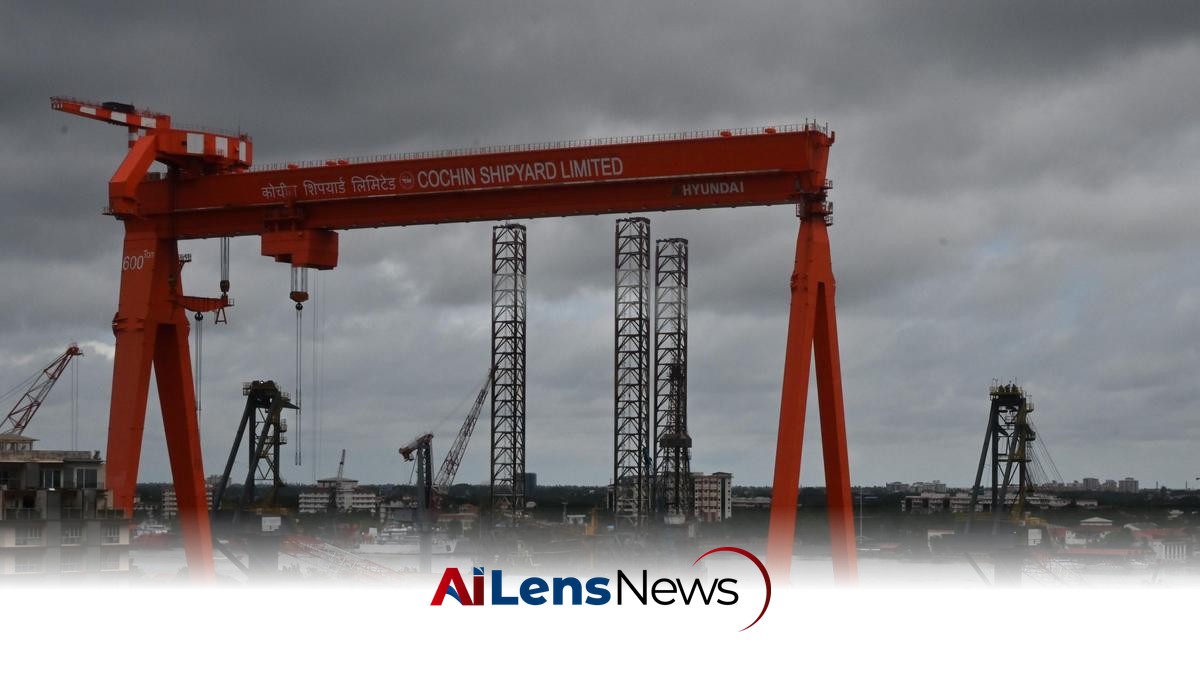


The government plans to sell a 5% stake in Cochin Shipyard at ₹1,400 per share through an offer for sale, starting July 7, 2026.
New Delhi, India Jul 7, 2026 ALN: The Indian government has officially announced its plan to divest up to 5% of its stake in Cochin Shipyard Limited (CSL), a significant player in the shipbuilding and repair industry. This divestment will occur through an offer for sale (OFS) at a floor price of ₹1,400 per share. The OFS is scheduled to begin on Tuesday, July 7, 2026, marking a notable event in the ongoing efforts by the government to monetize its assets and reduce its stake in public sector enterprises.
Arunish Chawla, the Secretary of the Department of Investment and Public Asset Management (DIPAM), has provided further details regarding the structure of this offer. The initial base offer will consist of 2.52% of CSL's paid-up equity, with an additional 2.52% available as a green-shoe option. This option is designed to accommodate potential oversubscription from investors, allowing for a greater allocation if demand exceeds expectations. Such mechanisms are common in OFS processes, as they provide flexibility and help in managing investor interest.
The OFS will be opened to non-retail investors on July 7, while retail investors will have the opportunity to participate starting on July 8, 2026. This staggered approach is typical in OFS processes, allowing institutional and non-retail investors to first gauge the demand before retail investors enter the market. This method is aimed at ensuring that the offer is well-received and that retail investors can benefit from the insights of larger investors.
The floor price of ₹1,400 per share represents a 7% discount compared to the closing price of ₹1,504.75 on the Bombay Stock Exchange (BSE) on the previous trading day, July 6, 2026. This discount is a strategic move aimed at attracting a higher number of bids from potential investors, as it provides an immediate financial incentive to purchase shares at a lower price than the market rate. On that day, shares of Cochin Shipyard had seen a decline of 1.25% from the previous close, indicating some volatility in the stock's performance, which may have influenced the decision to set a competitive floor price.
Currently, the Indian government holds a substantial 67.91% stake in Cochin Shipyard. This stake sale is part of a larger strategy to divest holdings in public sector undertakings (PSUs) and is in line with the government's ongoing efforts to streamline operations and improve financial health. The government has previously conducted stake sales through OFS in six public sector entities during the current fiscal year, which include notable companies such as Central Bank of India, Coal India, NHPC, NLC India, GIC, and IRFC. Collectively, these sales have raised a significant ₹18,561 crore, underscoring the government's commitment to its disinvestment agenda.
For the entire fiscal year, the government has set an ambitious target to raise ₹80,000 crore through various disinvestment and asset monetization initiatives. This target reflects the government's broader fiscal strategy aimed at reducing the fiscal deficit and increasing the resources available for developmental projects. The funds raised through these divestments are intended to be reinvested into critical areas such as infrastructure, healthcare, and education, which are essential for sustaining economic growth and improving public welfare. The focus on these sectors is particularly important given the challenges posed by the COVID-19 pandemic, which has strained public finances and highlighted the need for robust public investment.
Cochin Shipyard Limited, established in 1972, is one of the largest shipbuilding and repair facilities in India and plays a crucial role in the maritime sector. The company has built a reputation for excellence in constructing various types of vessels, including tankers, offshore support vessels, and specialized ships. In addition to shipbuilding, CSL is also involved in ship repair and has capabilities in the construction of naval ships and submarines, contributing significantly to India's defense and maritime capabilities. This strategic importance makes the company a critical asset in India’s efforts to bolster its naval presence and capabilities.
As the government moves forward with this stake sale, it is essential to consider the implications for Cochin Shipyard and the wider maritime industry. The divestment may lead to increased scrutiny of the company's operations and performance, as private shareholders may demand greater accountability and transparency. This shift could result in a more performance-driven culture within the company, which might improve operational efficiency and profitability. Furthermore, the reduction of government ownership could open the door for strategic partnerships and collaborations with private entities, which might enhance innovation and efficiency within the company. Such partnerships could also lead to an influx of new technologies and practices that are crucial for maintaining competitiveness in the global shipbuilding market.
Moreover, the performance of the OFS will be closely watched by market analysts and investors alike. A successful stake sale could bolster investor confidence in Cochin Shipyard and serve as a positive signal for future disinvestment initiatives by the government. Conversely, if the OFS fails to attract adequate interest, it may raise concerns about the company's financial health and market position. Market sentiment surrounding public sector enterprises has been mixed, and this OFS will serve as a litmus test for investor appetite in the sector, particularly in light of the government's ambitious divestment targets.
In conclusion, the government's decision to sell a 5% stake in Cochin Shipyard Limited at ₹1,400 per share via OFS is a significant move in the context of its broader disinvestment strategy. As the government aims to raise substantial funds through asset monetization, the outcome of this stake sale will be pivotal not only for Cochin Shipyard but also for the overall health of public sector enterprises in India. Investors, both retail and institutional, will be keenly observing the developments surrounding this offer, as it may set the tone for future disinvestment efforts and influence market dynamics in the shipbuilding sector. The implications of this divestment extend beyond immediate financial results, potentially shaping the future landscape of public-private partnerships in India’s maritime industry.
To learn more about the latest developments in Corporate & Industry Insights, stay updated with our exclusive reports and analyses on AiLensNews.

