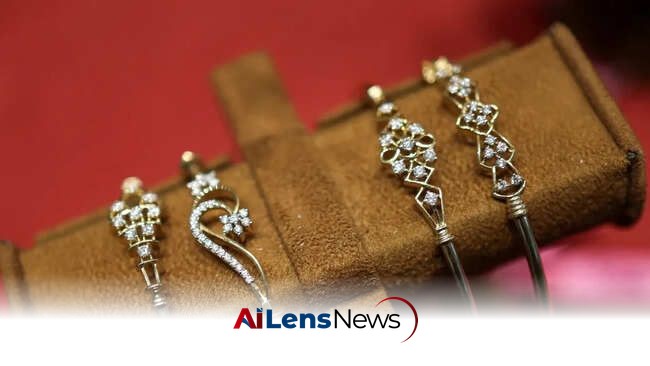


India's diamond exports have declined, but domestic retailers are investing heavily in both natural and lab-grown diamonds to meet rising consumer demand.
New Delhi, India Jul 10, 2026 ALN: India's diamond industry is currently experiencing two sharply contrasting realities that reflect the complexities of the global and domestic markets. On one hand, exports of both natural and lab-grown diamonds have seen a notable decline over the past two financial years, while on the other, significant investments are being made by jewellery retail giants to capitalize on the rising domestic demand for diamond jewellery.
The country’s cut and polished diamond exports, which represent its largest segment of diamond exports, have dropped to Rs 1.07 lakh crore in FY26, down from Rs 1.12 lakh crore in FY25 and Rs 1.32 lakh crore in FY24, according to data from the Gems and Jewellery Export Promotion Council (GJEPC). Despite this decline, cut and polished diamonds still accounted for nearly 44% of the country's total gems and jewellery exports, underscoring their importance to the Indian economy.
Similarly, the exports of worked lab-grown diamonds have also decreased, falling to Rs 10,012 crore from Rs 10,716 crore the year prior and Rs 11,612 crore in FY24. This decline indicates that the issues affecting the diamond export sector are not confined solely to natural diamonds; rather, a combination of factors including slowing global demand, pricing pressures, and disruptions in key overseas markets have adversely impacted nearly every segment of India's diamond export basket.
According to the GJEPC, the downturn in cut and polished diamond exports has been exacerbated by global inventory corrections, a decrease in discretionary spending among consumers, and uncertainties related to tariffs in the United States. Moreover, although polished lab-grown diamonds have seen higher shipment volumes, they have also experienced price corrections, indicating a challenging environment for exporters.
Despite the export slowdown, India is playing an increasingly strategic role in the global lab-grown diamond industry. As the technology for producing lab-grown diamonds improves and becomes more widespread, India has positioned itself as a key player in this emerging market. This shift is particularly significant as lab-grown diamonds are gaining acceptance among consumers who prioritize ethical sourcing and sustainability.
In stark contrast to the export figures, the outlook for India's leading jewellery retailers remains robust. These companies continue to invest heavily in diamond jewellery, responding to a shift in consumer preferences towards branded, lightweight, and design-led products. This trend is particularly pronounced among younger consumers, who are increasingly viewing diamond and studded jewellery as everyday adornment rather than items reserved for special occasions such as weddings.
For instance, Titan has launched its lab-grown diamond brand, beYon, in FY26, specifically targeting younger consumers. The company has also expanded its Diamond Expertise Centres, which provide customers with tools to differentiate between natural and lab-grown diamonds through in-store verification processes. Titan's annual report indicates that jewellery remains its most significant growth engine, and the company is continuing to invest across its various brands, including Tanishq, CaratLane, Zoya, and Mia, while positioning beYon as a new avenue for growth in the lab-grown segment.
BlueStone, another prominent player in the Indian jewellery market, believes that the most substantial opportunities lie not in exports but rather in the evolving domestic consumer market. Gaurav Singh Kushwaha, CEO and founder of BlueStone, emphasized the demographic shift, noting that younger, increasingly independent buyers are more inclined to view diamond and studded jewellery as part of their daily attire. This change reflects a broader cultural shift in India where traditional norms around jewellery ownership and usage are being redefined.
Kushwaha also pointed out that demand for diamond jewellery is no longer limited to metropolitan cities; it is spreading to Tier-II and Tier-III markets, where there is a growing acceptance of design-led studded jewellery. BlueStone, which does not engage in the export market, is able to concentrate entirely on the vast domestic jewellery opportunity, allowing it to tailor its offerings to meet the needs and preferences of Indian consumers.
When discussing the industry's outlook, Kushwaha expressed optimism about the future of diamond jewellery, particularly as consumers increasingly prefer lighter, everyday pieces where design takes precedence over the weight of gold. He anticipates that the design-led, diamond-and-studded segment will experience significant growth, which in turn could help moderate the industry's dependence on gold-intensive products.
Another company, Senco Gold, has also ventured into the lab-grown diamond market through its Sennes brand. However, the company has clarified that this move is intended to provide customers with more options rather than replace natural diamonds. Managing Director and CEO Suvankar Sen stated that their entry into the lab-grown segment is aimed at understanding the market dynamics better and offering customers choices that align with their preferences.
Senco reported a 9% growth in diamond volumes and a remarkable 32% increase in diamond sales value during FY26. This growth has been attributed to an improved product mix, the popularity of lightweight jewellery, and the introduction of lower-priced offerings, which have made diamond jewellery more accessible to a broader audience.
Despite the expansion of lab-grown diamond offerings, natural diamonds continue to hold a central position in premium jewellery portfolios. For example, CaratLane has introduced Shaya Diamonds, which features natural diamonds set in silver, starting at Rs 5,000, aimed at making diamond jewellery more affordable for consumers. Additionally, Titan continues to invest in diamond authentication infrastructure, ethical sourcing practices, and research-grade Raman spectroscopy to bolster consumer confidence in natural diamonds.
The contrasting trends within the diamond industry indicate a structural divergence in the sector. While export-oriented manufacturers grapple with challenges such as weak overseas demand, inventory corrections, and pricing pressures, organized retailers are increasingly optimistic about the potential of India's growing base of younger consumers. These consumers are expected to sustain demand for both natural and lab-grown diamond jewellery, creating a unique landscape in which the domestic market thrives even as exports face headwinds.
As the industry evolves, it will be crucial for stakeholders to adapt to changing consumer preferences and market dynamics. Retailers may need to innovate continuously, ensuring that they meet the demands of a diverse and discerning customer base. The ongoing investment in both natural and lab-grown diamonds reflects an understanding of the need for variety and choice in the marketplace, catering to a wide range of consumer tastes and values.
To learn more about the latest developments in Corporate & Industry Insights, stay updated with our exclusive reports and analyses on AiLensNews.

