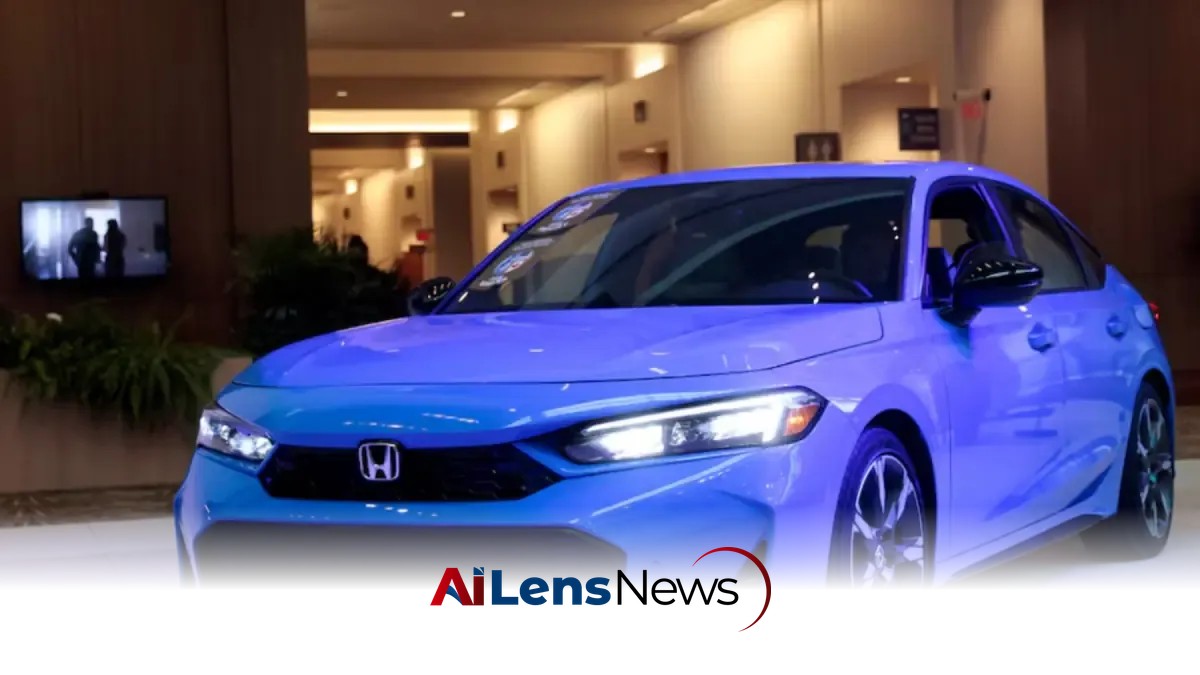


The recent increase in GST on hybrid vehicles to 25% has led to significant price hikes by local automakers, impacting consumer demand.
Islamabad, Pakistan Jul 12, 2026 ALN: In recent developments, the price of hybrid vehicles in Pakistan has surged dramatically, following the government's decision to increase the general sales tax (GST) on hybrid vehicles from 8.5 percent to 25 percent in the budget for the fiscal year 2027. This significant hike in taxation has prompted major automotive manufacturers, including Toyota and Honda, to raise the prices of their hybrid models by over Rs1.3 million. The price adjustments reflect the broader economic and regulatory landscape that local assemblers are navigating, particularly in the context of the yet-to-be-announced Auto Policy for the period 2026-2031.
The price increases have been particularly pronounced for popular hybrid models. Indus Motor Company, which assembles Toyota vehicles, has raised the prices of its Toyota Corolla Cross hybrid electric vehicle (HEV) models by Rs1.364 million and Rs1.314 million, bringing their new prices to Rs10.299 million and Rs9.849 million, respectively. Similarly, Honda Atlas Cars Limited has increased the price of its HR-Ve model by Rs1.370 million, now priced at Rs10.369 million. These substantial hikes in vehicle prices are likely to have a significant impact on consumer behavior, potentially leading to a decrease in demand for hybrid vehicles.
In addition to the price hikes, several automotive assemblers have reportedly suspended invoicing and deliveries of hybrid vehicles. This suspension indicates a cautious approach among manufacturers, who may be anticipating modifications in the new auto policy or a potential reduction in the GST rate. The uncertainty surrounding the government's policy direction has left consumers in a state of limbo, especially those eager to take delivery of their vehicles this month.
Industry analysts have expressed concerns that the steep increase in HEV prices could dampen demand for hybrid vehicles, which the government has been actively promoting as part of its strategy to encourage the adoption of fuel-efficient technologies. The increase in prices, now ranging from an additional Rs1.3 million to Rs1.9 million for electrified vehicles, may render these options financially unfeasible for a significant portion of the consumer base. As a result, the government's objectives to transition towards more sustainable transportation solutions could be undermined.
The current situation is further complicated by the absence of a new auto policy. The previous Auto Policy, which was in effect from 2021 to 2026, expired on June 30, 2026, and local assemblers have been left without clear guidance on the regulatory framework moving forward. Despite the government's claims that a draft of the new auto policy has been prepared and shared with stakeholders, assemblers have reported a lack of concrete information regarding its implementation. Asad Ali of Topline Securities highlighted the ongoing uncertainty, noting that the revised auto policy, which is expected to introduce a new incentive structure for the automotive sector, has yet to be officially notified.
Finance Minister Muhammad Aurangzeb, during his budget speech, indicated that the new Auto Policy 2026-2031 is currently under review by a committee appointed by the Prime Minister. The details of this policy are expected to be presented to parliament after receiving approval from both the Prime Minister and the cabinet. Meanwhile, the finance minister announced an extension of the incentive on imports of completely knocked down (CKD) kits for electric vehicles, which includes bikes, three-wheelers, cars, and buses, until June 30, 2027. This extension aims to support the local automotive industry in the face of rising costs and regulatory changes.
In addition to the GST increase, the government has made adjustments to the regulatory duty (RD) structure across various categories of imported vehicles. Asad Ali noted that the government had issued SRO 1064(I)/2026, which supersedes the previous SRO 1152(I)/2025, implementing the second-year tariff rationalization plan under the National Tariff Policy (NTP) 2025-30. This new notification has led to a reduction in regulatory duties across most categories, with the maximum RD now capped at 20 percent, down from 50 percent. This change is aimed at making imported vehicles more competitive in the local market.
The reductions in customs duty and additional customs duty (ACD) on several automotive products are also noteworthy. Customs duty on imports of CKD kits, auto parts, and completely built-up (CBU) vehicles has been reduced from rates ranging between 50-100 percent to a range of 30-50 percent. While these changes are intended to rationalize the overall tariff structure, industry experts suggest that they may not provide significant benefits to local assemblers, who are already importing products under preferential duty rates due to the concessionary regime established by SRO 656.
Local assemblers have been importing CKD kits and components at preferential rates of up to 30 percent, making the latest tariff reductions less impactful for them. The government’s move to reduce customs duties across a broad spectrum of automotive products, including components, CKD kits, and CBU vehicles, is part of a larger strategy to improve the competitiveness of the local automotive industry. However, the practical implications of these changes remain to be seen, especially in light of the current market dynamics and consumer sentiment.
Furthermore, the reduction of regulatory duties on commercial imports of vehicles has been aligned with the NTP 2025-30, with the RD on vehicles under PCT 8702, 8703, and 8704 being reduced to 30 percent from 40 percent. The government has committed to phasing out regulatory duties completely by 2030, which may ease the burden on consumers and manufacturers in the long run.
Despite these regulatory adjustments, the immediate future of the automotive market in Pakistan appears uncertain. The combination of rising prices due to increased taxation, the suspension of vehicle deliveries, and the lack of clarity surrounding the new auto policy may lead to a slowdown in the adoption of hybrid and electric vehicles. As the government continues to refine its approach to the automotive sector, stakeholders will be closely monitoring the developments, hoping for a framework that balances fiscal responsibility with the need to promote sustainable transportation solutions.
To learn more about the latest developments in Corporate & Industry Insights, stay updated with our exclusive reports and analyses on AiLensNews.

